
Ozempic vs. Mounjaro for Weight Loss: Which One Is Right for You?
If you've been searching online for weight loss solutions lately, it's almost impossible not to come across the names Ozempic and Mounjaro. These medications are everywhere—being highlighted on social media, discussed among friends, and recommended in medical clinics.
But once you tune out the hype and marketing, you're left with one important question: Which one is actually right for me?
However, the truth is, these medications aren't "magic weight loss injections." They are advanced medical treatments designed to help regulate appetite and metabolism. While both work toward the same goal, there are important differences that can make one more suitable than the other depending on your health, lifestyle, and medical history.
In this guide, we'll skip the confusing medical jargon and answer the real questions you're probably asking—so you can make an informed decision with confidence.
The Difference That Matters: Ozempic vs. Mounjaro
Before comparing the two, it's important to understand how these two medications work.
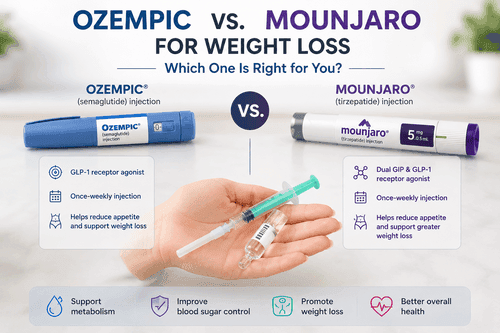
Both medications mimic naturally occurring hormones produced by your intestines called incretins. Normally, after you eat, these hormones signal your brain that you're full, helping regulate blood sugar, and slowing the rate at which food leaves your stomach.
These injections simply provide stronger, longer-lasting versions of those hormones, hence helping in weight management. The key difference lies in which hormones they target.
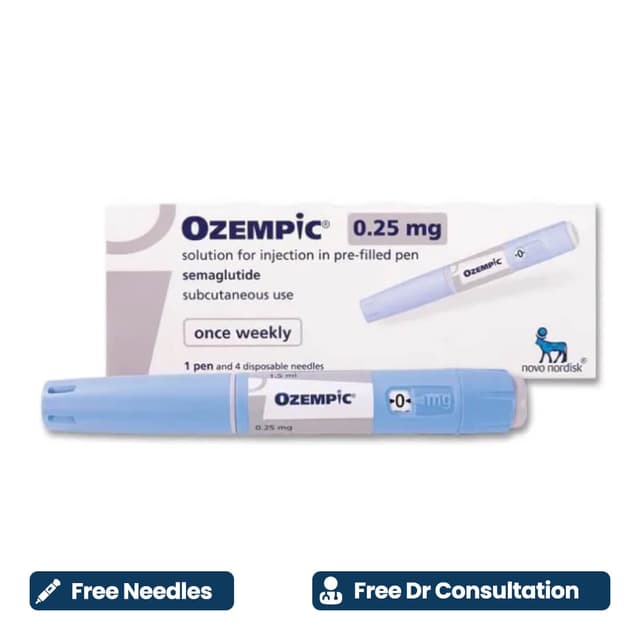
Ozempic (Semaglutide)
Ozempic (and its weight-loss counterpart, Wegovy) works by mimicking GLP-1, a hormone that:
- Slows stomach emptying
- Helps you feel full after eating smaller portions
- Reduces cravings for snacks and sugary foods
- Improves blood sugar control
It’s been said by people that they noticed their constant urge to snack gradually disappears.
Mounjaro (Tirzepatide)
Mounjaro (and its weight-loss version, Zepbound) represents the next generation of weight management medications.
Instead of targeting just one hormone, it mimics both GLP-1 and GIP.
The additional GIP activity not only enhances feelings of fullness but also improves the body's ability to regulate insulin and utilize energy more efficiently, making it particularly effective for people with insulin resistance.
How Much Weight Can You Actually Lose?
This is the most-commonly asked question amongst people. Clinical studies comparing both medications have shown impressive results. They are:
With Ozempic
On average, patients lose around 15% of their body weight. For someone weighing 100 kg, that typically translates to about 15 kg of weight loss over the course of treatment.
With Mounjaro
Because of its dual-action mechanism, average weight loss increases to 20–21% or even more in clinical trials. These results have led many healthcare professionals to consider Mounjaro one of the most effective non-surgical treatments currently available for obesity. However, remember that faster isn't always better. Rapid weight loss without proper nutrition, exercise and sleep, can lead to muscle loss and loose skin. The goal should always be losing fat while preserving lean muscle.
But, Which One Is Better for You?
The best choice isn't determined by which medication causes greater weight loss. It depends on your individual health profile.
Ozempic may be the better choice if you:
- Prefer a medication with many years of real-world safety data.
- Have concerns about heart health or cardiovascular disease.
- Looking for a treatment with a long-established safety profile.
- Looking for a more budget-friendly option.
Mounjaro may be ideal if you:
- You have severe obesity.
- Struggle with significant insulin resistance.
- You have Polycystic Ovary Syndrome (PCOS), now PMOS.
- Previously used GLP-1 medications but have reached a weight-loss plateau.
- Looking for a stronger metabolic support.
Managing Side Effects During the First Few Weeks
As these medications slow digestion, it's common to experience temporary side effects at the beginning, including:
- Nausea
- Heartburn
- Constipation
- Feeling overly full
Fortunately, these symptoms are usually manageable.
Here are a few simple strategies:
1. Stop eating at the first sign of fullness
Your stomach empties more slowly while on treatment. Continuing to eat out of habit often leads to nausea or vomiting.
2. Limit fried and fatty foods
High-fat meals take longer to digest and can worsen reflux and stomach discomfort.
3. Prioritize water and protein
Staying hydrated helps reduce headaches and constipation, while adequate protein intake helps preserve muscle mass during weight loss.
What Happens If You Stop the Injections?
Many people assume their journey ends once they reach their target weight. Unfortunately, that's not the case. Obesity and metabolic dysfunction are chronic medical conditions. Stopping treatment abruptly allows hunger hormones to return to previous levels, making appetite increase again and significantly raising the likelihood of regaining lost weight.
That's why, at Valeo Health, we believe ongoing medical support is extremely important after you've reached your weight goal. Our physicians tailor a gradual tapering strategy while also adjusting your nutrition plan, and helping establish long-term lifestyle habits that support lasting weight maintenance.
Cost and Availability
These medications should be viewed as an investment in your long-term health. However, it leads to occasional supply shortages due to high global demand.
Ozempic
- Generally more affordable
- Availability is there in many pharmacies
Mounjaro
- Typically more expensive
- Uses newer biological technology
- Availability may vary depending on demand
Ultimately, you're not simply paying for medication—you're investing in improved mobility, healthier joints, increased confidence, and reduced risk of chronic disease.
Final Thoughts
Ozempic and Mounjaro aren't shortcuts to your dream body. They're scientifically developed tools that help reset your relationship with food and improve your metabolic health. The best medication isn't necessarily the one that produces the biggest number on the scale.
It's the one that's appropriate for your body, protects your muscle mass, and helps you lose weight safely under expert medical supervision.
Whether Ozempic's appetite-regulating approach or Mounjaro Needles dual metabolic action is right for you, long-term success depends on personalized medical care, proper nutrition, exercise, and a structured maintenance plan that minimizes the risk of weight regain.
Your journey toward lasting health doesn't begin at the pharmacy it begins with understanding your body. If you're ready to start your weight loss management journey, book a FREE consultation with one of our top coaches. Whether you want to learn more about the Price of Mounjaro Needles in Saudi Arabia, explore your treatment options, or find out if Mounjaro is right for you, our medical team is here to guide you every step of the way.
Frequently Asked Questions
1. Which is better for weight loss: Mounjaro or Ozempic?
Clinical trials show that Mounjaro Injection generally produces greater average weight loss (over 20%) compared with Ozempic (around 15%). However, the right medication depends on your medical history, laboratory results, health goals, and your physician's recommendation.
2. What is "Ozempic Face," and can it be prevented?
"Ozempic Face" refers to facial volume loss or loose skin caused by rapid fat loss rather than the medication itself. It can be minimized by gradual dose escalation, consuming adequate protein, staying hydrated, and following a medically supervised weight-loss plan.
3. Can I switch from Ozempic to Mounjaro?
Yes. If your physician determines that you've reached a prolonged weight-loss plateau on Ozempic, transitioning to Mounjaro may be appropriate. The switch should always be medically supervised, beginning with an appropriate starting dose to minimize gastrointestinal side effects.
4. How long does it take to see results?
Many people notice reduced appetite within the first week. Visible body composition changes and measurable reductions in waist circumference typically become more noticeable after 3 to 6 months of consistent treatment and follow-up.
5. Do these medications cause muscle loss?
Weight loss can include both fat and muscle if you significantly reduce food intake without exercising. Resistance training two to three times per week, combined with sufficient protein intake, helps preserve muscle while maximizing fat loss.
6. Can I start these medications on my own if I can buy them?
No. These medications should only be started under medical supervision. Your doctor will evaluate your medical history, laboratory results, family history, and potential contraindications before determining the safest medication and dosage.
7. Are these medications safe for long-term use?
Yes. Both semaglutide and tirzepatide have been approved by major regulatory authorities following extensive clinical research. Their safety profiles are well established when prescribed and monitored appropriately by healthcare professionals.
8. How does Valeo Health make my journey different?
At Valeo Health, we don't simply prescribe medication—we create a personalized weight management program. We assess your blood work, recommend the most appropriate treatment, monitor your progress and side effects, provide tailored nutrition and exercise guidance to preserve muscle mass, and develop a long-term maintenance plan designed to help you sustain your results well beyond treatment.
9.What is the difference between Mounjaro 2.5 mg, Mounjaro 5 mg, Mounjaro 7.5 mg, Mounjaro 10 mg, Mounjaro 12.5 mg, and Mounjaro 15 mg, and how does a doctor choose the right dose?
Treatment typically begins with Mounjaro 2.5 mg to help your body adjust and minimize potential side effects. Depending on your response and treatment goals, your healthcare provider may gradually increase the dose to Mounjaro 5 mg, Mounjaro 7.5 mg, Mounjaro 10 mg, Mounjaro 12.5 mg, and eventually Mounjaro 15 mg if clinically appropriate. The highest dose is not suitable for everyone, so dose adjustments should always be made under medical supervision to ensure safe and effective weight loss while minimizing side effects.
10.What is the difference between Ozempic 0.25 mg, Ozempic 0.5 mg, and Ozempic 1 mg, and when should you move to a higher dose?
Treatment usually starts with Ozempic 0.25 mg once weekly to help your body adapt and reduce the risk of side effects. After the initial treatment period, your doctor may increase the dose to Ozempic 0.5 mg, and later to Ozempic 1 mg if additional blood sugar control or weight loss support is needed. The appropriate dose depends on your medical condition, treatment response, and your doctor's assessment. You should never increase or change your Ozempic dose without professional medical guidance.