




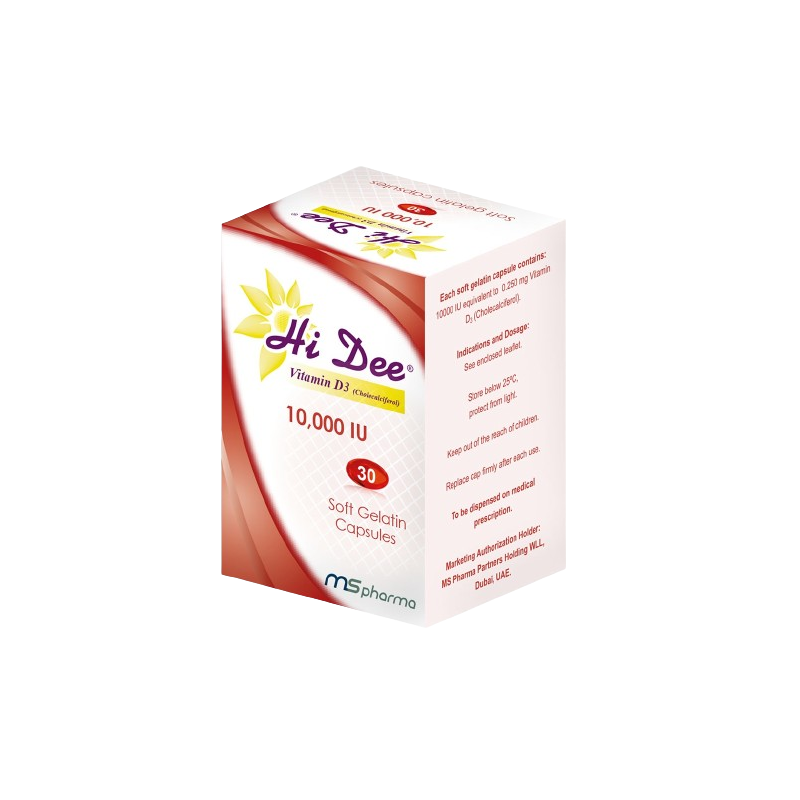
Hi Dee Vitamin D3 10000 IU Soft Gelatin Capsules 30's


Soft gelatin capsules with Vitamin D3

Vitamin D3 10000IU
Take 1 capsule every week or as advised


 Connect with an expert
What is Vitamin D3?
Vitamin D3 is a dietary supplement containing Vitamin D3 (cholecalciferol), an essential nutrient that supports bone health, immune function, and calcium absorption in the body. It is often taken alongside vitamin B12, which plays a key role in energy production, nerve function, and the formation of healthy red blood cells.
Why is Vitamin D3 important for overall health?
Vitamin D3 helps the body absorb calcium and phosphorus, which are crucial for maintaining strong bones and teeth. It also plays an important role in supporting immune and muscle health.
Who should consider taking Vitamin D3 supplements?
Vitamin D3 supplementation may benefit adults with limited sun exposure, low dietary intake of vitamin D, or those who have been diagnosed with low vitamin D levels by a healthcare professional.
How should Vitamin D3 be taken?
Vitamin D3 is typically taken once daily with a fatty meal to support better absorption. Always follow the dosage instructions on the label or as advised by your healthcare provider.
Does Vitamin D3 support bone health?
Yes, Vitamin D3 contributes to the maintenance of normal bones by helping the body absorb calcium efficiently, which is essential for bone strength and density.
Can Vitamin D3 help support immunity?
Vitamin D3 plays a role in regulating immune responses and may help support the body’s natural defense mechanisms, especially during periods of limited sun exposure.
Are there any side effects of taking Vitamin D3?
Vitamin D3 is generally well tolerated when taken at recommended doses. Taking excessive amounts over time may lead to elevated calcium levels, so it’s important not to exceed advised intake.
Can I take Vitamin D3 if I get sunlight regularly?
While sunlight helps the body produce vitamin D, factors such as indoor lifestyles, sunscreen use, skin tone, and geographic location can reduce natural production. Supplementation can help maintain optimal levels.
Should I consult a doctor before taking Vitamin D3?
Yes, consulting a healthcare provider is recommended, especially if you have existing medical conditions, are pregnant, or are already taking other supplements or medications.
Can Vitamin D3 be taken with other supplements?
Vitamin D3 is generally well tolerated when taken at recommended doses. Taking excessive amounts over time may lead to elevated calcium levels, so it’s important not to exceed advised intake, especially when managing overall treatment plans that may include medications such as rybelsus 7 mg.
What is Vitamin D deficiency and why does it matter?
Vitamin D deficiency occurs when your body doesn’t have enough vitamin D to maintain healthy bones and overall bodily functions. Vitamin D plays a crucial role in calcium absorption, immune system support, and muscle function. When levels are too low, it can lead to issues like weak bones, fatigue, muscle pain, and increased risk of conditions such as osteoporosis or infections. Common causes include limited sun exposure, poor diet, darker skin tone, or certain medical conditions. Treatment typically involves sunlight exposure, dietary changes, and supplements if needed.


