



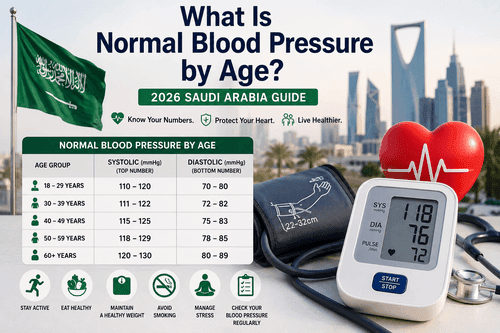
What Is Normal Blood Pressure by Age? 2026 Saudi Arabia Guide
Blood pressure is one of the most important indicators of cardiovascular health. Yet many people wonder whether their readings are normal, especially as they get older.
Understanding normal blood pressure can help you identify potential health concerns early and take steps to protect your heart. In Saudi Arabia, where lifestyle-related conditions are becoming increasingly common, knowing your blood pressure numbers is more important than ever.
This guide explains the blood pressure normal range by age, common causes of abnormal readings, and practical ways to reduce the risk of hypertension.
Quick Answer: What Is Normal Blood Pressure?
For most healthy adults:
- Normal blood pressure is below 120/80 mmHg
- Elevated blood pressure ranges from 120–129 systolic and less than 80 diastolic
- High blood pressure begins at 130/80 mmHg
- Readings should be monitored regularly, especially after age 40
Why Blood Pressure Matters
Blood pressure measures the force of blood pushing against artery walls.
A reading includes two numbers:
- Systolic pressure: The top number that measures pressure when the heart beats
- Diastolic pressure: The bottom number that measures pressure when the heart rests between beats
Example:
- 120/80 mmHg
- 120 = Systolic
- 80 = Diastolic
Keeping your normal blood pressure within a healthy range supports heart health, kidney function, and overall well-being.
Normal Blood Pressure by Age Table
Although the ideal target remains close to 120/80, blood pressure can vary slightly with age.
Age Group
Systolic (Top Number)
Diastolic (Bottom Number)
18–29 Years
110–120
70–80
30–39 Years
111–122
72–82
40–49 Years
115–125
75–83
50–59 Years
118–129
78–85
60+ Years
120–130
80–89
Note: Individual health conditions, medications, and lifestyle factors may influence readings.
Understanding the Blood Pressure Normal Range
Knowing the blood pressure normal range helps you understand whether your readings are healthy.
Blood Pressure Categories
Category
Reading
Normal
Less than 120/80
Elevated
120–129 and less than 80
Hypertension Stage 1
130–139 or 80–89
Hypertension Stage 2
140/90 or higher
Hypertensive Crisis
Above 180/120
Regular monitoring allows you to identify changes before serious complications develop.
What Causes Blood Pressure to Change?
Several factors can affect your blood pressure throughout the day.
Common Causes
- Stress and anxiety
- Excessive salt intake
- Lack of exercise
- Smoking
- Poor sleep
- Obesity
- Dehydration
- Certain medications
These factors can temporarily or permanently move you outside the healthy blood pressure normal range.
Signs That May Indicate Hypertension
Many people with hypertension experience no symptoms at all.
However, some warning signs may include:
- Frequent headaches
- Dizziness
- Blurred vision
- Shortness of breath
- Chest discomfort
- Fatigue
Because symptoms may not appear immediately, routine blood pressure checks are essential.
Normal Blood Pressure by Age: Real-Life Example
Consider two adults living in Saudi Arabia:
Example 1
A 28-year-old office worker records:
- 118/76 mmHg
This falls within the normal blood pressure range.
Example 2
A 55-year-old individual records:
- 138/86 mmHg
This may indicate early hypertension and should be monitored closely.
Consistent readings above the recommended blood pressure normal range should be discussed with a healthcare provider.
How to Maintain Normal Blood Pressure
1. Reduce Salt Intake
- Limit processed foods
- Check nutrition labels
- Choose fresh ingredients when possible
2. Stay Physically Active
Aim for:
- 30 minutes of walking daily
- Cycling
- Swimming
- Light strength training
3. Maintain a Healthy Weight
Weight management can significantly reduce the risk of hypertension.
4. Eat a Balanced Diet
Focus on:
- Fruits
- Vegetables
- Whole grains
- Lean protein sources
5. Stay Hydrated
Adequate hydration supports circulation and cardiovascular function.
6. Manage Stress
Helpful techniques include:
- Deep breathing
- Meditation
- Prayer
- Quality sleep
How Excessive Heat Can Affect Blood Pressure
Saudi Arabia experiences extremely high temperatures during many months of the year.
Excessive heat can:
- Cause blood vessels to widen
- Lower blood pressure temporarily
- Increase sweating and dehydration
- Lead to dizziness and fatigue
People with existing hypertension should pay extra attention to hydration and avoid prolonged exposure to extreme heat.
When Should You See a Doctor?
Seek medical advice if:
- Readings consistently exceed 130/80 mmHg
- You experience severe headaches
- Vision changes occur
- Chest pain develops
- Shortness of breath becomes frequent
Early treatment can help prevent complications associated with long-term hypertension.
Key Takeaways
- Normal blood pressure is generally below 120/80 mmHg.
- The blood pressure normal range may vary slightly with age.
- Regular monitoring helps identify problems early.
- Hypertension often develops without obvious symptoms.
- Healthy lifestyle choices remain one of the most effective ways to maintain cardiovascular health.
Knowing your numbers today can help protect your health for years to come.
Summary
if you're wondering what normal blood pressure is, the ideal reading for most adults is below 120/80 mmHg. Knowing what constitutes normal blood pressure can help detect health problems early and maintain long-term heart health. Regularly monitoring important health indicators, including blood pressure and Normal blood sugar level , adopting a healthy lifestyle, and following medical advice can significantly contribute to preventing many health problems and maintaining stable blood pressure within normal ranges.
Excessive Heat can significantly affect blood pressure because the body works harder to regulate its temperature. When the temperature rises, blood vessels dilate to help release heat through the skin. This process can lead to changes in blood pressure.
Blood pressure fluctuations during pregnancy can affect a pregnant woman's daily well-being and symptoms. As hormonal changes and increased blood volume occur, blood pressure may rise or fall, leading to various symptoms. Sometimes, early pregnancy symptoms resulting from these changes, such as dizziness, fatigue, and nausea, can resemble early pregnancy symptoms, prompting many women to seek a reliable 100% Guaranteed Home Pregnancy Test to confirm their pregnancy and monitor its health early on.
Frequently Asked Questions
1. What is considered normal blood pressure?
Normal blood pressure is generally less than 120/80 mmHg for most adults.
2. Does normal blood pressure change with age?
While ideal levels remain similar, slight variations may occur as people age.
3. What is the blood pressure normal range for older adults?
Many healthy adults over 60 maintain readings around 120–130/80–89 mmHg.
4. Can hypertension develop without symptoms?
Yes. Hypertension is often called a "silent condition" because many people experience no warning signs.
5. How often should blood pressure be checked?
Adults should check it regularly, especially after age 40 or if they have risk factors.
6. Can lifestyle changes lower hypertension?
Yes. Exercise, healthy eating, stress management, weight control, and reducing salt intake can help lower blood pressure.