



Everything You Need to Know About the NIPT test cost in saudi arabia (2026)
The early stages of pregnancy mark an extraordinary milestone in every family’s life. From the moment an expectant mother sees the two lines on a home pregnancy test in Saudi Arabia, excitement is accompanied by a deep sense of responsibility and a desire for reassurance. Questions about the baby’s genetic health and the curiosity of knowing the baby’s gender often become the top priorities during the first weeks of pregnancy.
In the past, parents had limited options. Mothers typically had to wait until the middle of pregnancy (around weeks 18–20) for initial answers through an ultrasound scan, or consider invasive procedures that carried a small but real risk of complications. Today, in line with the rapid advancements in Saudi Arabia’s healthcare sector in 2026, the Non-Invasive Prenatal Test (NIPT) has transformed preventive prenatal care. It enables expectant mothers to screen for common chromosomal conditions and determine the baby’s sex with remarkable accuracy from as early as the 10th week of pregnancy using a simple blood sample, with no risk to the pregnancy.
Since financial planning is an important part of preparing for a new family member, this updated guide explains everything you need to know about NIPT test cost in Saudi Arabia, while also highlighting the key factors to consider when choosing the right healthcare provider and testing service.
What Is the NIPT Test and What Does It Offer?
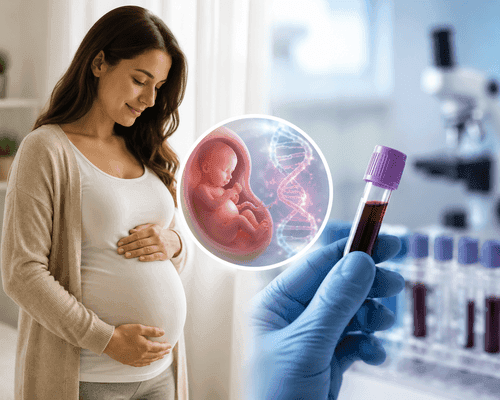
NIPT is a safe, non-invasive prenatal blood test performed from the 10th week of pregnancy onward. It analyzes small fragments of the baby's DNA (cell-free fetal DNA) circulating in the mother's bloodstream.
The test offers over 99% accuracy in screening for common chromosomal abnormalities while also providing early fetal sex determination.
What Does NIPT Offer?
Early screening for genetic conditions
- Screens for the most common chromosomal abnormalities, including:
- Down syndrome (Trisomy 21)
- Edwards syndrome (Trisomy 18)
- Patau syndrome (Trisomy 13)
Sex chromosome analysis
- Can identify abnormalities involving the sex chromosomes, such as:
- Turner syndrome
- Klinefelter syndrome
Early gender determination
- Accurately identifies whether the baby is a boy or a girl early in pregnancy.
Safety and peace of mind
- Since it only requires a maternal blood sample, NIPT poses no risk of miscarriage, giving parents valuable reassurance and allowing more time for informed medical and personal planning.
How to Prepare for the Test
Unlike blood tests for glucose or cholesterol, NIPT does not require fasting. However, the following recommendations can help ensure optimal results:
- Stay well hydrated: Drinking plenty of water makes blood collection easier by improving vein visibility.
- Confirm your gestational age: You should have completed at least 10 weeks of pregnancy, ideally confirmed by ultrasound, to ensure there is sufficient fetal DNA in your bloodstream.
- Inform your healthcare provider about any medications: If you are taking blood thinners such as aspirin or heparin, let your healthcare provider know. Some anticoagulants may affect DNA extraction quality, and your doctor may recommend temporarily adjusting your medication before the test if appropriate.
Your NIPT Journey: Step by Step
1. Schedule the test
Ensure you are at least 10 weeks pregnant, allowing enough fetal DNA to be present for accurate analysis.
2. Blood sample collection
Whether performed at a clinic or through an at-home service, a small blood sample is taken from your arm in less than five minutes with minimal discomfort.
3. Laboratory analysis
The laboratory analyzes the fetal DNA to screen for common chromosomal conditions and determine the baby's sex.
4. Receive your results
A secure digital medical report (PDF) is typically delivered within 5 to 15 business days.
How Much Does an NIPT Test Cost in Saudi Arabia in 2026?
Saudi Arabia's healthcare sector continues to experience significant growth and technological advancement, creating greater competition and more accessible testing options for expectant parents in 2026. Currently, the total cost of an NIPT test in Saudi Arabia ranges from SAR 700 to SAR 1,800, depending on the testing package selected and the services included.
What Does the Test Include?
- Screening for common chromosomal conditions: Accurate screening for the three most common chromosomal abnormalities—Down syndrome (Trisomy 21), Edwards syndrome (Trisomy 18), and Patau syndrome (Trisomy 13).
- Early fetal sex determination: Highly accurate identification of the baby's sex from an early stage of pregnancy.
- Advanced chromosomal screening: Detection of sex chromosome abnormalities and a broader range of microdeletion syndromes that may affect physical and cognitive development.
- Twin pregnancy assessment: Advanced screening specifically designed to account for the unique characteristics of twin pregnancies.
- At-home sample collection: The option to have a qualified healthcare professional collect your blood sample from the comfort of your home and safely transport it to the laboratory, providing maximum convenience during pregnancy.
Does Health Insurance Cover NIPT in Saudi Arabia?
In most cases, NIPT is not covered by standard health insurance, as it is generally considered an elective prenatal screening test. However, insurance providers may approve coverage in certain medical situations following prior authorization, including:
- Maternal age over 35 years
- A family history of chromosomal abnormalities or previous pregnancies affected by conditions such as Down syndrome
- Abnormal findings from first-trimester screening or ultrasound that warrant further genetic assessment
Pay for Your Test in Installments
Because your baby's health shouldn't have to wait, many healthcare providers and laboratories across Saudi Arabia now offer flexible payment solutions through providers such as Tabby and Tamara.
These services allow you to split the cost of your NIPT test into interest-free monthly installments, making the test more affordable while providing greater financial flexibility.
How to Choose the Right Laboratory
Price should never be the only factor when choosing where to have your NIPT performed. Consider the following:
1. Official licensing
Ensure the laboratory or healthcare provider is licensed by the Saudi Ministry of Health to offer genetic testing and, if applicable, home healthcare services.
2. Qualified healthcare professionals
Blood samples should be collected by licensed healthcare practitioners registered with the Saudi Commission for Health Specialties.
3. Transparent pricing
Choose providers that clearly disclose all fees without hidden charges.
4. Post-test medical support
Select a provider that offers access to a physician or genetic counselor to explain your results and answer any questions.
Conclusion
Peace of mind is one of the most valuable aspects of a healthy pregnancy. NIPT Test for Pregnancy should not be viewed merely as a way to learn your baby's gender early—it is an advanced preventive screening tool that provides parents with important insights into their baby's chromosomal health from the earliest stages of pregnancy.
With Saudi Arabia's rapidly expanding healthcare sector in 2026, financial barriers have become less significant thanks to a wide range of testing packages and flexible payment options. Investing in reliable prenatal screening is an informed decision that supports a healthier pregnancy, reduces uncertainty, and helps families prepare confidently for the arrival of their newest member.
Frequently Asked Questions
1. Can NIPT be performed for twin pregnancies?
Yes. Most NIPT packages available in 2026 support twin pregnancies. The test can determine whether the twins are identical or non-identical in certain cases and detect the presence of a Y chromosome. If a Y chromosome is detected, at least one baby is male; if not, both babies are female. Be sure to select a package specifically designed for twin pregnancies, as some laboratories offer separate testing protocols.
2. Does maternal obesity affect the accuracy of the test?
Yes. A higher Body Mass Index (BMI) may reduce the proportion of fetal DNA circulating in the mother's blood. For women with a higher BMI, healthcare providers may recommend waiting until the 11th or 12th week of pregnancy instead of testing at week 10 to increase the likelihood of obtaining a conclusive result.
3. How accurate is fetal gender determination with NIPT?
NIPT Test in Saudi Arabia is extremely accurate, with an error rate of less than 0.5% for fetal sex determination. Rare inaccuracies may occur in unusual situations, including: a recent pregnancy loss, recent blood transfusions, and vanishing twin syndrome. In uncomplicated pregnancies, NIPT is generally more accurate than ultrasound for early gender determination.
4. Does NIPT prevent birth defects?
No. NIPT is a screening test, not a treatment. It screens for chromosomal abnormalities but does not detect structural birth defects, such as: congenital heart defects, cleft lip and palate, and neural tube defects (such as spina bifida). A detailed fetal anatomy ultrasound performed between 18 and 22 weeks of pregnancy remains essential for evaluating structural development.
5. Can NIPT detect autism or intellectual disabilities?
No. NIPT cannot diagnose autism spectrum disorder, learning disabilities, or cerebral palsy. These conditions are influenced by complex genetic and environmental factors that are not identified through routine prenatal chromosome screening.
6. What happens if the result is inconclusive?
In a small percentage of cases, the test result may be reported as inconclusive or indicate that the sample could not be analyzed. The most common reasons include: testing before 10 weeks of pregnancy and insufficient fetal DNA in the maternal bloodstream due to biological factors, including higher maternal BMI In such cases, most healthcare providers will recommend repeating the blood draw one to two weeks later, often at no additional cost, to obtain a reliable result.