



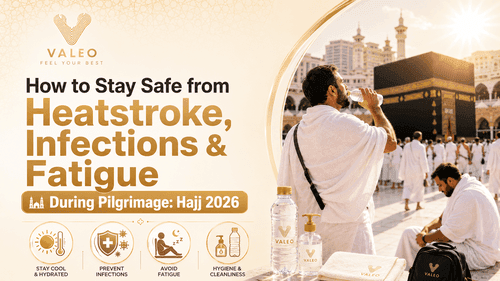
How to Stay Safe from Heatstroke, Infections & Fatigue During Pilgrimage: Hajj 2026
Hajj is one of the most meaningful journeys for Muslims around the world. Every year, millions of pilgrims travel to Mecca to perform sacred rituals that involve walking long distances, spending hours outdoors, and managing crowded environments.
During Hajj 2026, many pilgrims may face high temperatures and Excessive Heat, increasing the risk of dehydration, fatigue, infections, and heatstroke. These health concerns can affect anyone, but older adults and people with existing medical conditions are often at greater risk.
Good preparation before travel and smart health habits during pilgrimage can help reduce these risks. Maintaining healthy electrolytes, staying hydrated, and seeking timely medical support when needed are important steps for a safer Hajj experience.
Why Heatstroke Is a Major Concern During Hajj 2026
The combination of physical activity, crowded conditions, and hot weather can place extra stress on the body. Walking for long hours under direct sunlight may quickly lead to dehydration and overheating.
Heatstroke occurs when the body temperature rises dangerously high and can no longer cool itself properly. Without quick treatment, it may become life threatening.
Common symptoms include:
Dizziness
Rapid heartbeat
Heavy sweating or dry skin
Headache
Confusion
Nausea
Muscle cramps
Excessive Heat can worsen these symptoms very quickly, especially in pilgrims who are already dehydrated or physically exhausted.
Pilgrims should never ignore early warning signs. Resting immediately, cooling the body, and drinking fluids may help prevent serious complications.
Why Electrolytes Matter During Pilgrimage
Many people focus only on drinking water during Hajj, but hydration is not complete without replacing electrolytes. When the body sweats heavily, it loses essential minerals such as sodium, potassium, and magnesium.
These electrolytes are important for:
Muscle function
Fluid balance
Heart rhythm
Nerve signals
Energy levels
Without enough electrolytes, pilgrims may feel weak, dizzy, or extremely tired even after drinking water.
People walking long distances between rituals may lose large amounts of fluids through sweat. Excessive Heat can increase this fluid loss even further.
Best Sources of Electrolytes During Hajj
Pilgrims can support hydration by consuming:
Oral rehydration solutions
Coconut water
Bananas
Yogurt
Soups
Fresh fruits
These options help restore electrolytes naturally while providing energy for long hours of movement.
Practical Hydration Tips for Hot Weather
Preventing dehydration starts with small daily habits. Many pilgrims wait until they feel thirsty before drinking fluids, but thirst is often a late sign of dehydration.
Drink Water Regularly
Sip water throughout the day instead of drinking large amounts at once.
It is especially important to increase fluid intake during outdoor rituals, after sweating heavily, and during periods of Excessive Heat.
Avoid Too Much Caffeine
Coffee and energy drinks may increase fluid loss in some people. It is better to choose fluids that support hydration and electrolytes balance.
Wear Breathable Clothing
Loose and lightweight clothing helps the body cool itself more effectively during hot conditions.
Rest During Peak Afternoon Heat
One practical way to avoid heat related illness is to reduce unnecessary outdoor activity during the hottest hours of the day.
Managing Fatigue During Hajj
Fatigue is extremely common during pilgrimage because of long walking distances, sleep disruption, crowded conditions, heat exposure, and physical exertion.
Some pilgrims try to continue despite exhaustion, but ignoring fatigue may increase the risk of heatstroke or collapse.
Listen to Your Body
Take short breaks when needed and avoid overexertion. Resting does not weaken the pilgrimage experience; it helps protect your health.
Eat Balanced Meals
Nutritious meals support recovery and help maintain electrolytes during physically demanding days.
Good meal choices include:
Fruits
Rice
Lean proteins
Soups
Dates
Vegetables
Heavy fried foods may increase discomfort and tiredness during hot weather.
How IV Drip Support May Help Certain Pilgrims
Some pilgrims experience severe dehydration, vomiting, or heat exhaustion that cannot improve with oral fluids alone. In these cases, medical professionals may recommend IV Drip support.
An IV Drip can help deliver fluids and electrolytes directly into the bloodstream under professional supervision.
IV Drip treatment may sometimes help with severe weakness, heat exhaustion, persistent vomiting, low electrolyte levels, and dehydration caused by Excessive Heat.
However, IV Drip therapy is not necessary for everyone. Mild dehydration often improves with rest, fluids, and cooling measures.
A qualified Doctor consultation is important before receiving IV Drip treatment to ensure it is safe and appropriate.
Infection Risks During Hajj and How to Reduce Them
Large gatherings increase the chances of respiratory infections and stomach illnesses. Pilgrims are often in close contact with people from different countries and climates.
Wash Hands Frequently
Hand hygiene remains one of the most effective ways to reduce infection risk. Carry hand sanitizer and wash hands regularly, especially before eating.
Avoid Sharing Personal Items
Do not share water bottles, towels, razors, or eating utensils. These items may spread germs between travelers.
Wear Masks in Crowded Areas
Masks may help reduce exposure to respiratory infections, particularly for older adults or those with weaker immune systems.
Seek Early Doctor Consultation
Persistent fever, breathing difficulty, severe fatigue, or ongoing vomiting should never be ignored during pilgrimage.
A timely Doctor consultation can help identify infections early and prevent complications.
Elderly Care During Hajj 2026
Older pilgrims often require additional planning and support because aging affects stamina, hydration balance, and heat tolerance.
Good Elderly care starts before travel and continues throughout the pilgrimage.
Monitor Hydration Carefully
Older adults may not feel thirsty even when dehydrated. Family members should remind them to drink fluids regularly and monitor for signs of weakness.
Plan Enough Rest Periods
Frequent breaks are essential for proper Elderly care during periods of Excessive Heat.
Organize Medications
Carry medications in labeled containers and maintain a clear schedule to avoid missed doses.
Watch for Warning Signs
Family members should monitor older pilgrims for:
Sudden confusion
Dizziness
Trouble walking
Extreme fatigue
Reduced alertness
These symptoms may indicate dehydration or heat related illness that requires urgent Doctor consultation.
Providing proper Elderly care during Hajj can significantly reduce medical emergencies.
Why a Doctor Consultation Before Hajj Is Important
A pre travel Doctor consultation helps pilgrims prepare safely for the physical demands of Hajj.
Healthcare professionals may review medications, check chronic conditions, discuss heat safety, recommend vaccinations, and assess hydration risks.
A Doctor consultation is especially important for people with diabetes, heart disease, kidney problems, asthma, and high blood pressure.
Medical preparation before travel can help reduce stress and improve confidence during pilgrimage.
Preparing for Excessive Heat During Hajj
Temperatures during Hajj may become extremely challenging, making preparation essential.
To reduce the impact of Excessive Heat:
Carry a reusable water bottle
Use umbrellas or cooling towels
Stay in shaded areas whenever possible
Avoid direct sunlight for long periods
Wear comfortable footwear
Replace lost electrolytes regularly
Even healthy adults can develop heat related illness if they ignore hydration and rest.
Essential Packing Checklist for Hajj 2026
Packing the right health supplies can help pilgrims stay safer and more comfortable.
Recommended items include:
Electrolyte sachets
Hand sanitizer
Reusable water bottle
Personal medications
Face masks
Cooling towel
Comfortable walking shoes
Healthy snacks
Simple preparation often prevents unnecessary health problems later.
Final Thoughts
Hajj is a deeply spiritual experience, but physical preparation is equally important. Heatstroke, dehydration, infections, and fatigue can affect pilgrims quickly, especially during periods of Excessive Heat.
Maintaining healthy electrolytes, practicing good hygiene, and resting when needed can help pilgrims stay healthier throughout the journey.
Families traveling with older relatives should prioritize proper Elderly care, including hydration monitoring and regular rest breaks. In more serious situations, supervised IV Drip therapy may help restore fluids and support recovery safely.
Most importantly, pilgrims should never hesitate to seek a Doctor consultation if symptoms become severe. Early medical attention can prevent small problems from becoming serious emergencies during Hajj 2026.
FAQs
1. Why are electrolytes important during Hajj?
Electrolytes help maintain hydration, muscle function, and energy levels during hot weather and heavy sweating.
2. Can Excessive Heat cause serious health problems during pilgrimage?
Yes. Excessive Heat may lead to dehydration, heat exhaustion, and heatstroke if proper precautions are not taken.
3. When is IV Drip therapy needed during Hajj?
IV Drip treatment may be recommended for severe dehydration, vomiting, or heat exhaustion under medical supervision.
4. Why is Elderly care important during Hajj?
Older adults are more vulnerable to dehydration, fatigue, and heat related illness, making proper Elderly care essential.
5. Should pilgrims get a Doctor consultation before travel?
Yes. A Doctor consultation helps identify health risks and prepare safely for the physical demands of Hajj.
6. How can pilgrims reduce infection risks during Hajj?
Frequent hand washing, mask use, staying hydrated, and avoiding shared personal items can help reduce infections.