



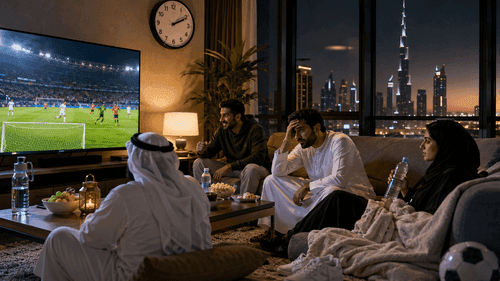
Staying Up Late for the World Cup: What GCC Fans Should Know About Sleep, Health, and Recovery
For football fans in the GCC, the 2026 FIFA World Cup comes with one big challenge: the time difference.
The tournament is being held across the United States, Mexico, and Canada, which means many matches will take place when people in the Gulf are usually winding down, sleeping, or getting ready for work the next morning. For fans in Saudi Arabia, Qatar, Bahrain, Kuwait, and Oman, matches may fall late at night. For fans in the UAE, some games may run even later.
And let’s be honest: when it is the World Cup, “I’ll just watch the first half” rarely works. One big match can easily turn into extra time, penalties, post-match analysis, WhatsApp debates, and suddenly it is 3 a.m.
That is part of the magic of football. But it can also affect your sleep, mood, appetite, focus, and energy the next day.
One late night is not the end of the world. The real problem is when late nights become a pattern across the tournament. Here is what staying up for World Cup matches can do to your body and how to recover the next day without ruining your routine.
Why the 2026 World Cup May Be Tough on GCC Sleep Schedules
The GCC is several hours ahead of North America. So while a match may be scheduled in the afternoon or evening in the United States, Mexico, or Canada, it can land much later in the Gulf.
That creates a problem for fans who want to watch matches live. You may go to bed later, wake up at your usual time for work, school, family responsibilities, or Fajr prayer, and end up running on only a few hours of sleep.
Your body does not adjust instantly to this. It follows an internal clock, often called the circadian rhythm, which helps control when you feel alert, when you feel sleepy, how your digestion works, and how your energy rises and falls during the day.
When you stay up late watching a match, especially with bright screens, snacks, caffeine, excitement, and group chats, your body gets the signal to stay awake. But the next morning, life in the GCC usually continues as normal. Offices open, meetings start, and the heat of the day arrives. That is when the sleep loss starts to show.
Abdulmonem, a Valeo customer with a near-perfect sleep score, says: “I am willing to sacrifice my sleep for the World Cup. I will definitely be up at 1am watching the Saudi match on Tuesday morning.”
What Happens to Your Body After a Late Match?
You may feel foggy at work
Even one short night can make it harder to concentrate, remember details, and react quickly. You may feel like you are present, but not fully sharp.
This can affect meetings, driving, studying, decision-making, and productivity. If your job involves safety, medical care, driving, construction, machinery, or long commutes, poor sleep is not something to ignore.
Your mood can change
Sleep affects emotional control. After a late night, you may feel more impatient, irritated, anxious, or low.
So if you wake up in a bad mood after your team loses, it might not just be the result. It might also be the fact that you slept four hours and started your day already drained.
You may crave heavier food
Lack of sleep can increase hunger and cravings. Many people reach for more sugar, salty snacks, fried food, or extra coffee after a poor night of sleep.
In the GCC, late-night viewing often comes with karak, Arabic coffee, soft drinks, sweets, chips, shawarma, burgers, or delivery food. Enjoying match snacks is normal, but heavy eating late at night can leave you feeling bloated, thirsty, and sluggish the next day.
Your workouts may feel harder
If you usually train, play football, go to the gym, or walk outdoors, a late night can make exercise feel harder. Your reaction time, motivation, and recovery may all be lower.
This matters even more in the Gulf summer, where heat already puts extra stress on the body. If you slept badly, it is better to keep exercise lighter the next day instead of forcing a hard session.
Your sleep schedule may drift
The biggest risk is not one match. It is staying up repeatedly across the tournament.
If you watch several late games in one week, your bedtime may start shifting later and later. Then you may rely on naps, caffeine, and weekend oversleeping to catch up. This can make your sleep feel messy and inconsistent, even after the match ends.
Caffeine, Karak, Arabic Coffee, and Energy Drinks: Be Smart
For many fans, caffeine is part of the experience. A cup of karak, Arabic coffee, Turkish coffee, or an energy drink can help you stay awake for a late match.
The problem is timing.
Caffeine can stay in your system for hours. If you drink it late at night, you may be able to watch the match, but then struggle to sleep after the final whistle. That means the match ends, you go to bed, and your body still feels switched on.
A better approach is to use caffeine earlier and keep it moderate. If the match is very late, try switching to water or a caffeine-free drink during the second half. You do not want the drink that helped you stay awake for the game to be the reason you cannot sleep afterwards.
Match-Night Tips for GCC Fans
Choose your must-watch matches
You do not have to watch every game live. Pick the matches that really matter to you: your national team, your favourite club players, knockout games, major rivalries, or finals.
For other matches, highlights may be the better choice. Your sleep is worth protecting.
Take a short nap before a late game
If you know you are watching a late match, a short nap earlier in the day can help. Keep it around 20 minutes if possible. A long nap late in the evening may make it harder to sleep after the match.
Eat properly before the match
Have a real dinner earlier in the evening instead of relying only on late-night snacks. This helps reduce overeating during the game.
If you want snacks, keep them lighter: fruit, yogurt, nuts, popcorn, soup, dates with moderation, or a small sandwich. You do not need to make match night a heavy meal every time.
Lower the lights
Bright light tells your brain to stay awake. During late matches, dim the room where possible and lower your screen brightness. This will not solve everything, but it can make it easier to wind down afterwards.
Do not go straight from full excitement to bed
A close match, a last-minute goal, or penalties can leave your body full of adrenaline. Give yourself 15 to 30 minutes after the game to calm down.
Stretch, shower, pray, breathe slowly, dim the lights, or read something quiet. Try not to fall into an endless scroll of highlights, analysis, reactions, and arguments.
That “just five minutes” after the game is often what turns a late night into a very late night.
What to Do the Next Day
Get morning light
Morning light helps reset your body clock. Step outside early if you can, even for 10 to 20 minutes. In the GCC summer, this is best done early before the heat becomes intense.
Light exposure in the morning can help you feel more awake and make it easier to sleep earlier that night.
Hydrate early
Late nights, salty snacks, caffeine, and air conditioning can all leave you feeling dehydrated. Start the day with water before relying on more coffee.
If you had a heavy meal or salty snacks during the match, hydration matters even more. For people feeling drained or dehydrated, hydration support may help with faster recovery.
Use caffeine carefully
A morning coffee is fine for many people. But avoid chasing tiredness with caffeine all day.
Too much caffeine in the afternoon or evening can keep the cycle going: you stay up late, feel tired, drink more caffeine, then struggle to sleep again.
Keep your nap short
If you are exhausted, a short nap can help. Aim for 10 to 20 minutes. Avoid long naps late in the day, because they can make it harder to sleep at night.
Go lighter on exercise
If you slept badly, do not force your hardest workout. Choose something easier: walking, stretching, mobility work, light cycling, or a lower-intensity gym session.
If you exercise outdoors, avoid peak heat and listen to your body. Poor sleep and high temperatures are not a good combination.
Be careful with driving
This is one of the most important points.
If you slept very little, your reaction time and attention may be worse. That can make driving riskier, especially during early-morning commutes, long highway drives, or heavy traffic.
If you feel sleepy, keep yawning, have heavy eyes, miss turns, or cannot remember parts of the drive, do not ignore it. Use a ride-hailing app, carpool, public transport where available, delay the trip, or rest first.
Sleep earlier the next night
The best recovery is simple: go to bed earlier the next night. Do not try to “fix” sleep loss only with coffee, supplements, or weekend oversleeping.
Give your body the recovery it was asking for in the first place.
A Realistic World Cup Sleep Plan for the GCC
Here is a simple approach:
Pick the matches you truly care about. Watch highlights for the rest. Avoid late caffeine when you can. Keep snacks light. Dim the lights during late games. Wind down after the final whistle. Get morning light the next day. Nap briefly if needed. Go to bed earlier the following night.
You can still enjoy the World Cup without sacrificing your whole sleep routine.
Who Should Be Extra Careful?
Some people should be more cautious with repeated late nights. This includes anyone with insomnia, sleep apnea, high blood pressure, heart disease, diabetes, mood disorders, pregnancy-related sleep issues, or jobs where tiredness could put them or others at risk.
It also includes people who already struggle with daytime sleepiness or rely heavily on caffeine to function.
If you regularly wake up tired, snore loudly, wake up gasping, or feel sleepy during the day even after spending enough time in bed, it may be worth speaking with a healthcare professional.
Final Thoughts
For GCC fans, the 2026 World Cup will be exciting but the time difference means sleep will need some planning.
Staying up for a big match can be worth it. Football is emotional, social, and sometimes unforgettable. But your body still needs rest.
So enjoy the goals, the drama, the penalties, and the late-night group chats. Just choose your matches wisely, protect your sleep when you can, and give yourself a proper recovery plan the next day.
Frequently Asked Questions
1. Is it bad for your health to stay up late watching World Cup matches?
Staying up late once in a while is usually not a serious problem for healthy adults, but repeated late nights can affect sleep, mood, focus, appetite, energy, and recovery. If you already have sleep problems, high blood pressure, diabetes, heart disease, or daytime sleepiness, you should be more careful.
2. How can I recover the next day after staying up late for a football match?
The best recovery steps are to get morning sunlight, drink enough water, eat a balanced breakfast, avoid too much caffeine, take a short 10–20 minute nap if needed, keep exercise light, and sleep earlier the next night.
3. Why do I feel tired and foggy after watching a late-night match?
You feel tired and foggy because your body did not get enough sleep and your circadian rhythm was disturbed. Lack of sleep can reduce concentration, memory, reaction time, and decision-making, which can affect work, studying, driving, and daily routine.
4. Can late-night football matches cause headaches?
Yes, late-night matches can contribute to headaches, especially when combined with screen brightness, dehydration, caffeine, poor posture, stress, loud environments, and lack of sleep. Watching on a phone for long periods can make headaches and eye strain worse.
5. How can I avoid eye strain while watching World Cup matches at night?
Lower your screen brightness, keep soft room lighting on, avoid sitting too close to the TV, reduce phone scrolling during the game, blink often, and follow the 20-20-20 rule: every 20 minutes, look at something 20 feet away for 20 seconds.
6. Is caffeine good or bad for staying awake during late matches?
Caffeine can help you stay awake, but drinking it too late can make it harder to sleep after the match. Coffee, karak, Arabic coffee, and energy drinks should be used carefully. Try to avoid caffeine during the second half if the match is already very late.
7. What should I eat while watching late-night World Cup matches?
It is better to eat a proper dinner before the match and keep snacks light. Good options include fruit, yogurt, nuts, popcorn, soup, dates in moderation, or a small sandwich. Heavy, salty, fried, or sugary foods late at night can cause bloating, thirst, and low energy the next day.
8. Is it safe to drive after sleeping only a few hours?
Driving after very little sleep can be risky because poor sleep affects reaction time, focus, and alertness. If you feel sleepy, have heavy eyes, keep yawning, or cannot remember parts of your drive, use a ride-hailing app, carpool, public transport, or rest before driving.
9. Can staying up late for several matches affect my sleep schedule?
Yes, watching several late matches in one week can shift your bedtime later and disturb your sleep routine. You may start depending on naps, caffeine, and weekend oversleeping, which can make your sleep pattern inconsistent even after the tournament ends.
10. When should I speak to a doctor about tiredness, sleep problems, or headaches?
You should consider a doctor consultation if you regularly wake up tired, snore loudly, wake up gasping, feel sleepy during the day, have frequent headaches, blurred vision, eye pain, or symptoms that do not improve with rest. People with high blood pressure, diabetes, heart disease, sleep apnea, insomnia, or pregnancy-related sleep issues should be extra careful.