Get in touch!
We'll help you find the Best solution For YouConnect with us on
 WhatsApp
Full Name*
Email ID*
Phone Number*
Phone
Send










 WhatsApp
What is the difference between an allergy test and an intolerance test?
Allergy tests (IgE Test) assess immediate immune reactions that may cause symptoms such as rashes, swelling, sneezing, breathing difficulty, or severe allergic responses. Intolerance tests (IgG Test) help identify delayed sensitivities that may contribute to bloating, digestive discomfort, fatigue, headaches, skin issues, or general wellness concerns.
What symptoms can intolerance and allergy testing help assess?
These tests are commonly considered for symptoms such as bloating, digestive discomfort, skin irritation, sinus issues, sneezing, headaches, fatigue, brain fog, eczema, unexplained inflammation, respiratory symptoms, and suspected food or environmental sensitivities.
What types of allergies and intolerances can be tested?
Depending on the panel selected, testing may include food sensitivities, environmental allergies, dust allergies, pet allergies, pollen allergies, respiratory allergens, and other common intolerance or allergy-related triggers.
Which Test should I do if I have bloating, indigestion or general gut health complaints?
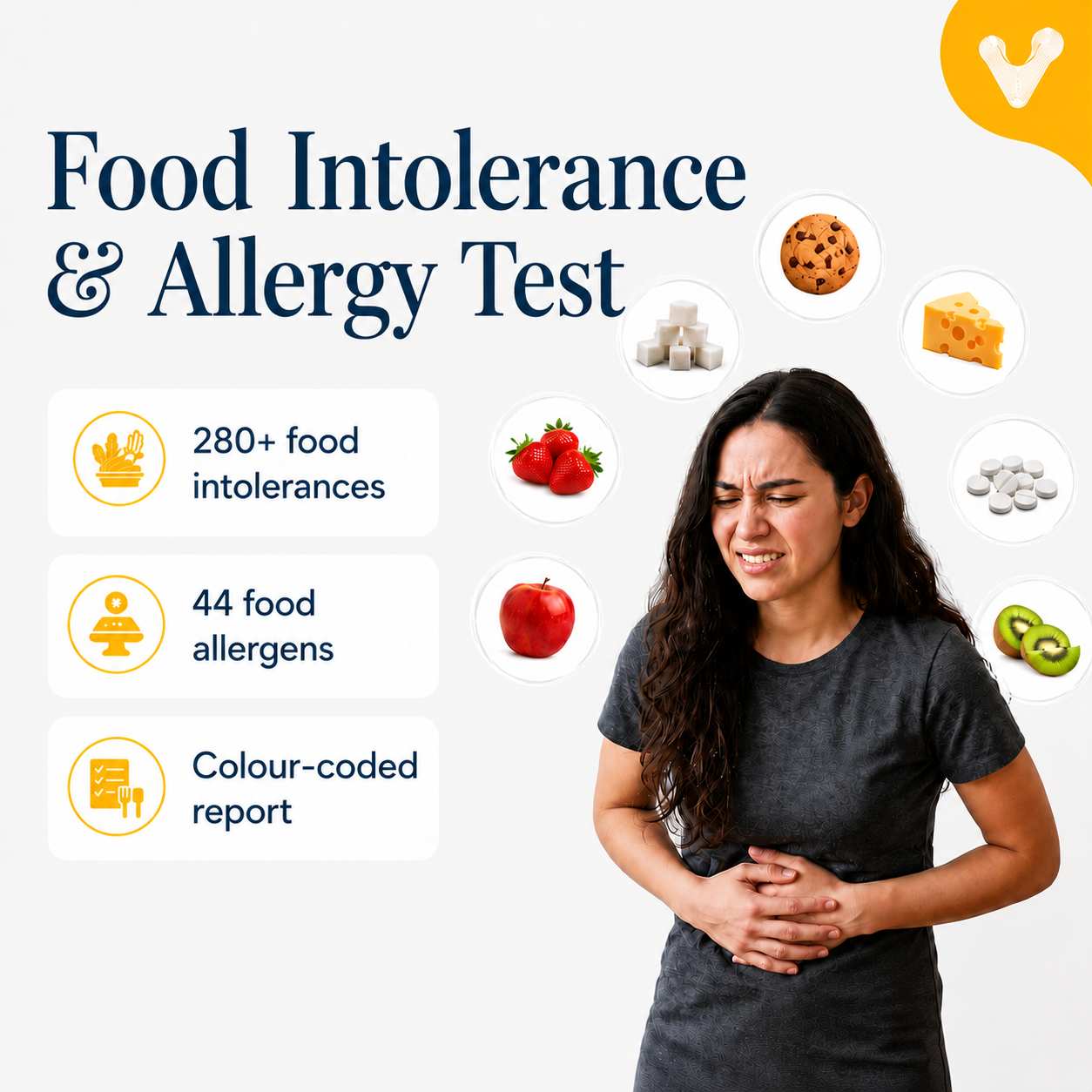
For understanding bloating, indigestion or general gut health, Comprehensive Food Intolerance Test with more than 280 parameters is best for you.
Which test should I do If I suffer severe health conditions, like rashes, breathing difficulty, Sinus, sneezing, headaches, fatigue, brain fog, eczema or unexplained inflammation?
Inhalant allergy Test (also called Respiratory Allergy Test) is ideal to understand upto 44 air borne allergens like pollen dust etc. For a more extended understanding, Molecular Allergy test with 295 allergens is best.
Which test should I do if i do not know the actual cause behind my allergic reactions, which can be either Food Allergy or Air borne allergy or both?
Valeo Comprehensive Allergy Package with 88 parameters is combination of Food Allergy and Air borne allergy which is best allergy test to evaluate unknown cause.


