

Sexual Health in UAE: Common Concerns, Prevention Tips & When to Seek Medical Advice
You've noticed something wasn't quite right, told yourself it would probably clear up on its own, and then just... didn't mention it. Not to a partner, not to a doctor, not even to a search bar you'd actually trust. If that sounds familiar, you're not alone. Sexual health UAE conversations are only just starting to become more open, and that gap between curiosity and action is exactly where most preventable problems start.
The good news is protecting your sexual wellness UAE-wide doesn't require an awkward waiting room or a conversation you've been dreading. It starts with understanding what's normal, what's worth checking, and how private, judgment-free testing actually works.
Why Is Sexual Health Still a Taboo Topic in the UAE?
Sexual health carries a level of stigma here that doesn't match how common these concerns actually are. Reliable, population-wide data on STIs is genuinely hard to come by, partly because so many cases are handled quietly through private clinics rather than reported publicly. That's a big part of why sexual health awareness UAE campaigns have struggled to gain traction — the silence doesn't mean the risk isn't real, it just means fewer people talk about it.
Globally, the World Health Organization estimates that four curable STIs alone — chlamydia, gonorrhoea, syphilis, and trichomoniasis — cause more than a million new infections every single day. Stigma doesn't reduce that number, it just delays diagnosis, which is exactly why sexual health UAE data remains so limited compared to other regions.
What Are the Most Common Sexual Health Concerns in the UAE?
Most people bring the same handful of concerns to a sexual health clinic UAE visit once they finally do ask:
Undiagnosed infections – Chlamydia, gonorrhoea, and trichomoniasis often cause no symptoms early on, which is exactly why they go unnoticed.
Delayed HIV and hepatitis screening – Two of the infections people worry about most, yet test for least.
Symptoms mistaken for something else – Itching or discharge often gets blamed on hygiene products instead of getting checked.
Uncertainty after a new relationship – One of the most common, and most avoided, reasons people consider testing.
Fertility worries – Left untreated, some infections affect fertility later, a bigger long-term concern than most realize.
Recognizing these patterns early is exactly what better sexual health awareness UAE efforts are trying to encourage.
How Can You Prevent STIs and Protect Your Sexual Health?
Prevention is less about one big decision and more about a few consistent habits:
Use protection consistently, not just with new partners.
Get tested between partners, even if nothing feels wrong — absence of symptoms isn't absence of infection.
Talk to partners directly about testing history first.
Avoid sharing personal items like razors or needles.
Stay current on vaccinations where relevant, such as HPV.
Treat routine testing as maintenance, not an emergency response.
These habits are the foundation of long-term sexual wellness UAE doctors recommend, as sexual health awareness UAE initiatives slowly shift people away from "test only when something's wrong."
When Should You Get an STD Test?
A few situations make getting tested a clear priority:
A new relationship, or a recent change in relationship status.
Any new or unusual symptoms, even mild ones.
A previous partner informing you of a diagnosis.
It's simply been a while since your last check.
You and a partner are planning to stop using protection.
That's exactly the situation STI testing UAE guidelines are designed for. If you'd rather talk to someone in person first, a sexual health clinic UAE visit is always an option too. For a fuller breakdown, see testing frequency by age, relationship status, and risk factors.
What Does an STD Test Involve?
This is usually where hesitation creeps in — people assume it's more invasive than it is. In reality, an STD test typically involves:
A blood sample, for infections like HIV, syphilis, and hepatitis B or C.
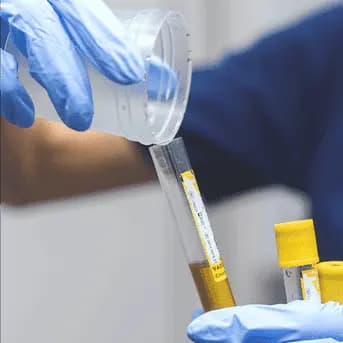
A urine sample, commonly used for chlamydia and gonorrhoea.
A swab test, used when symptoms point to a specific concern.
None of this requires a hospital visit, which is exactly what makes modern STI testing UAE services so much less intimidating. A private, at-home test can cover the same range of infections using medical-grade kits sent to the same certified labs as in-clinic testing.
Where Can You Get Confidential Sexual Health Testing in the UAE?
The real barrier usually isn't the test itself, but the idea of a waiting room where someone might recognize you. A private sexual health clinic UAE visit isn't your only choice anymore — STI testing UAE providers increasingly offer at-home collection, with results delivered discreetly.
That's exactly what sexual health UAE residents have been asking for: it removes the two biggest reasons people delay testing, time and exposure, without compromising accuracy — and it's quietly become the standard for sexual wellness UAE clinics now build around.
Conclusion
Sexual health UAE support doesn't have to wait for a symptom to force the issue. If you're unsure where to start, the simplest step is talking to a doctor rather than guessing. Valeo Health offers private, DHA-licensed STD testing at home across the UAE, so you can get clear answers on your own terms, then let a doctor guide you on what comes next.
Medically Reviewed By: Dr. Rayan Mohammed, General Practitioner at Valeo Health
Reviewed for medical accuracy, safety guidelines, and healthcare recommendations.