

How Often Should You Get a Lipid Profile Test? Expert Recommendations for Different Age Groups
A lipid profile test is a vital component of preventive healthcare, measuring the levels of various fats (lipids) in your blood, such as cholesterol and triglycerides. Regular testing plays a crucial role in identifying potential health risks—especially cardiovascular diseases—before they develop into serious issues.
But how often should you get a lipid profile test in Dubai or anywhere else? The ideal frequency depends on several factors, including your age, medical history, and lifestyle choices. Staying proactive with your health can make all the difference!
In this blog, we’ll walk through expert recommendations for lipid testing, focusing on how often you should get checked at different stages of life. We’ll also discuss insights from Valeo Health, which emphasizes the importance of personalized healthcare, especially when it comes to heart health.
Understanding About Lipid Profile Test
If you're scheduling a lipid profile test for the first time, it’s important to understand what the test involves and why it matters. This test measures four key components that provide a comprehensive picture of your heart health:
1. Total Cholesterol – Overall cholesterol level in the blood.
2. Low-Density Lipoprotein (LDL) – Known as "bad cholesterol," high LDL levels increase the risk of heart disease.
3. High-Density Lipoprotein (HDL) - "Good cholesterol" that helps remove excess cholesterol from the bloodstream.
4. Triglycerides – A type of fat linked to heart disease, especially when present at elevated levels.
These all components provide valuable insight into your cardiovascular health, allowing you to take early action if necessary, such as medication or other relevant tests.
Expert Recommendations: How Often Should You Get Tested?
Healthcare experts, including Valeo Health, recommend regular lipid testing, but the frequency varies based on factors such as age, existing conditions, and lifestyle risks.
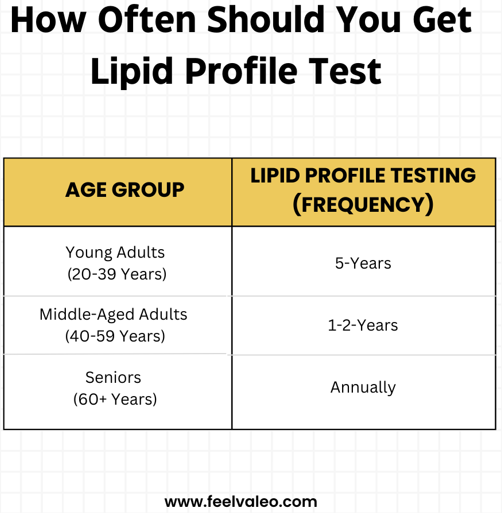
Let’s explore the guidelines for different age groups in detail.
1. Lipid Profile Testing in Young Adults (20-39 Years)
Frequency: Every 5 years
Young adults should begin testing around the age of 20, even if they feel healthy. Early testing is essential for identifying any genetic predisposition to high cholesterol or cardiovascular issues.
● At-risk individuals (e.g., those with family history of heart disease or obesity) may require more frequent testing, every 2 to 3 years.
● If the test reveals high cholesterol or triglyceride levels, your doctor may recommend changes in diet and lifestyle, along with more frequent follow-ups.
Why It Matters: Early detection can help prevent long-term complications like heart attacks or strokes later in life.
2. Lipid Profile Testing for Middle-Aged Adults (40-59 Years)
Frequency: Every 1-2 years
At this stage, the risk of cardiovascular disease starts to increase. If your previous tests showed normal results, you can typically get checked every 1 to 2 years. However, individuals with elevated cholesterol levels or other health risks, such as high blood pressure or diabetes, should have lipid profiles tested annually.
● If lifestyle interventions don't improve cholesterol levels, Valeo Health suggests consulting with doctors to explore medication options, such as statins.
● Regular testing can also help track the effectiveness of any treatments or lifestyle changes.
Why It Matters: Cardiovascular issues are more likely to develop at this age, and timely lipid tests are crucial for managing risks before they become serious.
3. Lipid Profile Testing for Seniors (60+ Years)
Frequency: Annually
Older adults face a higher risk of heart disease, making annual lipid profile testing highly recommended for this age group. Many seniors also manage other health conditions, such as hypertension or diabetes, which further increase the need for regular monitoring. Frequent testing helps track changes in cholesterol levels, ensuring timely adjustments to treatment plans and reducing the risk of complications.
● If a senior has previously been diagnosed with heart disease, their doctor may recommend more frequent testing to monitor cholesterol levels closely.
● Valeo Health emphasizes that seniors should focus not only on total cholesterol but also on maintaining higher levels of HDL to protect against cardiovascular events.
Why It Matters: As people age, their body’s ability to regulate cholesterol declines, making regular monitoring even more critical to prevent life-threatening events.
Living in the UAE and searching for a reliable lipid profile test in Dubai? Or perhaps you need other tests like a CBC, Food Intolerance Test, or STD at-home test in Dubai?
Look no further—Valeo Health offers a comprehensive range of at-home blood and non-blood testing services, along with various supplements and IV drips to support your wellness.
To schedule your test, visit www.feelvaleo.com and experience healthcare tailored to your convenience!
Special Considerations: Who Needs More Frequent Testing?
While the above guidelines provide general recommendations, certain individuals should undergo lipid testing more frequently:
● People with a family history of heart disease – Testing every 1-2 years is recommended, starting from an earlier age.
● Individuals with diabetes or high blood pressure – These conditions increase the risk of heart disease, requiring annual tests.
● Obese individuals – Higher cholesterol levels are common in those with obesity, so tests every 1-2 years are advised.
● Smokers – Smoking affects cholesterol levels and heart health, necessitating more frequent monitoring.
Valeo Health encourages you to consult with a healthcare provider to assess your personal risk factors and determine the ideal testing frequency for your specific needs—always be open about your health to receive the best care!
Quick Updates About Preparing for a Lipid Profile Test
● Fasting: Most doctors recommend fasting for 9-12 hours before the test, as eating can temporarily raise triglyceride levels.
● Hydration: Drink water before the test to stay hydrated, but avoid alcohol for at least 24 hours.
● Medication Management: If you’re on cholesterol-lowering medication, follow your doctor’s advice regarding your dosing schedule before the test.
The testing process is quick, with results often available within a day. If your cholesterol levels are elevated, it’s important to take prompt action through lifestyle changes such as diet and exercise, and medication if necessary. However, consulting your doctor after receiving the results is highly recommended to develop a personalized care plan.
5 Major Lifestyle Tips to Maintain Healthy Cholesterol Levels
While regular testing is essential for everyone, maintaining healthy cholesterol levels through lifestyle changes is equally important. Here are five key tips you should never overlook:
1. Eat a Heart-Healthy Diet: Focus on fruits, vegetables, whole grains, and healthy fats like those in nuts and olive oil.
2. Exercise Regularly: Aim for at least 30 minutes of moderate exercise, such as walking, five days a week.
3. Quit Smoking: Smoking lowers HDL (good cholesterol) and raises the risk of heart disease.
4. Limit Alcohol: Excess alcohol consumption can raise triglyceride levels.
5. Manage Stress: Chronic stress can negatively affect heart health and cholesterol levels.
Why Regular Lipid Profile Testing Is Important
Lipid profile tests in Dubai or elsewhere, are essential for identifying potential health risks, particularly cardiovascular issues. Even if you feel healthy, cholesterol levels can remain elevated without any noticeable symptoms.
High cholesterol increases the risk of serious complications like heart disease and stroke, making regular testing crucial—and consulting a doctor even more important.
Valeo Health emphasizes the importance of early detection and personalized care to prevent complications. Our healthcare experts recommend setting reminders for routine tests to help you stay on track and prioritize your well-being.
Summary
How often you should get a lipid profile test depends on your age, medical history, and risk factors. For young adults, testing every 5 years may suffice, but for middle-aged and older adults, more frequent monitoring is essential. People with existing conditions or a family history of heart disease may need tests annually or even more often.
At Valeo Health, we encourage proactive healthcare through personalized lipid testing schedules, and guide you about other relevant tests—like CBC, food allergy, food intolerance or std at-home tests in Dubai.
However, by taking care of your cholesterol levels is an investment in your long-term health, helping you avoid preventable complications. Regular lipid profile testing, combined with healthy lifestyle choices, is the key to a healthier heart and a longer life.
Stay informed, get tested regularly with us at www.feelvaleo.com, and take charge of your health—because prevention is always better than cure.