



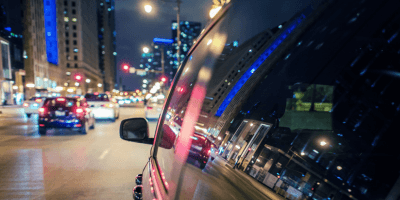
Exposure to bright artificial light could increase stroke risk
In a groundbreaking study published in the American Stroke Association's peer-reviewed journal, Stroke, researchers have found a significant link between continuous exposure to bright, artificial outdoor light at night and an increased risk of developing conditions that affect blood flow to the brain, including stroke.
The study, which analyzed data from 28,302 adults living in China over a six-year period, discovered that individuals with the highest levels of exposure to outdoor light at night had a 43% higher risk of developing cerebrovascular disease compared to those with the lowest exposure levels.
According to the study's authors, about 80% of the world's population currently lives in light-polluted environments due to the excessive use of artificial light. This research is one of the first to explore the relationship between light pollution at night and its potential impact on brain health and stroke risk.
The study also found that exposure to air pollutants, such as particulate matter (PM2.5 and PM10) and nitrogen oxide, was associated with an increased risk of developing cerebrovascular disease. Participants with the highest levels of exposure to PM2.5, PM10, and nitrogen oxide had a 41%, 50%, and 31% higher risk, respectively, compared to those with the lowest exposure levels.
Jian-Bing Wang, Ph.D., one of the study's corresponding authors, emphasized the importance of considering environmental factors in efforts to reduce the global burden of cardiovascular disease. He advised people, particularly those living in urban areas, to consider reducing their exposure to outdoor artificial light at night to protect themselves from its potentially harmful impact.
Continuous exposure to artificial light sources, such as fluorescent, incandescent, and LED lights, can suppress the production of melatonin, a hormone that promotes sleep. This disruption in the body's 24-hour internal clock can lead to poor sleep, which has been linked to worse cardiovascular health over time.
The study's authors call for the development of more effective policies and prevention strategies to reduce the burden of disease from environmental factors, such as light and air pollution, especially for those living in densely populated and polluted areas around the world.
While the study has some limitations, such as not accounting for indoor lighting products and shading measWhile the study has some limitations, such as not accounting for indoor lighting products and shading measures and focusing on a population from a single city in China, its findings highlight the need for further research on the impact of light pollution on human health.ues, and focusing on a population from a single city in China, its findings highlight the need for further research on the impact of light pollution on human health. Larger prospective studies are required to confirm these findings and develop appropriate interventions to mitigate the risks associated with exposure to bright, artificial outdoor light at night.
This information is based on a study published by the American Heart Association on March 25, 2024, linking outdoor light pollution to an increased risk of stroke.