



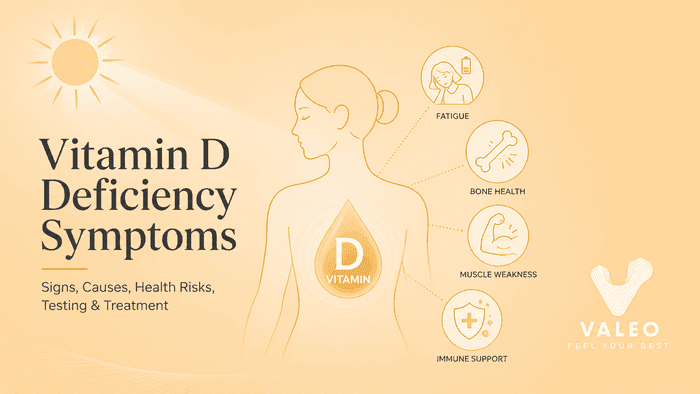
Vitamin D Deficiency Symptoms: Signs, Causes, Health Risks, Testing, and Treatment
Vitamin D plays an important role in bone strength, muscle function, immune support, and overall wellness. When your body does not get enough vitamin D, you may start feeling tired, weak, low in energy, or experience body aches without clearly knowing why.
Many people ignore early signs because they look like normal stress, poor sleep, or a busy lifestyle. But ongoing vitamin d deficiency symptoms should not be taken lightly, especially if they affect your daily routine, mood, bones, muscles, or immunity.
A simple blood test can help confirm your vitamin D level. From there, your doctor may suggest sunlight exposure, diet changes, supplements, or in some cases, options like Vitamin D injection & hair vitamins depending on your symptoms and test results.
What Is Vitamin D Deficiency?
Vitamin D deficiency means your body has lower than needed vitamin D levels. Vitamin D helps your body absorb calcium and supports healthy bones, muscles, nerves, and the immune system. Low vitamin D can lead to weak bones, muscle pain, and a higher risk of bone-related problems.
Unlike some nutrients, vitamin D is made by the body when your skin gets sunlight. You can also get it from foods and supplements, but many people still do not get enough.
This is common in people who:
- Spend most of the day indoors
- Use sunscreen regularly
- Wear covered clothing
- Have darker skin tone
- Have poor dietary intake
- Have digestive conditions that affect absorption
- Are overweight or older in age
In places where people work long office hours or avoid direct sun because of heat, low vitamin D can be very common.
Common Vitamin D Deficiency Symptoms
The most common vitamin d deficiency symptoms can be mild at first. Some people may not notice anything until the deficiency becomes more serious.
Vitamin D Deficiency Symptoms can range from mild and easy to miss to more serious signs that affect daily life. Many people with mild deficiency may not notice any symptoms at all, while others may experience ongoing fatigue, frequent illness, bone and muscle pain, mood changes, slow wound healing, or general weakness.
If vitamin D levels stay low for a long time, they can affect calcium absorption and may lead to weaker bones.
Common signs may include:
- Constant tiredness or low energy
- Bone pain or tenderness
- Muscle weakness
- Body aches
- Back pain
- Mood changes or low mood
- Frequent illness
- Slow wound healing
- Hair fall or thinning
- Poor sleep quality
- General weakness
For example, someone may feel tired even after sleeping well, struggle during workouts, or feel body pain without any injury. Another person may notice frequent flu-like illness or slow recovery after minor sickness.
These symptoms can happen for many reasons, so testing is important instead of guessing.
Early Vitamin D Deficiency Symptoms You Should Not Ignore
Early vitamin d deficiency symptoms often feel like small daily problems. You may think you are just tired, stressed, or not eating well.
Some early warning signs include:
1. Fatigue and Low Energy
Feeling tired all the time is one of the most common complaints. You may wake up feeling heavy, lose focus at work, or feel drained even after light activity.
2. Muscle Weakness
Vitamin D supports muscle function. Low levels may make your legs feel weak, reduce workout performance, or make climbing stairs feel harder than usual.
3. Bone and Back Pain
Because vitamin D helps calcium absorption, low levels can affect bone strength. Some people feel lower back pain, bone tenderness, or body aches.
4. Low Mood
Low vitamin D may be linked with mood changes in some people. If you feel low, irritated, or mentally tired along with physical weakness, it may be worth checking your vitamin D level.
5. Hair Fall
Hair fall can be related to stress, hormones, iron deficiency, thyroid issues, and other causes. However, low vitamin D may also play a role in some cases. This is why people searching for Vitamin D injection & hair vitamins often need a proper blood test before starting treatment.
What Causes Vitamin D Deficiency?
Vitamin D deficiency can happen for several reasons. In many cases, it is not due to one single cause but a mix of lifestyle, diet, and health factors.
Limited Sun Exposure
Your body needs sunlight to make vitamin D. If you work indoors, avoid the sun, or live in a hot climate where outdoor activity is limited, your levels may drop over time.
Poor Diet
Few foods naturally contain vitamin D. Fatty fish, egg yolks, fortified milk, and fortified cereals can help, but diet alone may not be enough for everyone.
Skin Tone
People with darker skin have more melanin, which can reduce the skin’s ability to make vitamin D from sunlight.
Digestive or Absorption Issues
Some medical conditions can make it harder for the body to absorb vitamin D from food or supplements.
Age
As people get older, the skin becomes less efficient at making vitamin D. Older adults may also spend less time outdoors.
Body Weight
Vitamin D can get stored in body fat, which may reduce its availability in the bloodstream. People with higher body fat may need medical guidance for proper dosing.
Health Risks of Untreated Vitamin D Deficiency
Ignoring vitamin D deficiency for a long time can affect your health. Severe or prolonged deficiency may contribute to weak bones, osteomalacia in adults, osteoporosis, and a higher risk of fractures. In children, severe deficiency can cause rickets.
Possible health risks include:
- Weak bones
- Bone pain
- Muscle weakness
- Higher fracture risk
- Poor calcium absorption
- Reduced physical performance
- Delayed recovery
- Increased risk of osteoporosis
Vitamin D also supports the immune system, nerves, and muscles, so low levels may affect daily wellness in different ways.
Vitamin D Deficiency Symptoms and Hair Fall
Hair fall is a common concern, especially when it happens suddenly or continues for months. Many people start taking hair supplements without checking the root cause.
Low vitamin D may be one possible factor, but it is rarely the only reason. Hair fall can also be linked with:
- Iron deficiency
- Low B12
- Thyroid imbalance
- Stress
- Hormonal changes
- Poor protein intake
- Scalp conditions
This is where Vitamin D injection & hair vitamins may be discussed with a healthcare provider. The right plan should depend on blood test results, symptoms, and your overall health.
For example, if someone has low vitamin D and hair fall along with fatigue, the doctor may recommend vitamin D correction plus selected hair nutrients. But taking random high-dose supplements without testing can be unsafe.
How Is Vitamin D Deficiency Tested?
The most accurate way to check vitamin D status is usually a 25-hydroxy vitamin D blood test. This test measures the level of vitamin D in your blood and helps your doctor decide whether you need treatment.
Testing may be useful if you have:
- Ongoing fatigue
- Bone pain
- Muscle weakness
- Frequent illness
- Hair fall with other symptoms
- Low sunlight exposure
- History of low vitamin D
- Bone health concerns
- Pregnancy or postnatal weakness
- Older age
Routine vitamin D testing is not required for everyone, so it is best to follow medical advice based on your symptoms and risk factors.
Treatment for Vitamin D Deficiency
Treatment depends on how low your vitamin D level is and whether you have symptoms. Your doctor may suggest one or more of the following options.
1. Safe Sunlight Exposure
Short, regular sunlight exposure may help your body make vitamin D. The right amount depends on your skin type, location, time of day, and health condition.
Practical tip: Try morning sunlight when possible and avoid burning your skin.
2. Vitamin D-Rich Foods
Add vitamin D-supporting foods to your diet, such as:
- Salmon
- Tuna
- Sardines
- Egg yolks
- Fortified milk
- Fortified cereals
- Mushrooms exposed to UV light
Food helps, but if your level is very low, diet alone may not correct it quickly.
3. Vitamin D Supplements
Doctors may suggest tablets, capsules, drops, or weekly doses depending on your blood level. Do not take high doses without medical advice, because too much vitamin D can be harmful. High intake may cause side effects such as vomiting, weakness, confusion, heart rhythm problems, kidney stones, or kidney damage.
4. Vitamin D Injection
In some cases, a doctor may recommend vitamin D injections, especially if levels are very low, absorption is poor, or the patient struggles with regular oral supplements.
People often search for Vitamin D injection & hair vitamins when they feel tired and also notice hair fall. This can be helpful only when recommended after proper assessment.
5. Follow-Up Testing
After treatment, follow-up testing may be needed to check whether your vitamin D level has improved. This helps avoid both under-treatment and over-supplementation.
Practical Tips to Prevent Vitamin D Deficiency
You can reduce your risk by building small habits into your routine.
- Get safe sunlight exposure regularly
- Eat vitamin D-rich foods
- Check levels if symptoms continue
- Avoid self-prescribing high doses
- Discuss supplements with a doctor
- Combine vitamin D with overall nutrition
- Stay active with weight-bearing exercise
- Recheck levels after treatment if advised
For example, an office worker who spends 9 hours indoors may benefit from a morning walk, better diet, and testing if fatigue or body aches continue.
When Should You See a Doctor?
You should speak to a healthcare provider if you have ongoing vitamin d deficiency symptoms such as fatigue, muscle weakness, bone pain, back pain, frequent illness, or unexplained hair fall.
Medical advice is especially important if you are pregnant, older, have kidney disease, have digestive problems, or already take multiple supplements.
A doctor can check your vitamin D level and may also test calcium, B12, iron, thyroid, and other markers if your symptoms suggest more than one issue.
Final Thoughts
Vitamin D deficiency can affect your bones, muscles, energy, mood, immunity, and overall quality of life. The symptoms can be easy to ignore, but they should not be left untreated if they continue.
The safest approach is simple: notice your symptoms, get tested when needed, and follow a doctor-guided treatment plan. Whether your plan includes sunlight, diet, supplements, Vitamin D injection & hair vitamins, or follow-up testing, the goal should be correcting the deficiency safely and supporting long-term health.
If you are experiencing ongoing tiredness, muscle weakness, bone pain, hair fall, or you suspect low vitamin D levels, you can book a vitamin D test with Valeo Health for a clear medical assessment and personalized guidance. Valeo Health doctors can also help you choose the most suitable treatment plan, whether it includes supplements, Vitamin D, or regular follow-up care.
FAQs
1. What are the most common vitamin D deficiency symptoms?
Common symptoms include tiredness, low energy, muscle weakness, bone pain, back pain, body aches, low mood, frequent illness, slow wound healing, and hair fall. Some people may have no clear symptoms, so a blood test is the best way to confirm low levels.
2. Can low vitamin D cause hair fall?
Low vitamin D may contribute to hair fall in some people, but it is not the only cause. Iron deficiency, thyroid issues, stress, hormones, and poor diet may also be involved. A doctor may recommend testing before suggesting hair vitamins or vitamin D treatment.
3. How do I know if my vitamin D is low?
You cannot confirm low vitamin D based on symptoms alone. A 25-hydroxy vitamin D blood test is commonly used to measure vitamin D levels and guide treatment.
4. Is vitamin D injection better than tablets?
Vitamin D injections may be suitable for some people, but tablets or capsules work well for many others. The best option depends on your test results, absorption, symptoms, and doctor’s advice.
5. Can I take vitamin D supplements without testing?
Small daily doses may be safe for many people, but high-dose vitamin D should not be taken without medical guidance. Too much vitamin D can cause health problems, including kidney issues.
6. How long does it take to improve vitamin D levels?
It depends on how low your level is, your treatment dose, absorption, lifestyle, and consistency. Some people feel improvement within weeks, while others need longer and may require follow-up testing.