



How to Increase Longevity: 5 Healthy Aging Habits That Actually Work in Midlife
Your twenties get all the hype. Your sixties get all the health advice. Midlife, the years in between, barely gets mentioned, even though it might matter more than either. What you do with your body and brain between roughly 40 and 60 quietly decides how much longevity and healthy aging you actually get to enjoy later. Most age-related diseases are seeded years earlier by habits that seemed small at the time. The good news: a handful of unglamorous, repeatable habits move the needle more than any supplement or trend.
What Really Determines How Well You Age?
Genetics set the starting point. Everything after that comes down to what you actually do, day after day.
Healthy lifestyle habits, not willpower in short bursts, are what actually shape how you age.
A single healthy month won't undo a decade of neglect.
No anti-aging product on a shelf works as well as the basics done consistently.
Think of midlife less as a deadline and more as the window where prevention still pays off.
Does Exercise in Midlife Actually Extend Your Life?
Cardio-respiratory fitness is one of the strongest predictors of staying active and mobile later in life.
Interval training (short bursts of effort followed by rest) builds fitness faster than steady, moderate exercise alone.
Strength training matters just as much: losing muscle mass raises the risk of frailty, and resistance work helps release inflammation-calming myokines.
Walking around 7,000 steps a day is linked to a 47% lower risk of dying from any cause compared to walking just 2,000, according to a major 2025 review in The Lancet Public Health.
A short morning workout is often the easiest place to start, and it asks for consistency, the same quiet consistency behind most healthy aging.
Can Gut Health Influence Healthy Aging?
Your gut is home to trillions of organisms that shape inflammation, immunity, and how your body handles stress.
A more diverse, unique gut microbiome has been linked to better mobility and longer lifespans in older adults.
Fermented foods (yogurt, kimchi, kefir, sauerkraut) feed beneficial gut bacteria and may help keep that balance in check.
Fiber-rich foods like beans, vegetables, and whole grains support the same goal.
A gut microbiome test can show which bacteria are helping or working against you.
Gut health isn't a trend here, it's one of the more consistent threads in aging research.
Why Is Staying Social Linked to Longevity?
Most people don't think of a phone call or a walk with a friend as a health habit, but longevity researchers increasingly do.
Loneliness and social isolation carry health risks comparable to smoking up to 15 cigarettes a day, yet they rarely make anyone's list of habits to fix.
Midlife schedules make it easy to let friendships slide.
Pairing errands or workouts with a friend turns two priorities into one, a walk or grocery run can double as both a task and a check-in.
It sounds small, but consistent social contact is repeatedly linked to better long-term health outcomes, including a lower risk of cognitive decline.
Is the Shingles Vaccine Worth It for Long-Term Health?
Most people have heard of shingles, but few know what actually causes it, or that the vaccine's benefits reach further than shingles itself.
What it is:
Shingles is caused by the same virus behind chickenpox.
Once you've had chickenpox, that virus stays dormant in your nerves and can reactivate later in life as a painful, blistering rash.
Why it's needed:
Risk rises sharply with age, which is why the vaccine is typically recommended from age 50 onward.
Beyond the rash itself, shingles can lead to long-term nerve pain and other complications, especially in older adults.
How it helps:
A Brown University study found a 24% lower risk of a dementia diagnosis over four years in people who received the vaccine.
Researchers suspect it works by reducing infections that would otherwise trigger inflammation in the brain and body.
It's a one-time action with a benefit that compounds for years, which makes it one of the easier items on this list.
How Much Does Sleep Consistency Affect Aging?
Getting enough sleep matters, but a 2024 study published in the journal Sleep found that sleep regularity, going to bed and waking up at roughly the same time daily, predicted mortality risk even more strongly than sleep duration alone.
Aim for a consistent bedtime before chasing a specific number of hours.
Cut caffeine several hours before bed, it stays in your system longer than people realize.
Dim the lights and step away from screens in the 30 minutes before bed to help your body wind down.
Avoid heavy meals late at night, digestion competes with the deep sleep your body needs to recover.
If constant tiredness feels like more than just poor sleep, a blood test for fatigue can help rule out an underlying cause.
What Are the Best Anti Aging Habits You Can Actually Stick To?
The habits that hold up over decades are rarely dramatic:
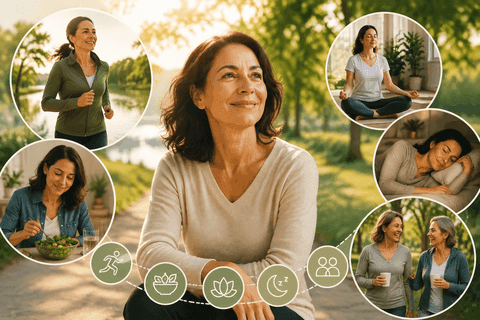
Move most days, mixing intervals with strength work.
Eat protein at every meal and include fermented, fiber-rich foods.
Keep at least one consistent social habit each week.
Protect your sleep schedule as strictly as any meeting.
Stay current on vaccines that carry longer-term protection.
These are the healthy lifestyle habits that actually compound, unlike most anti aging shortcuts.
Conclusion
Aging well isn't decided by one dramatic change; it's built from healthy lifestyle habits repeated for years, the same quiet habits behind most longevity. Move consistently, protect your gut health, stay socially connected, sleep on a schedule, and don't skip preventive steps like vaccines. If you want a clearer picture of where you actually stand, the best next step is a conversation with a Valeo Health Coach, who can help you figure out which biomarkers actually matter for your healthy aging, instead of guessing alone.
Medically Reviewed By: Dr. Rayan Mohammed, General Practitioner at Valeo Health
Reviewed for medical accuracy, safety guidelines, and healthcare recommendations.