
Psyllium Husk: Benefits, Uses, How It Works & How to Take It?
Quick Summary : What Is Psyllium Husk?
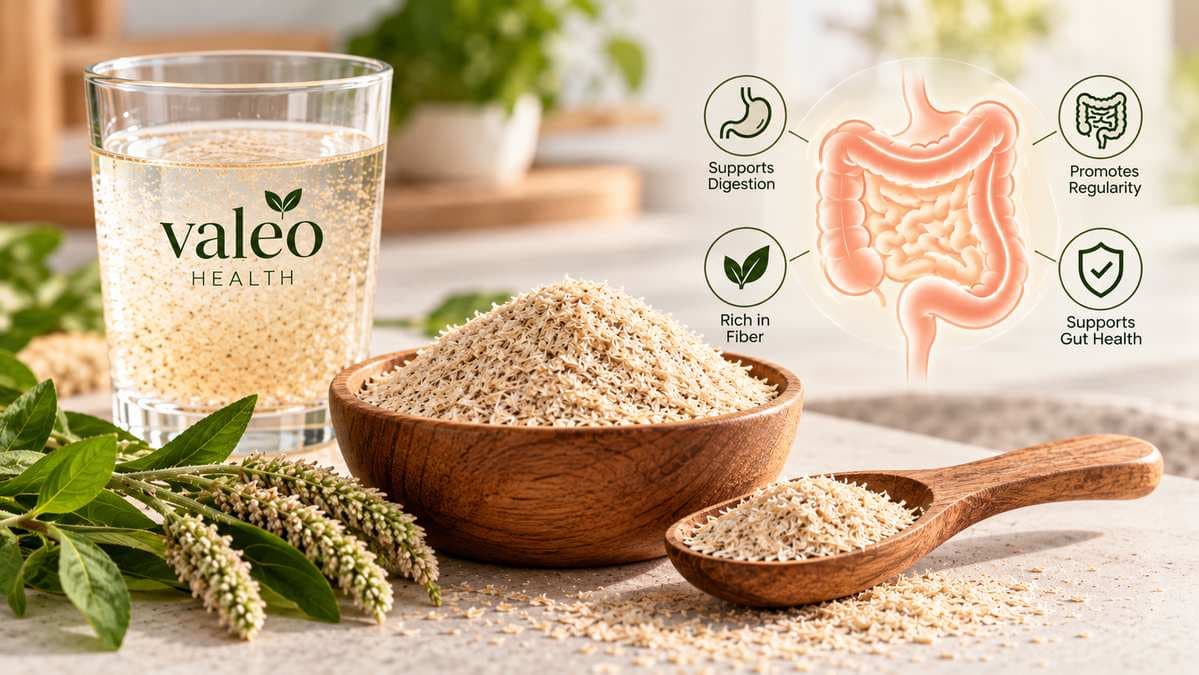
Psyllium husk is a plant-derived source of soluble dietary fiber made from the outer coating of Plantago ovata seeds. When mixed with liquid, psyllium absorbs water and forms a gel-like substance that increases stool bulk and can help support regular bowel movements.
It is commonly used as a fiber supplement, particularly by people who do not get enough dietary fiber from food. Research has also examined psyllium for areas such as cholesterol and blood-glucose management, although these effects should not be considered a replacement for medical treatment.
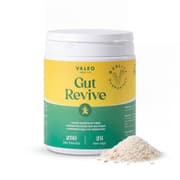
For people looking for a convenient daily fiber option, Valeo Gut Revive contains psyllium husk fiber and can be considered as part of a broader digestive-health routine.
Key Takeaways
Psyllium husk is a soluble, water-absorbing dietary fiber.
It can help increase daily fiber intake and support bowel regularity, particularly in people with constipation.
Psyllium needs to be taken with sufficient liquid because it expands when it absorbs water.
It is different from a "detox" or "gut cleanse." Psyllium is a source of fiber that works with the normal digestive process.
Whole foods such as vegetables, fruits, legumes, whole grains, nuts and seeds should remain important sources of dietary fiber.
Psyllium has also been studied for effects on cholesterol and blood-glucose measures, but these findings do not mean it should replace prescribed treatment.
Anyone taking regular medication or experiencing persistent digestive symptoms should speak with a healthcare professional before making significant changes to their fiber intake.
Table of Contents
What is psyllium husk?
How does psyllium husk work?
What are the benefits of psyllium husk?
Psyllium husk and digestive health
Psyllium husk and the gut microbiome
How much fiber do you need?
How to take psyllium husk
When is the best time to take psyllium husk?
Psyllium husk powder vs capsules
Psyllium husk vs other fiber sources
Can psyllium help with constipation?
Can psyllium cause bloating?
Psyllium husk and medications
Who should be cautious with psyllium?
Psyllium husk and cholesterol
Psyllium husk and blood sugar
Psyllium husk and digestive health in Dubai
Psyllium husk and Valeo Gut Revive
How to build a daily digestive-health routine
Frequently asked questions
Sources and references
What Is Psyllium Husk?
Psyllium husk is the outer covering of the seeds of Plantago ovata, a plant that provides a concentrated source of dietary fiber.
It is particularly rich in soluble and viscous fiber. When psyllium comes into contact with liquid, it absorbs water and expands, creating a gel-like material.
This water-holding property is central to how psyllium works in the digestive tract.
Psyllium is available in several forms, including:
Whole psyllium husk
Psyllium husk powder
Granules
Capsules
Other prepared fiber products
The concentration and recommended serving can vary between products, so the instructions on the individual product should always be followed.
MedlinePlus describes psyllium as a bulk-forming fiber used for constipation because it absorbs liquid, swells and forms a bulky stool that is easier to pass.
How Does Psyllium Husk Work?
The simplest way to understand psyllium is:
Psyllium + water → swollen, gel-forming fiber
Once consumed with sufficient liquid, psyllium absorbs water and becomes more viscous.
This can increase stool bulk and influence stool consistency, which is why psyllium is commonly used to support bowel regularity.
A systematic review and meta-analysis of 16 randomized controlled trials involving 1,251 adults with chronic constipation found that fiber supplementation improved stool frequency and consistency overall, with psyllium among the fiber types showing significant effects.
What psyllium does not do
Psyllium should not be described as a way to "flush toxins" from the body.
The digestive system already has natural processes for digestion and elimination. Psyllium is better understood as a dietary fiber that absorbs water and changes the physical characteristics of intestinal contents.
That distinction matters when comparing psyllium with products marketed as detoxes or restrictive gut cleanses.
What Are the Benefits of Psyllium Husk?
1. It Can Help Increase Daily Fiber Intake
Fiber is an important part of a balanced diet, but getting enough from food every day can be challenging.
Good sources include:
Vegetables
Fruits
Beans
Lentils
Chickpeas
Whole grains
Nuts
Seeds
Psyllium provides another concentrated source of fiber when additional fiber is appropriate.
However, a supplement should complement rather than replace fiber-rich foods.
The Dubai Health Authority's dietary-fiber guidance also emphasizes fruits, vegetables, whole grains, legumes, seeds and nuts as food sources of dietary fiber and recommends increasing water intake alongside an increase in fiber.
2. It Supports Bowel Regularity
Psyllium absorbs water and increases stool bulk.
This is why it is commonly used as a bulk-forming fiber for constipation.
The evidence is stronger here than for many of the broader claims sometimes made about "gut health" supplements. A systematic review of randomized controlled trials found that fiber supplementation improved stool output and consistency, with psyllium demonstrating significant effects in the analysis.
That does not mean constipation always results from low fiber.
Constipation can be associated with:
Low dietary fiber
Inadequate fluid intake
Reduced physical activity
Changes in routine
Certain medications
Some medical conditions
Persistent or unexplained constipation should therefore be assessed rather than automatically treated by adding more fiber.
3. It Is a Source of Soluble Fiber
There are different types of dietary fiber, and they do not all behave in exactly the same way.
Soluble vs Insoluble Fiber
Mayo Clinic identifies psyllium among soluble-fiber sources and notes that eating a variety of fiber-rich plant foods helps provide both soluble and insoluble fiber.
4. It Can Be Part of a Gut-Health Routine
Gut health involves much more than one ingredient.
A supportive routine may include:
A varied, fiber-rich diet
Adequate hydration
Regular movement
Adequate sleep
Appropriate probiotic foods or supplements
Managing individual dietary triggers
Medical assessment when symptoms persist
Psyllium can be one part of that routine because it provides soluble dietary fiber.
For readers interested in a combined fiber and probiotic approach, Valeo Gut Revive is the main Valeo product destination for this topic.
Psyllium Husk and the Gut Microbiome
The gut microbiome is the community of microorganisms living in the digestive tract.
Dietary fiber interacts with the gut microbiome, but different types of fiber can have different effects. The amount and type of fiber, as well as individual characteristics, can influence how a person responds.
This is one reason it is better to talk about fiber diversity rather than treating every fiber supplement as interchangeable.
Psyllium is particularly notable for its ability to absorb water and form a viscous gel.
It can be included alongside other fiber sources rather than used as the only source of dietary fiber.
If someone has ongoing digestive symptoms and wants to investigate their gut microbiome, Valeo provides a Gut Microbiome Test in Dubai.
How Much Fiber Do You Need?
Fiber needs vary according to age, sex and energy requirements.
The Dubai Health Authority's dietary-fiber guidance states that children and adults up to age 50 need approximately 20–35 grams of total fiber per day, while people over 50 need approximately 21–30 grams per day.
Mayo Clinic provides age- and sex-specific recommendations based on National Academy of Medicine guidance, including 25 g/day for women aged 50 or younger and 38 g/day for men aged 50 or younger.
These numbers refer to total dietary fiber, not the amount of psyllium you should take.
A practical way to increase fiber
Instead of trying to get all your fiber from a supplement, build meals around different sources:
The DHA guide similarly recommends fruits, vegetables, whole grains, legumes, seeds and nuts as dietary fiber sources.
How to Take Psyllium Husk
The correct serving depends on the specific product, so always follow the label.
Step 1: Check the serving size
Different psyllium products have different concentrations.
Do not assume that the serving size for one product applies to another.
Step 2: Mix it with enough liquid
Psyllium needs adequate liquid to expand properly.
MedlinePlus advises mixing psyllium powder or granules with 240 mL (8 oz) of liquid immediately before use and emphasizes drinking sufficient liquid when taking it.
Step 3: Stir and drink promptly
Psyllium thickens after it comes into contact with water.
Mix it according to the product directions and consume it promptly.
Step 4: Stay hydrated
Increasing fiber intake should go hand in hand with appropriate fluid intake unless a healthcare professional has advised you to restrict fluids.
The Dubai Health Authority also recommends increasing water intake when increasing dietary fiber.
Step 5: Increase fiber gradually
If your normal diet is low in fiber, increasing it too quickly may cause:
Gas
Bloating
Abdominal discomfort
A gradual increase may make the transition easier.
When Is the Best Time to Take Psyllium Husk?
There is no single time of day that is best for everyone.
The appropriate timing depends on:
The product instructions
Your daily routine
Other supplements
Prescription medicines
Your individual health needs
Consistency and correct preparation are more important than choosing a universally "best" time.
If you take medication regularly, ask your doctor or pharmacist whether psyllium needs to be separated from your medicines.
Psyllium Husk Powder vs Capsules
Psyllium is available in different forms, and each has practical differences.
The amount of actual fiber per serving is more important than simply choosing powder or capsules.
Psyllium Husk vs Other Sources of Fiber
Psyllium should not be viewed as a replacement for a varied diet.
Which is better?
There is no universal "best" fiber source.
Psyllium is convenient and concentrated. Whole foods offer broader nutrition.
For most people, a combination of different fiber-rich foods makes more sense than relying on one isolated source.
Can Psyllium Help With Constipation?
Yes, psyllium can support bowel regularity and is one of the better-studied supplemental fibers for constipation.
A systematic review and meta-analysis of 16 randomized controlled trials found that fiber supplementation improved stool frequency and consistency in adults with chronic constipation. Psyllium was among the fiber types with significant effects.
However, persistent constipation can have causes other than insufficient fiber.
If constipation continues despite appropriate dietary and lifestyle measures, or if it occurs with concerning symptoms, seek medical advice rather than continually increasing fiber.
Can Psyllium Cause Bloating?
It can.
Any rapid increase in dietary fiber can cause temporary digestive symptoms in some people.
Possible effects include:
Gas
Bloating
Abdominal discomfort
The constipation meta-analysis found that flatulence was more common in some fiber-treatment groups than in controls.
This is one reason a gradual increase can be more comfortable.
If bloating is persistent, severe or associated with other symptoms, speak with a healthcare professional.
Psyllium Husk and Cholesterol
Psyllium has also been studied for its effect on blood lipids.
A systematic review and meta-analysis of 28 randomized controlled trials involving 1,924 participants found that psyllium supplementation significantly reduced LDL cholesterol, non-HDL cholesterol and apolipoprotein B.
A more recent 2025 systematic review and dose-response meta-analysis included 41 randomized controlled trials involving 2,049 participants and also reported significant reductions in LDL and total cholesterol. However, the researchers found substantial heterogeneity between studies, meaning the results were not identical across trials.
What does that mean in practical terms?
Psyllium may have a role as part of a heart-conscious dietary pattern, but it should not be presented as a replacement for cholesterol medication or medical treatment.
If you have high cholesterol, follow your healthcare professional's treatment plan.
Psyllium Husk and Blood Sugar
Psyllium has also been studied in relation to blood-glucose measures.
A 2024 systematic review and meta-analysis of 19 randomized controlled trials involving 962 participants reported reductions in fasting blood glucose, HbA1c and HOMA-IR with psyllium compared with placebo, although the effects varied across subgroups and study conditions.
These findings are interesting but should be interpreted carefully.
Psyllium is not a treatment for diabetes.
Anyone with diabetes or taking glucose-lowering medication should discuss significant dietary or supplement changes with their healthcare professional.
Psyllium Husk and Medications
This is an important part of using fiber supplements safely.
Psyllium may affect the absorption of some medicines. MedlinePlus specifically advises people to tell their doctor and pharmacist about prescription medicines, over-the-counter medicines, vitamins and supplements they are taking. It also lists certain medicines that should not be taken within three hours of psyllium.
If you take medication regularly, ask your doctor or pharmacist about the appropriate timing.
Do not change your prescribed medication schedule without professional advice.
Who Should Be Cautious With Psyllium?
Psyllium is widely used, but it is not appropriate for every situation.
Speak with a healthcare professional before using psyllium if you:
Have difficulty swallowing
Have symptoms suggesting an intestinal blockage
Have unexplained rectal bleeding
Have persistent abdominal pain
Have a significant change in bowel habits
Take regular medication
Have been advised to restrict fluids
Are pregnant or breastfeeding
Seek urgent medical attention if you experience severe abdominal pain, vomiting, difficulty breathing or swallowing, or significant bleeding.
MedlinePlus also advises following the product or prescription directions carefully and taking psyllium with sufficient liquid.
Psyllium Husk and Digestive Health in Dubai
Dietary fiber is relevant to everyday digestive health in the UAE as well as globally.
The Dubai Health Authority's dietary-fiber guide explains that dietary fiber supports digestive health and bowel movement and distinguishes between soluble and insoluble fiber. It also recommends obtaining fiber from foods such as fruits, vegetables, whole grains, legumes, seeds and nuts and increasing water intake alongside higher fiber intake.
This provides useful local context for people researching psyllium husk and digestive health in Dubai.
However, a fiber supplement is not a substitute for medical evaluation.
Persistent symptoms such as ongoing constipation, diarrhea, abdominal pain, unexplained weight loss, blood in the stool or major changes in bowel habits should be discussed with a healthcare professional.
Gut Health Support in Dubai
For people in Dubai who want to explore their digestive health further, Valeo Health provides healthcare and wellness services through its Dubai offering. Its Dubai platform includes gut-related services such as Gut Microbiome Test, GI-MAP, Gut Health Package and Gut Healing & Testing Protocol, alongside its daily supplements.
Psyllium Husk and Valeo Gut Revive
For readers looking for a convenient daily combination of fiber and probiotic support, Valeo Gut Revive is the main Valeo product relevant to this topic.
Valeo's current product positioning describes Gut Revive as a combination of psyllium husk fiber, prebiotic fiber and live probiotics. The product is designed as a daily supplement to complement a balanced diet and adequate water intake.
How the ingredients fit together
Gut Revive should be viewed as a supplement to a balanced diet, not as a replacement for vegetables, fruits, whole grains, legumes and other fiber-rich foods.
For the exact current serving instructions, ingredient information and suitability guidance, refer to the product page before use.
How to Build a Daily Digestive-Health Routine
Psyllium works best when it is part of a consistent lifestyle rather than the entire strategy.
1. Start with food
Include a variety of vegetables, fruits, legumes, whole grains, nuts and seeds.
2. Increase fiber gradually
If your current intake is low, make changes progressively.
3. Drink enough water
Adequate fluid is particularly important when increasing fiber or taking psyllium.
4. Include different fiber sources
Different foods provide different types and characteristics of fiber.
5. Stay physically active
Regular movement can be part of a healthy lifestyle and digestive routine.
6. Avoid unnecessary restrictive cleanses
Your digestive system does not normally require a detox program to remove waste.
7. Pay attention to persistent symptoms
Do not assume that ongoing digestive symptoms are simply caused by low fiber.
8. Use supplements appropriately
Fiber and probiotic supplements can complement a balanced diet when appropriate.
Psyllium Husk: Quick Comparison
Author & Medical Review
Author: Valeo Health Editorial Team
Our health content is prepared by the Valeo Health editorial team using medically reviewed and evidence-based sources.Medically Reviewed by: May Chalhoub
Certified Nutritionist | Licensed Dietitian & Health CoachMay Chalhoub reviews health and nutrition content for accuracy, clarity, and alignment with established nutrition and healthcare guidance.
Published: 29 September 2026
Last Medically Reviewed: 29 September 2026
Final Takeaway
Psyllium husk is a well-studied source of soluble dietary fiber. Its ability to absorb water and form a viscous gel explains why it can increase stool bulk and support bowel regularity.
Research also suggests potential effects on cholesterol and blood-glucose measures, although these effects vary between studies and should not be interpreted as a replacement for medical treatment.
For digestive health, the bigger picture matters.
A varied diet, adequate fiber, sufficient water, regular movement and appropriate medical care are more important than relying on one supplement.
For people looking for a convenient combination of psyllium fiber, prebiotic fiber and probiotics, explore: