



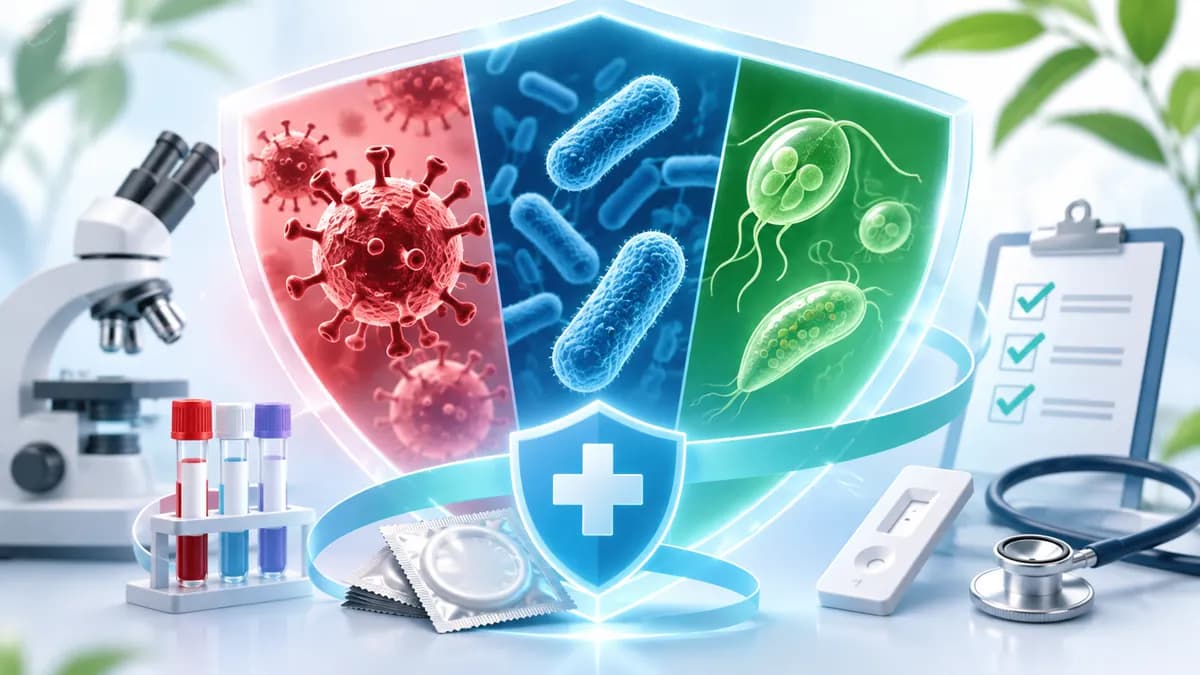
Difference Between Viral, Bacterial & Parasitic STDs: Causes, Symptoms, Treatment and Prevention
Quick Answer: What Is the Difference Between Viral, Bacterial and Parasitic STDs?
The primary difference is the type of microorganism responsible for the infection.
Viral STDs: Caused by viruses that enter and replicate inside human cells. Examples include HIV, genital herpes, HPV and hepatitis B.
Bacterial STDs: Caused by harmful bacteria that multiply in the body. Examples include chlamydia, gonorrhoea and syphilis.
Parasitic STDs: Caused by parasites that live on or inside the human body. A common example is trichomoniasis.
Bacterial and parasitic STDs are generally curable with appropriate medication, whereas viral STDs usually require ongoing management, depending on the infection.
Introduction
Sexually transmitted diseases (STDs), also known as sexually transmitted infections (STIs), are infections that primarily spread through sexual contact, including vaginal, oral and anal sex. They can affect people of all genders and ages, and some infections may remain unnoticed for months or even years without causing noticeable symptoms.
However, not all STDs are the same. Some are caused by bacteria, others by viruses, while certain infections develop due to parasites. Understanding these differences is important because the cause of an infection determines how it is diagnosed, treated and managed.
For example, bacterial STDs such as chlamydia and gonorrhoea can generally be cured with antibiotics. Viral infections such as herpes and HIV can be managed with antiviral medication, although current treatments do not eliminate these viruses from the body. Parasitic infections, such as trichomoniasis, are generally treatable with specific antiparasitic medication.
So, what exactly separates these three categories?
Let's explore the difference between viral, bacterial and parasitic STDs, their common symptoms, treatment options and when to consider testing.
1. What Are Viral STDs?
Viral STDs are sexually transmitted infections caused by viruses. These viruses can enter the body through infected bodily fluids, mucous membranes or direct skin-to-skin contact during sexual activity.
Unlike many bacterial infections, viral infections can remain in the body for extended periods. Some may be controlled through medication, but treatment does not necessarily eliminate the virus completely.
Common Examples of Viral STDs
1. Human Immunodeficiency Virus (HIV)
HIV attacks the immune system, particularly CD4 cells, which help the body fight infections. Without treatment, HIV can gradually weaken immune function and progress to acquired immunodeficiency syndrome (AIDS).
Common symptoms may include:
Fever and flu-like symptoms during early infection.
Swollen lymph nodes.
Night sweats.
Fatigue.
Unexplained weight loss in advanced disease.
Modern antiretroviral therapy (ART) can control HIV effectively. People who maintain an undetectable viral load through treatment do not sexually transmit HIV (Undetectable = Untransmittable or U=U).
2. Genital Herpes (HSV-1 and HSV-2)
Genital herpes is caused by the herpes simplex virus. HSV-2 is a common cause of genital herpes, although HSV-1 can also cause genital infections.
Possible symptoms include:
Painful blisters or sores around the genital or anal area.
Itching or tingling sensations.
Pain during urination.
Flu-like symptoms during the initial outbreak.
There is currently no cure for herpes. Antiviral medications can help shorten outbreaks, reduce symptoms and lower the risk of transmission.
3. Human Papillomavirus (HPV)
HPV is one of the most common sexually transmitted viral infections. Certain types cause genital warts, while high-risk types can contribute to cervical, anal, penile, vulvar and throat cancers.
Many HPV infections clear naturally through the immune system. Others may persist and require medical monitoring.
HPV vaccination is an effective preventive measure against several cancer-causing and wart-causing HPV types.
4. Hepatitis B
Hepatitis B is a viral infection that affects the liver. It can spread through sexual contact, infected blood and from an infected mother to her baby during childbirth.
Possible symptoms include:
Fatigue.
Nausea and vomiting.
Abdominal discomfort.
Dark-coloured urine.
Yellowing of the skin and eyes (jaundice).
Some people develop chronic hepatitis B, which may require long-term monitoring and antiviral treatment.
How Are Viral STDs Treated?
Treatment depends on the specific virus.
Most viral STDs cannot currently be completely cured, but appropriate medical care can help control infections, prevent complications and reduce transmission.
2. What Are Bacterial STDs?
Bacterial STDs develop when harmful bacteria enter the body and multiply, usually through sexual contact.
These infections commonly affect the genital tract, urinary system, rectum and sometimes the throat.
One important difference is that many bacterial STDs can be cured with the correct course of antibiotics. However, early diagnosis and appropriate treatment are essential to prevent complications.
Common Examples of Bacterial STDs
1. Chlamydia
Chlamydia is caused by the bacterium Chlamydia trachomatis. It is one of the most common bacterial STIs and frequently causes no noticeable symptoms.
When symptoms occur, they may include:
Unusual vaginal or penile discharge.
Burning sensation during urination.
Pelvic or lower abdominal pain.
Pain during sexual intercourse.
Testicular pain or swelling.
If left untreated, chlamydia can lead to pelvic inflammatory disease (PID) in women and may affect reproductive health.
2. Gonorrhoea
Gonorrhoea is caused by Neisseria gonorrhoeae. It can infect the genitals, rectum and throat.
Common symptoms include:
Painful urination.
White, yellow or green genital discharge.
Pelvic discomfort.
Testicular pain.
Rectal discomfort or discharge.
Some individuals have no symptoms. Untreated gonorrhoea can cause reproductive complications and, in rare cases, spread to other parts of the body.
Antibiotics are used to treat gonorrhoea, but antibiotic resistance is an increasing concern. Therefore, treatment should always follow current medical guidelines.
3. Syphilis
Syphilis is caused by the bacterium Treponema pallidum. It develops in stages and can cause serious complications if left untreated.
Its stages include:
Primary syphilis: Usually causes a painless sore (chancre) at the infection site.
Secondary syphilis: May cause skin rashes, including on the palms and soles, swollen lymph nodes and fever.
Latent syphilis: The infection remains in the body without visible symptoms.
Tertiary syphilis: In some untreated cases, serious damage can affect the heart, brain and other organs.
Syphilis is generally curable with appropriate antibiotic treatment, most commonly penicillin.
How Are Bacterial STDs Treated?
Bacterial STDs are generally treated with antibiotics prescribed by a healthcare professional.
The medication, dosage and duration depend on the infection, individual circumstances and current treatment recommendations.
It is important not to take antibiotics without medical advice, as inappropriate treatment can contribute to antibiotic resistance.
3. What Are Parasitic STDs?
Parasitic STDs are infections caused by parasites that can spread through sexual contact.
Unlike viruses and bacteria, parasites are organisms that live on or inside another organism, using it as a source of nourishment.
Some parasitic infections affect the genital and urinary systems, while others affect the skin and surrounding areas.
Common Examples of Parasitic STDs
1. Trichomoniasis
Trichomoniasis is caused by a microscopic parasite called Trichomonas vaginalis.
It is one of the most common curable sexually transmitted infections.
Symptoms in women may include:
Vaginal discharge that may be yellowish or greenish.
Unpleasant vaginal odour.
Genital itching or irritation.
Pain during urination.
Discomfort during sexual intercourse.
Symptoms in men may include:
Irritation inside the penis.
Burning after urination or ejaculation.
Penile discharge.
Many people with trichomoniasis do not experience noticeable symptoms.
Trichomoniasis can generally be cured with prescription medication such as metronidazole or tinidazole. Sexual partners should also be evaluated and treated to prevent reinfection.
2. Pubic Lice
Pubic lice, sometimes called crabs, are small parasitic insects that usually live in coarse body hair, particularly around the genital area.
They commonly spread through close intimate or sexual contact.
Symptoms may include:
Intense itching around the genital area.
Visible lice or eggs attached to hair.
Skin irritation.
Small blue-grey spots or bite marks.
Treatment generally involves medicated lotions or creams specifically designed to eliminate lice. Sexual partners may also need evaluation and treatment.
3. Scabies
Scabies is a skin infestation caused by microscopic mites known as Sarcoptes scabiei.
It can spread through prolonged skin-to-skin contact, including intimate sexual contact, although it is not exclusively sexually transmitted.
Common symptoms include:
Intense itching, particularly at night.
Small red bumps or rashes.
Thin burrow-like lines on the skin.
Irritation around the genital area, wrists, fingers and other body parts.
Scabies is treated with prescribed topical medication or other appropriate antiparasitic treatment. Close contacts may need treatment as well.
How Are Parasitic STDs Treated?
Treatment depends on the type of parasite.
Unlike viral infections, many parasitic infections can be eliminated with appropriate treatment.
4. Viral vs Bacterial vs Parasitic STDs: Key Differences
Understanding the differences between these infections can help you recognise why testing and treatment approaches vary.
Important: Not every STD causes visible symptoms. Some infections can remain undetected, making screening important even when you feel healthy.
5. What Are the Common Symptoms of STDs?
Although symptoms vary depending on the infection, certain warning signs may indicate a sexually transmitted infection.
Look out for:
Unusual vaginal or penile discharge.
Burning or pain during urination.
Genital sores, blisters or ulcers.
Genital itching or irritation.
Pain during sexual intercourse.
Lower abdominal or pelvic pain.
Swollen lymph nodes.
Unexplained rashes around the genital area or other parts of the body.
Testicular discomfort or swelling.
However, the absence of these symptoms does not mean you are free from infection.
Many STIs are asymptomatic, particularly during their early stages. Testing is the most reliable way to identify an infection.
6. How Are Viral, Bacterial and Parasitic STDs Diagnosed?
The diagnostic method depends on the suspected infection, symptoms, exposure history and time since possible exposure.
Healthcare professionals may recommend one or more of the following tests:
1. Blood Tests
Blood tests are commonly used to screen for infections such as:
HIV.
Syphilis.
Hepatitis B.
Hepatitis C.
The type of blood test and timing of testing depend on the infection and its window period.
2. Urine Tests
Urine samples can help detect certain bacterial and parasitic infections, including:
Chlamydia.
Gonorrhoea.
Trichomoniasis, depending on the test used.
3. Swab Tests
Swab samples may be collected from the genital area, throat, rectum or an active sore.
They can help identify infections such as:
Herpes.
Gonorrhoea.
Chlamydia.
Trichomoniasis.
4. PCR and Molecular Testing
Molecular tests, including nucleic acid amplification tests (NAATs), can detect genetic material from certain bacteria and parasites.
PCR-based testing may also be used for selected viral infections, depending on the clinical situation.
Not every STD is detected by one universal test. A healthcare professional can recommend the appropriate combination based on individual risk factors and exposure.
7. When Should You Consider STD Testing?
You should consider STD testing if:
You have had unprotected vaginal, oral or anal sex.
You have a new sexual partner.
You or your partner have been diagnosed with an STI.
You notice unusual genital symptoms.
You have had sexual contact with someone whose STI status is unknown.
You are planning a pregnancy and need appropriate sexual health screening.
You want routine sexual health screening based on your personal risk factors.
Even if you do not experience symptoms, testing may still be recommended.
Remember that different infections have different window periods. A test taken too soon after exposure may not detect an infection. A healthcare professional can advise whether repeat testing is necessary.
8. How Can You Prevent Viral, Bacterial and Parasitic STDs?
Although not every sexually transmitted infection can be prevented completely, several measures can significantly reduce the risk.
Use condoms correctly: External and internal condoms can reduce the risk of many STIs. However, infections spread through uncovered skin, such as herpes and HPV, may still be transmitted.
Consider vaccination: Vaccines are available to help prevent HPV and hepatitis B infections.
Get tested regularly: Routine screening helps identify infections early, even when symptoms are absent.
Discuss sexual health openly: Knowing your partner's STI status and discussing testing can help reduce the risk of transmission.
Avoid sexual contact during treatment: Follow your healthcare professional's advice about when it is safe to resume sexual activity. Partners may also require testing or treatment.
Complete prescribed treatment: Take medication exactly as directed. Do not stop treatment early or share medication with another person.
9. Why Is Early STD Detection Important?
Ignoring an untreated sexually transmitted infection can lead to complications that affect long-term health.
Depending on the infection, possible complications include:
Pelvic inflammatory disease.
Infertility and reproductive complications.
Chronic pelvic pain.
Pregnancy complications.
Increased risk of acquiring or transmitting HIV.
Liver damage associated with chronic hepatitis B.
Certain cancers associated with persistent high-risk HPV infections.
Neurological or cardiovascular complications of untreated syphilis.
Early detection allows healthcare professionals to recommend appropriate treatment and help prevent further complications.
10. Where Can You Get Confidential STD Testing in Dubai?
Sexual health is an important part of overall wellbeing. However, concerns about privacy, convenience or discussing sensitive symptoms may prevent some people from seeking testing.
Valeo Health offers confidential STD testing services in Dubai, with at-home sample collection options.
Depending on your needs, available screening options include:
STD Test – 7 Panel: Screens for seven selected sexually transmitted pathogens.
STD Test – 14 Panel: Screens for 14 selected sexually transmitted pathogens.
STD Test – 28 Panel: Screens for a broader selection of 28 pathogens.
These panels cover different combinations of pathogens and are not interchangeable with every individual STI test. The appropriate panel depends on your exposure history, symptoms and clinical requirements.
With professional sample collection, laboratory testing and confidential support, Valeo Health helps make sexual health screening more accessible.
Take a proactive step towards your sexual health. Explore STD testing services in Dubai and speak with a healthcare professional about choosing the right screening option.
Final Thoughts
Understanding the difference between viral, bacterial and parasitic STDs is an important step towards taking control of your sexual health.
While bacterial and many parasitic infections can be cured with appropriate medication, viral infections often require ongoing management. Regardless of the type, early detection, appropriate treatment and preventive measures can help reduce complications and transmission.
You do not need to wait until symptoms appear to prioritise your sexual health. Regular screening, informed decisions and timely medical guidance can make a meaningful difference.
Your sexual health deserves attention, care and confidentiality.
Medically Reviewed by Dr. Mahmoud Musa, General Practitioner
Dr. Mahmoud Musa is a General Practitioner dedicated to promoting evidence-based healthcare through accurate medical information and patient education. He reviews health and wellness content to help ensure medical accuracy, clarity and alignment with current clinical knowledge, making complex health topics easier to understand.
Medical Disclaimer: This article is intended for general educational purposes and should not replace professional medical advice, diagnosis or treatment. If you suspect an STI or have had a potential exposure, consult a qualified healthcare professional for appropriate testing and guidance. Seek urgent medical attention if you experience severe pelvic or abdominal pain, fever with genital symptoms, or other concerning symptoms.