



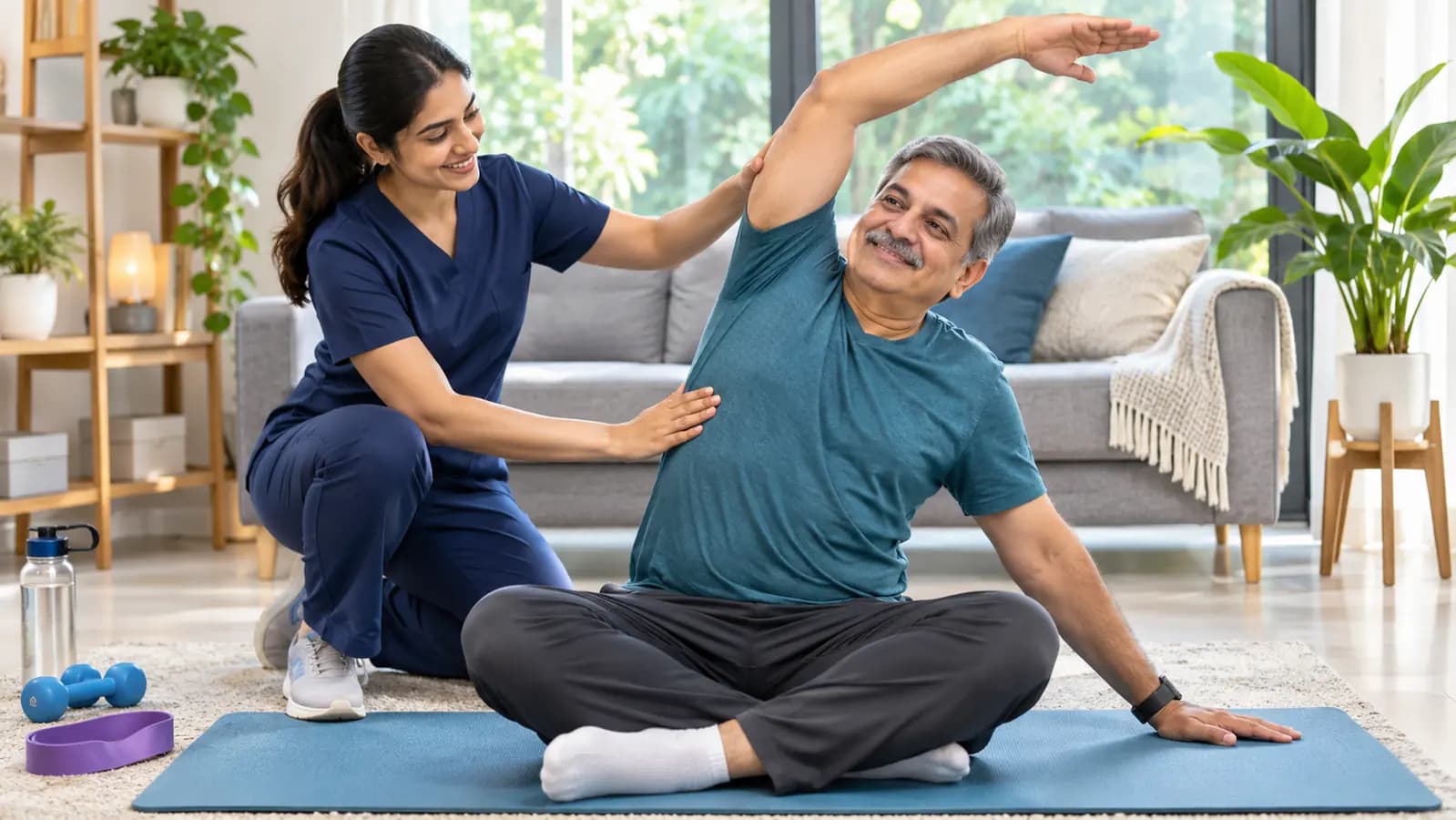
The Benefits of Physiotherapy at Home: Stay Active and Pain-Free
Staying active is essential for maintaining good health, mobility, and overall well-being. However, muscle stiffness, joint pain, sports injuries, back problems, and age-related mobility issues can make everyday activities challenging. Even simple tasks such as walking, climbing stairs, sitting for extended periods, or getting out of bed can become uncomfortable when movement is restricted.
Physiotherapy plays an important role in managing these concerns. It helps improve movement, strengthen muscles, restore physical function, and support recovery from injuries and medical conditions. But visiting a clinic regularly is not always convenient, particularly for older adults, people recovering from surgery, or individuals experiencing mobility difficulties.
This is where Physiotherapy at Home can make a difference.
With professional physiotherapy sessions in a familiar environment, individuals can receive personalised rehabilitation while continuing their daily routines. Whether you are recovering from an injury, managing chronic pain, improving mobility, or looking to maintain physical fitness, home-based physiotherapy offers a practical approach to rehabilitation.
In this guide, we explore the benefits of physiotherapy at home, the conditions it can help manage, what happens during a session, and how to make the most of your recovery.
What Is Physiotherapy at Home?
Physiotherapy at home is a healthcare service in which a qualified physiotherapist visits a patient's residence to assess their physical condition and provide personalised treatment.
Instead of travelling to a rehabilitation centre or hospital, patients receive physiotherapy in their own surroundings. Treatment focuses on improving movement, reducing discomfort, strengthening muscles, restoring balance, and helping individuals perform everyday activities more comfortably.
A physiotherapist begins by understanding the patient's medical history, symptoms, physical limitations, and recovery goals. Based on this assessment, they develop an individualised treatment plan.
Depending on the patient's condition, treatment may include:
Therapeutic exercises to improve muscle strength and joint mobility.
Stretching exercises to reduce stiffness and improve flexibility.
Manual therapy to support joint movement and manage muscle tension.
Balance and coordination training to improve stability.
Posture correction and movement education.
Rehabilitation exercises following surgery or an injury.
Guidance on maintaining physical activity and preventing recurring problems.
The treatment approach depends on the patient's needs, medical history, and physical abilities.
According to the NHS guide to physiotherapy, physiotherapy uses exercises, manual techniques, and other treatments to help people manage pain and improve movement following injuries, illnesses, and physical conditions.
10 Benefits of Physiotherapy at Home
Home-based physiotherapy offers several advantages for people who need professional rehabilitation. Beyond convenience, it allows physiotherapists to understand how patients move within their everyday surroundings and tailor exercises to their individual requirements.
Here are ten important benefits.
1. Personalised Treatment Based on Your Needs
Every individual experiences pain, stiffness, and mobility problems differently. An exercise programme that works for one person may not be appropriate for another.
One of the main advantages of physiotherapy at home is the opportunity to receive treatment based on your specific condition, physical abilities, and recovery goals.
During the initial assessment, a physiotherapist may evaluate:
Joint flexibility and range of motion.
Muscle strength and endurance.
Posture and body alignment.
Balance and coordination.
Walking patterns and movement difficulties.
Pain levels during different activities.
Ability to perform everyday tasks.
Based on these findings, the physiotherapist creates a treatment plan that addresses the patient's individual challenges.
For example, someone experiencing lower back pain may require exercises that improve core stability and movement control. Meanwhile, someone recovering from a knee injury may benefit from a programme focusing on knee mobility, leg strength, and balance.
This individualised approach helps ensure that exercises are appropriate for the patient's condition and recovery stage.
2. Better Convenience and Comfort
Travelling to a physiotherapy clinic can be difficult when you are experiencing pain or restricted movement.
For someone recovering from surgery, an older adult with balance difficulties, or a person experiencing severe joint discomfort, travelling can create additional physical challenges.
Physiotherapy at home removes the need for regular travel to a treatment facility.
Patients can receive professional care in a familiar environment without worrying about transportation, parking, or long waiting times.
Being at home may also help individuals feel more comfortable during treatment. They can perform exercises in a familiar space and discuss their difficulties more openly with the physiotherapist.
This convenience can be particularly helpful for:
Older adults with limited mobility.
Individuals recovering from orthopaedic surgery.
People experiencing chronic back or joint pain.
Patients with neurological conditions.
Individuals who find travelling physically challenging.
3. Improved Mobility and Flexibility
Reduced mobility can affect almost every aspect of daily life. Stiff joints and tight muscles may make walking, bending, reaching, and climbing stairs uncomfortable.
Physiotherapy helps address these limitations through structured mobility and flexibility exercises.
A physiotherapist may recommend gentle stretching, controlled joint movements, and strengthening exercises depending on the patient's condition.
For example:
Shoulder mobility exercises may help improve the ability to reach overhead.
Hip mobility exercises may support walking and sitting comfortably.
Knee movement exercises may help restore flexibility after an injury or surgery.
Ankle mobility exercises may support walking and balance.
Regularly performing prescribed exercises can help improve joint movement and make everyday activities easier.
The NHS guide to strength and flexibility exercises explains how strength and flexibility activities support joint function, balance, and everyday physical abilities.
4. Support for Managing Chronic Pain
Living with persistent pain can affect sleep, work, physical activity, and emotional well-being.
Conditions such as arthritis, chronic lower back pain, neck pain, and certain musculoskeletal disorders may cause recurring discomfort and movement difficulties.
Physiotherapy can help people manage these conditions through a combination of therapeutic exercises, movement education, strengthening activities, and appropriate manual techniques.
For example, individuals experiencing lower back discomfort may benefit from exercises designed to improve core strength and movement control. People with knee osteoarthritis may require a carefully planned programme to strengthen the muscles supporting the knee joint.
The goal is not simply to reduce discomfort during a session but also to help patients develop better movement habits and manage their symptoms over time.
It is important to remember that physiotherapy does not guarantee complete pain relief. Treatment outcomes depend on the underlying condition, its severity, and the individual's response to rehabilitation.
5. Faster Access to Rehabilitation After Surgery
Recovery following surgery often involves a structured rehabilitation programme.
Procedures such as knee replacement, hip replacement, spinal surgery, and other orthopaedic operations may temporarily affect strength, balance, flexibility, and mobility.
Physiotherapy plays an important role in helping patients regain physical function during recovery.
With physiotherapy at home, patients can receive support without needing to travel to a clinic during the early stages of rehabilitation, when movement may be uncomfortable.
Depending on the surgeon's recommendations and the patient's condition, treatment may involve:
Gentle joint mobility exercises.
Muscle activation and strengthening.
Walking and movement practice.
Balance training.
Functional exercises for daily activities.
Education on safe movement techniques.
For example, after knee replacement surgery, a physiotherapist may guide the patient through appropriate knee movement exercises, leg strengthening, and walking practice.
A rehabilitation plan should always follow the surgeon's instructions and take into account any movement restrictions or precautions.
6. Better Balance and Reduced Risk of Falls
Balance becomes increasingly important as people age. Reduced muscle strength, joint stiffness, vision difficulties, and certain neurological conditions can affect stability.
Poor balance can increase the risk of falls, which may result in fractures, injuries, and loss of independence.
Physiotherapy can help improve balance and coordination through exercises designed to strengthen the muscles involved in maintaining stability.
A physiotherapist may introduce:
Supported standing exercises.
Controlled weight-shifting activities.
Sit-to-stand practice.
Walking and gait training.
Lower-limb strengthening exercises.
Balance and coordination activities.
These exercises can be adapted to the patient's abilities and performed using appropriate support.
For older adults, home-based physiotherapy also allows the therapist to observe potential environmental challenges, such as slippery floors, obstacles, and unsuitable furniture arrangements.
This can help identify opportunities to make the home environment safer.
7. A Rehabilitation Plan That Fits Your Daily Environment
One unique advantage of physiotherapy at home is that treatment takes place in the environment where patients carry out their everyday activities.
A clinic may have specialised equipment, but a patient's actual challenges often occur at home.
For example, someone recovering from surgery may struggle with:
Getting up from a sofa.
Walking between rooms.
Climbing stairs.
Getting in and out of bed.
Using the bathroom safely.
A physiotherapist can observe these movements and recommend practical ways to perform them more comfortably.
They may also demonstrate how to use suitable household support, improve movement techniques, or modify exercises to fit the available space.
This makes rehabilitation more relevant to the patient's everyday needs.
8. Greater Consistency With Exercise
Consistency is an important part of physiotherapy.
Even when patients attend regular appointments, recovery often involves completing prescribed exercises between sessions.
Some people struggle to maintain an exercise routine because of busy schedules, transportation difficulties, or uncertainty about how to perform movements correctly.
Home-based physiotherapy can make it easier to establish a regular routine.
The physiotherapist can demonstrate exercises, observe how patients perform them, correct their technique, and explain how often they should practise.
Patients can also learn how to incorporate suitable movements into everyday activities.
However, exercises should always follow professional guidance. Performing too many repetitions, using incorrect techniques, or progressing too quickly may aggravate existing symptoms.
9. Support for Different Age Groups and Physical Conditions
Physiotherapy is not limited to athletes or people recovering from major injuries. Individuals of different ages may benefit from rehabilitation depending on their physical condition.
Home-based physiotherapy may be appropriate for:
Older adults: To support mobility, balance, muscle strength, and independence.
Working professionals: To manage movement-related problems associated with prolonged sitting, poor posture, or repetitive activities.
Sports enthusiasts: To support recovery from muscle strains, sprains, and other sports-related injuries.
Post-surgery patients: To follow a rehabilitation programme after orthopaedic procedures.
Individuals with neurological conditions: To work on movement, coordination, balance, and functional abilities following conditions such as stroke or Parkinson's disease.
People with chronic musculoskeletal conditions: To manage symptoms associated with arthritis, back pain, neck pain, and other joint or muscle problems.
Treatment should always be tailored to the patient's diagnosis, functional abilities, and medical recommendations.
10. Better Independence and Quality of Life
Pain and restricted movement can make people dependent on others for everyday activities.
Tasks such as dressing, bathing, walking, cooking, and shopping may become difficult when physical abilities are affected.
Physiotherapy aims to improve functional movement so that individuals can perform more activities independently.
Through structured rehabilitation, patients can work towards goals such as:
Walking more comfortably.
Improving their ability to stand and sit.
Climbing stairs with better stability.
Performing household activities.
Regaining strength after an injury.
Maintaining mobility as they age.
Improved physical function can also support confidence and participation in social and recreational activities.
The ultimate goal is to help people maintain an active lifestyle and participate in everyday life as comfortably and independently as possible.
What Conditions Can Physiotherapy at Home Help With?
Physiotherapy at home can support rehabilitation for several musculoskeletal, neurological, and mobility-related conditions.
The following are some common examples.
1. Lower Back Pain
Lower back pain is a common problem that may develop due to muscle strain, prolonged sitting, movement-related issues, or certain spinal conditions.
Symptoms may include stiffness, muscle discomfort, and difficulty bending or standing for extended periods.
A physiotherapist may recommend appropriate mobility exercises, core strengthening, movement education, and other treatments based on the cause of the pain.
2. Neck and Shoulder Pain
Long working hours, repetitive movements, muscle tension, and certain musculoskeletal conditions may contribute to neck and shoulder discomfort.
Physiotherapy may include:
Neck mobility exercises.
Shoulder strengthening.
Postural education.
Gentle stretching.
Movement correction.
The treatment plan depends on the underlying cause and the patient's symptoms.
3. Knee Pain and Arthritis
Knee pain may affect walking, climbing stairs, standing, and other everyday activities.
People with knee osteoarthritis may benefit from an individualised exercise programme focusing on muscle strength, joint movement, and functional ability.
A physiotherapist can help identify appropriate exercises without placing unnecessary stress on the affected joint.
4. Sports Injuries
Sports-related injuries such as sprains, strains, and muscle injuries can temporarily affect strength and movement.
Physiotherapy can support rehabilitation by gradually restoring flexibility, strength, coordination, and sport-specific movement.
The return to physical activity should be gradual and guided by recovery progress.
5. Post-Surgical Rehabilitation
Patients recovering from orthopaedic procedures may need physiotherapy to regain strength and mobility.
Treatment may include exercises, walking practice, balance training, and functional movement activities.
The programme must follow the surgeon's post-operative instructions.
6. Stroke Rehabilitation
A stroke may affect muscle strength, coordination, balance, and the ability to perform everyday activities.
Physiotherapy can form part of a multidisciplinary rehabilitation programme to help patients practise movements, improve mobility, and work towards greater independence.
Depending on the patient's condition, home-based rehabilitation may include supported movement, walking practice, balance exercises, and functional training.
7. Age-Related Mobility Problems
Ageing can be associated with reduced muscle strength, joint stiffness, and changes in balance.
Physiotherapy can help older adults work on maintaining strength, flexibility, coordination, and mobility.
An individualised home programme may also address difficulties with everyday activities.
For additional information about the role of physiotherapy in different conditions, refer to the NHS physiotherapy resource.
What Happens During a Physiotherapy at Home Session?
If you have never received home-based physiotherapy, understanding the process can help you feel more prepared.
Although treatment varies depending on the condition, a typical session may involve the following stages.
Step 1: Initial Assessment
The physiotherapist begins by discussing your symptoms, medical history, previous injuries, current medications, and treatment goals.
They may ask questions such as:
When did the pain or movement difficulty begin?
Which activities make the symptoms worse?
Have you undergone surgery recently?
Do you have any existing medical conditions?
What activities would you like to perform more comfortably?
The physiotherapist may then assess your posture, joint movement, muscle strength, balance, and functional abilities.
Step 2: Personalised Treatment Planning
Following the assessment, the physiotherapist develops an appropriate rehabilitation plan.
This plan considers your current physical abilities, medical condition, recovery goals, and any precautions that need to be followed.
For example, someone with shoulder stiffness may need a different exercise programme from someone recovering from a knee injury.
Step 3: Guided Physiotherapy Exercises
The physiotherapist demonstrates suitable exercises and guides you through the movements.
Depending on your condition, these may include stretching, strengthening, balance training, joint mobility exercises, or functional movements.
The therapist observes your technique and makes adjustments where necessary.
Step 4: Progress Monitoring
Your progress is evaluated during subsequent sessions.
The physiotherapist may assess improvements in movement, strength, balance, pain levels, and the ability to perform daily activities.
Exercises may be adjusted according to your response and recovery.
Step 5: Home Exercise Guidance
You may receive a set of exercises to practise between appointments.
The physiotherapist explains the correct technique, repetitions, frequency, and precautions.
Following the recommended programme consistently is important for maintaining progress.
Physiotherapy Exercises You May Perform at Home
Home exercises are often an important part of rehabilitation. However, not every exercise is appropriate for every condition.
A physiotherapist should assess your needs before recommending a programme.
Here are some examples of exercises that may be included in certain rehabilitation plans.
1. Seated Knee Extensions
Purpose: To help strengthen the muscles around the knee.
How to perform:
Sit upright on a stable chair.
Keep both feet resting on the floor.
Slowly straighten one knee until your leg is extended comfortably.
Hold briefly if comfortable.
Lower your foot slowly.
Repeat as instructed by your physiotherapist.
2. Shoulder Rolls
Purpose: To encourage gentle shoulder movement and reduce stiffness.
How to perform:
Sit or stand comfortably.
Relax your arms by your sides.
Slowly roll your shoulders forward.
Return to the starting position.
Repeat the movement backwards.
Avoid forcing the movement if it causes pain.
3. Ankle Pumps
Purpose: To encourage ankle movement and support lower-limb mobility.
How to perform:
Sit or lie down comfortably with your legs supported.
Point your toes gently away from your body.
Bring your toes back towards your shins.
Repeat the movement slowly.
4. Sit-to-Stand Exercise
Purpose: To improve functional leg strength and practise standing up from a chair.
How to perform:
Sit on a stable chair with your feet positioned comfortably.
Lean forward slightly.
Push through your feet to stand up.
Slowly lower yourself back onto the chair.
Use appropriate support if required. This exercise may not be suitable for people with certain post-operative restrictions or significant balance difficulties.
5. Gentle Neck Movements
Purpose: To maintain comfortable neck mobility.
How to perform:
Sit upright with your shoulders relaxed.
Slowly turn your head to one side.
Return to the centre.
Repeat towards the opposite side.
Keep the movement within a comfortable range.
These examples are for general education and are not a substitute for an individualised physiotherapy assessment. Stop if you experience significant pain, dizziness, or worsening symptoms.
Physiotherapy at Home vs Physiotherapy at a Clinic
Both home-based and clinic-based physiotherapy can support rehabilitation. The most appropriate option depends on the patient's condition, treatment requirements, and personal circumstances.
Home physiotherapy is not automatically better than clinic-based treatment. Some patients require specialised equipment, multidisciplinary facilities, or hands-on interventions that are more appropriate in a clinical setting.
The treatment environment should be selected according to clinical needs rather than convenience alone.
A Cochrane evidence review on rehabilitation service delivery highlights that the available evidence comparing rehabilitation settings remains limited. Some studies have found similar outcomes between home-based and conventional care, but stronger evidence is needed to establish which setting is best for different patient groups.
How to Prepare Your Home for a Physiotherapy Session
Preparing your surroundings can make home physiotherapy sessions more comfortable and organised.
Consider the following tips:
Create enough space: Choose an area where you can stretch, stand, walk, and perform prescribed exercises safely.
Keep the floor clear: Remove loose rugs, cables, toys, and other objects that could cause tripping.
Wear comfortable clothing: Choose clothing that allows your physiotherapist to assess movement and joint mobility.
Keep a stable chair nearby: A suitable chair may be useful for seated exercises and supported movements.
Have your medical information ready: Share relevant medical reports, surgical details, prescriptions, and previous treatment records.
Discuss your symptoms openly: Tell your physiotherapist about pain, discomfort, dizziness, or any difficulties experienced during previous exercises.
These simple preparations can help create a safer and more effective rehabilitation environment.
How Often Should You Have Physiotherapy at Home?
The frequency of physiotherapy depends on your diagnosis, physical condition, treatment goals, and response to rehabilitation.
Some individuals may benefit from more frequent sessions during the early stages of recovery, while others may need periodic appointments combined with independent exercises.
For example:
Post-surgical patients may require a structured rehabilitation schedule based on the surgeon's instructions.
People with chronic joint pain may benefit from ongoing exercise guidance and periodic progress assessments.
Older adults with balance difficulties may require regular supervised balance and strengthening sessions.
Sports injury patients may need progressive rehabilitation before returning to their usual activities.
Your physiotherapist will recommend an appropriate schedule after assessing your condition.
It is equally important to follow the prescribed home exercise programme between appointments.
When Should You Consider Physiotherapy at Home?
You may want to consider home-based physiotherapy if:
You experience recurring back, neck, or joint discomfort.
You find it difficult to walk or move comfortably.
You are recovering from surgery or an injury.
You have reduced flexibility or muscle strength.
You experience balance or coordination difficulties.
You are an older adult who wants to maintain mobility.
Travelling to a physiotherapy clinic is physically challenging.
You need professional guidance to maintain a consistent rehabilitation routine.
However, physiotherapy is not a substitute for urgent medical care. Sudden severe pain, new significant weakness, loss of bladder or bowel control associated with back pain, or other serious symptoms require prompt medical assessment.
Why Choose Physiotherapy at Home in Dubai?
Dubai's busy lifestyle can make it difficult to fit regular healthcare appointments into an already demanding schedule.
Long working hours, commuting, family responsibilities, and transportation challenges may make clinic visits inconvenient.
For individuals who need rehabilitation, receiving professional care at home can offer a more practical way to manage their treatment routine.
Whether you are a working professional experiencing back discomfort, an older adult managing mobility difficulties, or someone recovering from surgery, home-based physiotherapy can help you work towards your physical recovery goals.
With Valeo Health, you can explore professional Physiotherapy at Home in Dubai and learn more about the available home physiotherapy service.
Having access to physiotherapy in your own surroundings can make it easier to incorporate rehabilitation into your everyday routine.
Conclusion
Maintaining an active lifestyle requires more than simply exercising occasionally. It involves taking care of your muscles, joints, flexibility, balance, and overall physical function.
Whether you are managing chronic discomfort, recovering from surgery, dealing with a sports injury, or experiencing age-related mobility difficulties, physiotherapy can play an important role in supporting your recovery and everyday movement.
Physiotherapy at Home makes rehabilitation more accessible by bringing professional guidance into your familiar surroundings. With an individualised treatment plan, appropriate exercises, and consistent progress monitoring, you can work towards improved mobility, greater independence, and a more active lifestyle.
If you are looking for a convenient way to access rehabilitation support, explore Valeo Health's Physiotherapy at Home service in Dubai.