



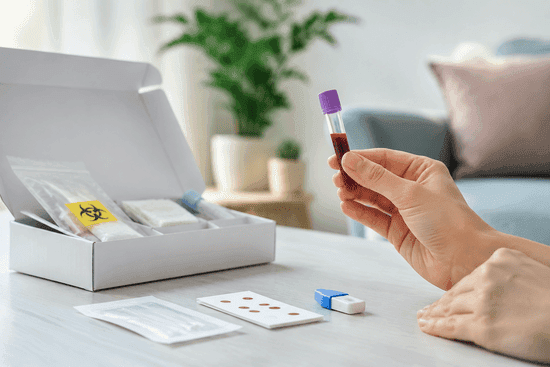
Are At Home Lab Tests Accurate? A Complete Guide to Reliability and Results
Picture this: you’re sitting in your office and you have blocked your calendar to go for a blood check and oops, a meeting comes up. Irritating, right? Well, you do not have to continue living like this. With at home blood sample collection, it no longer means taking time off work, sitting in waiting rooms, or navigating traffic just to reach a lab or hospital. In the last few years, at home healthcare and door-step lab sample collection have gone from niche to mainstream, giving people a far more convenient way to monitor their health regularly.
With this shift, a common question naturally comes up: Are at home blood tests really as accurate as tests done in a hospital or clinic? Many people worry that if the sample is taken at home, the results might somehow be “less reliable” or “less medical.”
The reality is more nuanced, and more reassuring. In most cases, accuracy has very little to do with where your blood is collected and everything to do with how that sample is collected, handled, transported, and processed in the lab. When those steps follow the same strict standards, an at home sample can be just as accurate as one taken in a clinic setting.
By the end of this guide, you will be able to decide confidently whether at home blood testing fits your health needs and how to use it wisely as part of a preventive care routine.
Will an at home Lab Test Match a Hospital or Laboratory Test?
For most routine health checks, a professionally collected at home blood sample that is processed in a quality-accredited lab can match the accuracy of a sample taken in a hospital or clinic. The key difference is not where your blood is drawn, but how the sample is collected, handled, transported, and analyzed behind the scenes.
1. Where the Sample Is Collected vs Where It’s Analyzed
There are two separate stages in any blood test:
- Collection: at home lab test, in a clinic, or in a hospital OPD.
- Analysis: in the central laboratory, using standardized analyzers and quality controls.
When a trained phlebotomist draws blood at home and the sample is sent to the same central lab that processes hospital samples, the analytical process is identical—same machines, reagents, reference ranges, and quality checks.
2. Why Professional at home Collection Can Be Equivalent
At home lab tests done by professional services can be as reliable as clinic draws because they typically use:
- Certified or trained phlebotomists following standard techniques.
- The same vacutainers, needles, and labels used in collection centres.
- Defined transport protocols for temperature control and timely delivery to the lab.
As long as these pre-analytical steps are followed, the “home test vs laboratory test” setting becomes almost irrelevant for most standard panels (CBC, lipids, LFT, thyroid, HbA1c, etc.).
3. Importance of Accredited Laboratories and Standardized Procedures
Accuracy is anchored in the lab’s quality system, not the doorstep visit.
- Accreditation (e.g., NABL, ISO 15189, CLIA, CAP) signals that the lab is regularly audited for staff competency, equipment calibration, and internal and external quality controls.
- Standard operating procedures ensure each sample is logged, centrifuged, stored, and run in a controlled, repeatable way, regardless of whether it originated at home or in a hospital.
4. When Repeat or Confirmatory Testing May Be Needed
Even with good collection and strong labs, there are times when repeating a test is sensible:
- When results do not match the person’s symptoms or clinical picture.
- When values are unexpectedly high or low compared to prior reports.
- When tests are being used to make high‑stakes decisions (e.g., surgery clearance, starting potent medications).
- When the parameter is known to be sensitive to collection issues or finger‑prick methods, or when the first result looks borderline or inconsistent.
How Accurate Is At Home Lab Testing?
At home lab testing can be very accurate, often comparable to clinic testing – when the process, not just the place, is done right. Accuracy mainly depends on:
- Professional sample collection: A trained phlebotomist drawing blood at home using standard tubes and technique greatly reduces errors.
- Proper storage and transport: Samples that are kept at the right temperature and reach the lab quickly are more likely to give reliable results.
- Accredited laboratories: When your sample goes to an accredited lab with validated equipment and protocols, home-collected venous samples can match hospital-level accuracy.
- Quality control: Good labs run internal and external quality checks to keep results consistent over time.
1. Home Collection vs Finger-Prick Kits
- Professionally collected home tests (venous draws) are usually as accurate as tests done in a lab, because the same labs and analyzers are used.
- Finger-prick/self-test kits are more vulnerable to user error and are better viewed as screening or trend tools rather than full replacements for lab venous tests, especially for high‑stakes decisions.
Choosing a reputable provider that uses trained staff and accredited labs is one of the most important steps you can take to ensure accurate at home results.
2. Why Might Test Results Be Faint, Unclear, or Inconclusive?
Sometimes test reports come back as faint, unclear, or “inconclusive,” and this usually has more to do with the sample than with a serious health issue. Poor sample quality (like hemolysis or clotting), too little blood in the tube, or delays in getting the sample to the lab can all make it difficult to generate reliable numbers. Not following pre-test instructions—such as fasting, staying hydrated, or managing medications—or normal day-to-day biological variation can also nudge results into borderline ranges that are hard to interpret confidently. In these situations, labs or doctors often recommend a repeat test to confirm whether the result is real or just a technical or situational issue, and an “inconclusive” or “repeat advised” note is usually a sign of caution, not an automatic indication of disease.
Which At Home Lab Tests Do You Actually Need?
At home lab testing is most useful when you focus on essential, high-yield panels rather than testing everything “just because.” For most generally healthy adults, sensible at home options include:
- Routine screening: CBC, blood sugar (HbA1c), lipid profile, basic kidney and liver function.
- Targeted nutrition tests: Vitamin D, B12, and iron studies when diet, symptoms, or risk factors suggest a need.
- Hormones when indicated: Thyroid profile and, only when clinically appropriate, reproductive hormones (e.g., for cycle issues, fertility, or PCOS concerns).
- Preventive packages: Age- and risk-based comprehensive health checkups that bundle core tests, ideally chosen with your doctor rather than just picking the largest panel.
Unnecessary testing should be avoided because it can create anxiety, incidental findings, and extra follow-up without improving health decisions—every test should have a clear “what will we do with this result?” attached to it.
What Should You Do If Your Laboratory Results Are Normal but You Still Feel Unwell?
Normal blood tests can be reassuring, but they do not rule out every possible condition. Lab panels only measure a limited set of markers, and many issues are partly or primarily clinical—based on symptoms, examination, and history rather than numbers alone.
If you still feel unwell despite “normal” results, your symptoms may warrant:
- Repeat testing at an appropriate interval (especially if symptoms are new, fluctuating, or worsening).
- Additional biomarkers that were not included in the first panel (for example, more specific hormones, autoimmune markers, or infection tests, as guided by a doctor).
- Imaging studies such as ultrasound, X-ray, CT, or MRI when structural or organ-level issues are suspected.
- Specialist evaluation (e.g., endocrinologist, cardiologist, neurologist, gastroenterologist, mental health professional), depending on the pattern of symptoms.
The key message for your readers: symptoms and lab results must always be interpreted together. A report is a tool, not a verdict. Persistent fatigue, pain, weight changes, mood shifts, or other ongoing complaints deserve proper medical attention even when initial tests look fine. Rather than self-diagnosing or repeatedly ordering new tests on their own, people should use normal results as a starting point for a deeper conversation with a doctor, who can decide what to monitor, what to recheck, and what to investigate next.
How to Ensure the Most Accurate At home Lab Test Results
Getting reliable results from an at home lab test is mostly about doing a few simple things right before and during your appointment:
- Follow fasting instructions (if required)
If your test requires fasting, stick to the recommended window (often 8–12 hours) and avoid snacks, sugary drinks, and coffee with milk or sugar during that time. - Stay hydrated
Drink water before your test (unless specifically told not to). Good hydration makes veins easier to access and can improve sample quality. - Schedule tests at the recommended time
Some markers (like certain hormones, cortisol, and even glucose) follow a daily rhythm. When possible, book your test for the time your doctor or lab suggests, often in the morning. - Inform your provider about medications and supplements
Tell your doctor and the lab which medicines, vitamins, and supplements you’re taking. Some may need to be continued, timed differently, or very occasionally paused before testing—never stop anything without medical advice. - Avoid strenuous exercise before certain tests
Very intense workouts right before your blood draw can temporarily alter some values (like certain enzymes, muscle markers, or even glucose). For most routine tests, it’s safer to avoid heavy exercise on the same morning. - Choose reputable providers and accredited labs
Opt for services that clearly state they use accredited laboratories and trained healthcare professionals for home collection. This helps ensure proper technique, handling, and analysis.
Benefits of Professionally Collected At home Lab Tests
Professionally collected at home lab tests bring reliable diagnostic services to your doorstep—helping you prioritise your health without the inconvenience of visiting a laboratory. When samples are collected by trained professionals and processed by accredited laboratories, home collection can provide the same laboratory-quality testing while improving comfort and accessibility.
- Convenience without compromising quality: Book a suitable time, have your sample collected at home, and receive your results securely online.
- Less travel and waiting: Avoid traffic, queues, crowded waiting rooms, and unnecessary time away from work or family.
- A more comfortable experience: Familiar surroundings may help reduce stress or anxiety associated with clinical settings.
- Accessible healthcare: An ideal option for busy professionals, families, older adults, people with limited mobility, and those who require regular monitoring.
- Professional sample handling: Trained phlebotomists use appropriate equipment and follow procedures for safe collection, labelling, transport, and processing.
- Secure results and medical guidance: Receive reports through secure digital channels, with doctor consultation or follow-up support when required.
Conclusion
At home lab tests have transformed the way people access healthcare, making routine health screening more convenient without compromising on quality. When blood samples are collected by trained healthcare professionals, transported under the correct conditions, and analyzed in accredited laboratories, at home testing can provide the same reliable and accurate results as tests performed in a clinic or hospital.
The key to accurate results lies in choosing a trusted healthcare provider that follows strict clinical protocols—from sample collection and handling to laboratory analysis and result interpretation. Following any preparation instructions, such as fasting or staying hydrated, also helps ensure your results are as accurate and meaningful as possible.
At Valeo Health, every blood test at home is carried out by DHA-licensed nurses, with samples processed in accredited laboratories using rigorous quality standards. Whether you're booking a routine health check, monitoring an existing condition, or simply taking a proactive approach to your wellbeing, Valeo Health combines clinical excellence with the convenience of healthcare delivered to your doorstep—helping you make informed decisions about your health with confidence.
Medically Reviewed By: Dr. Rayan Mohammed, General Practitioner at Valeo Health
Reviewed for medical accuracy, safety guidelines, and healthcare recommendations.
Frequently Asked Questions
1. Are blood tests at home as accurate as hospital blood tests?
Yes. Professionally collected at home blood tests analyzed in accredited laboratories are as accurate as those performed in hospitals or clinics.
2. How are home blood samples transported safely?
Samples are packaged using medical-grade protocols and transported under controlled conditions to maintain their quality and accuracy.
3. Can medications affect my blood test results?
Yes. Certain medications and supplements can influence test results, so always inform your healthcare provider before testing.
4. Should I repeat an abnormal blood test?
Not always. Your doctor may recommend a repeat test or further investigations depending on the result and your symptoms.
5. How often should I get routine blood tests?
Most healthy adults benefit from annual blood tests, but your doctor may recommend more frequent testing based on your health.
6. Can I eat or drink before my blood test?
It depends on the test. Some require fasting, while others don't—always follow the preparation instructions provided.
7. Are at home lab tests suitable for children and older adults?
Yes. At home testing offers a safe, convenient option for children, seniors, and anyone who prefers care in the comfort of home.