

5 Surprising Facts Your Lipid Profile Test in Dubai Doesn’t Tell You
You’ve been getting regular lipid profile tests in Dubai – your LDL is "normal," HDL looks good, and triglycerides are in check. But could you still be at risk for heart disease?
The answer might shock you.
We noticed that there's something many people don't realize—a basic lipid test doesn't tell the full story.
Yes, it's helpful. Yes, it's important. It might be possible that these standard screenings provide valuable information, they can completely miss critical warning signs that predict cardiovascular events.
But cholesterol and heart health are more complex than they seem. Some of the most dangerous warning signs can actually be hiding in plain sight—even if your test results are “normal.”
No worries, folks—the experts at Valeo Health are here to break down five surprising things your lipid profile test in Dubai might miss (but absolutely shouldn’t).
Let’s dig deeper into what’s really going on behind those numbers.
1. Normal LDL Doesn’t Always Mean Low Risk
Most of us are told to keep our LDL cholesterol low—usually below 100 mg/dL. So if your LDL comes back “within range,” it might feel like a win.
But here’s the interesting twist:
It's not just the LDL amount that matters—it’s the type of LDL particles.
As experts mentioned, small, dense LDL particles are more dangerous than large, fluffy ones.
These smaller particles of LDL can sneak into artery walls more easily, leading to plaque buildup and increasing your risk of heart disease—even if your LDL level looks fine on paper.
Unfortunately, standard lipid profiles don’t tell you particle size. To see that, you’d need an advanced lipoprotein subfraction test, which is not commonly included in regular screenings in Dubai.
2. Inflammation Is a Bigger Deal Than Cholesterol Alone
Did you know that chronic inflammation is a major contributor to heart attacks and strokes? If not, don't worry - we are here to guide you through it and understand why it's important to your heart health.
Even with complete cholesterol results, the artery can be silently inflamed. This persistent inflammation can damage blood vessels and cause plaque structures, an important driver of heart disease.
Your lipid profile doesn’t measure inflammation, but other tests can, including:
● High-sensitivity C-reactive protein (hs-CRP)
● Fibrinogen levels
● Homocysteine levels
These home blood tests in Dubai show what is happening beneath the surface and are especially valuable if you have a family history of heart disease.
3. Triglycerides Can Be More Dangerous Than You Think
Triglycerides often get less attention than cholesterol, but they’re just as important—especially in Dubai, where many people eat high-sugar diets, don’t move enough, and deal with a lot of stress.
High triglycerides (above 150 mg/dL) are linked to:
● Insulin resistance
● Type 2 diabetes
● Pancreatitis
● Increased risk of stroke
What’s more, triglycerides often rise after meals, but most lipid tests are done after fasting. That means you may be missing how your body truly reacts to daily food intake.
Quick Tip: Ask your doctor if you can do a post-meal (non-fasting) lipid test. It can show how well your body handles fats and sugars in real time.
4. Your Test Doesn’t Reveal Your HDL Function
HDL is known as the “good cholesterol” because it helps remove excess cholesterol from the bloodstream. But here's the catch—not all HDL is equally protective.
Your HDL cholesterol count won't tell you how well it works.
In some people, especially chronic health conditions (such as diabetes or metabolic syndrome), HDL may be dysfunctional and does not regenerate normal protective roles even at high levels.
You can have high HDL levels but still be at risk.
Unfortunately, routine at-home lipid profiles don’t measure HDL functionality. This can lead to a false sense of security, especially in people trying to “raise their HDL” without addressing underlying issues.
5. It Doesn’t Show Your Real-Time Heart Health
A lipid profile is a snapshot. It tells you how your blood lipids looked at the moment the blood was drawn.
But your body—and your lifestyle—change constantly.
Here’s what your lipid test doesn’t capture:
● Your current diet and nutrition habits
● Daily stress and sleep patterns
● How often you exercise
● Family history of cardiovascular disease
● Your weight trends over time
All of these factors influence cholesterol levels and your overall heart health. This is why we at www.feelvaleo.com guide you about the basic & advanced home blood tests in Dubai.
Other essential steps you need to focus:
- Lifestyle tracking
- Wearable health devices
- More frequent blood monitoring
All these tactics can help give you a real-time picture of what’s happening inside your body—not just what was true on test day.
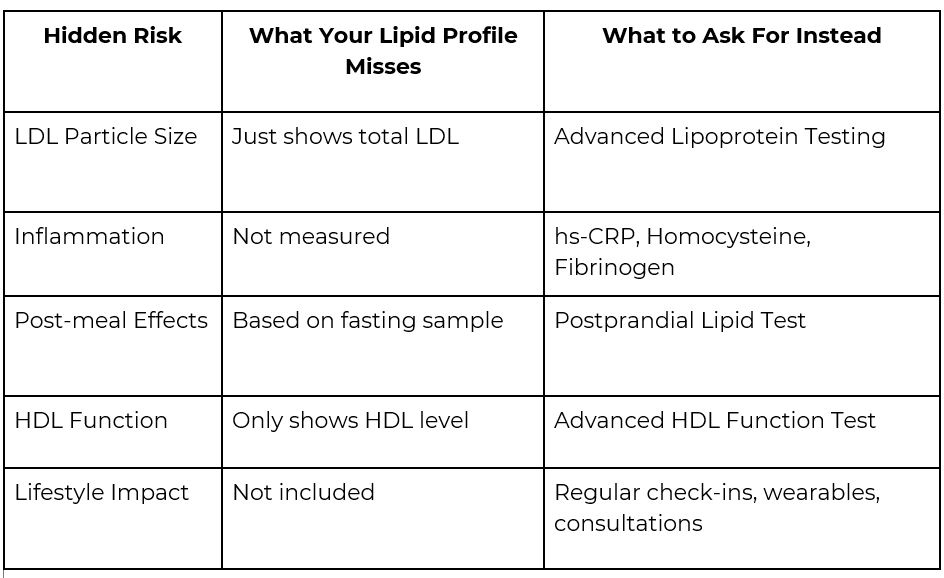
Quick Recap: What Your Lipid Test Might Be Missing
3 Lifestyle Changes That Can Improve Heart Health—Beyond Just Lowering Cholesterol
If you're ready to take proactive steps, here are three powerful habits that help from the experts of Valeo Health:
● Eat more fiber-rich foods (like oats, chia seeds, fruits, and legumes)
● Exercise at least 30 minutes daily, even a brisk walk helps
● Prioritize sleep and stress management—your heart needs rest too!
Your next lipid test should be just the beginning—not the final word. Stay informed, ask deeper questions, and take charge of your heart health in a smarter way.
And we are with you at every step!
For more details—book us at www.feelvaleo.com!
The Final Words
In Dubai, with easy access to world-class clinics and health screening packages, it's tempting to tick off a lipid profile and move on. But your heart health deserves a deeper look.
Instead of just asking:
“Are my cholesterol levels, okay?”
Try asking:
“What else should I know that my test didn’t tell me?”
Talk to your doctor about advanced lipid testing, inflammation markers, and how your lifestyle is influencing your heart health. You don’t need to over-test, but being aware of what’s missing can help you make smarter health decisions.
Because when it comes to your heart, what you don’t know can hurt you.