




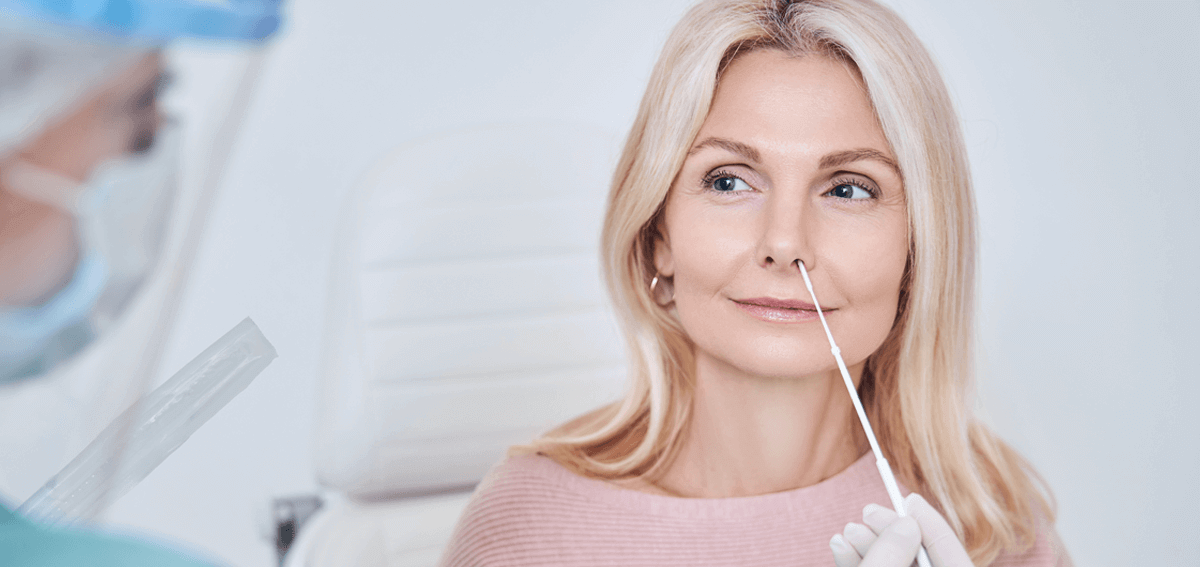
PCR test - 24 Hours Results
Find out if you are COVID-19 positive. Our certified nurses follow strict hygiene guidelines in compliance with DHA's COVID-19 health regulations.

At-home nasal swab sample collection

4-6 hours advance booking required

Standard | 24 Hours
Get an accurate and reliable test for COVID-19
PCR refers to polymerase chain reaction. It’s a test used to detect genetic material from a specific organism, such as a virus. The PCR test detects the presence of the SARS-CoV-2 virus if you have it at the time of the test. This is not an antibody test.
This PCR test is recommended if you have been recently exposed to COVID-19, are experiencing symptoms, or just want to test proactively or for travel purposes.
In case of severe COVID-19 symptoms, please seek emergency medical care right away.

- Fatigue
- Muscle or body aches
- Fever or chills

- Stomach ache
- Nausea or vomiting
- Diarrhea

- Runny nose
- Nose congestion
- Loss of smell

- Shortness of breath
- Chest pain

- Cough
- Loss of taste
- Sore throat
Safe & accredited testing all at the touch of a button.

Why Valeo

Accredited Laboratories
Our partner laboratories are CAP accredited and maintain the highest laboratory proficiency, quality standards, and certifications.

Science Backed
With a team of highly qualified experts, the latest scientific research, and the power of technology, we're committed to bringing you the best evidence based wellbeing advice.

Secure Data
We comply with the highest professional standards for data storage and protection so your personal information remains safe and confidential at all times. Check out our full privacy policy for more details.
1. What is an lPCR test?
An lPCR test (Polymerase Chain Reaction test) is a highly accurate laboratory method used to detect the genetic material of viruses or bacteria in the body. It is most commonly used to identify infections such as COVID-19, even in the early stages.
2. When should I take an lPCR test?
You should consider taking an lPCR test if:
- You have symptoms like fever, cough, or fatigue
- You’ve been in close contact with someone who tested positive
- You need a test result for travel, work, or medical procedures
- You want to confirm a negative result after a rapid test
3. How is the lPCR test performed?
The lPCR test is usually done by collecting a sample from your nose or throat using a swab. In some cases, saliva samples may also be used. The sample is then sent to a laboratory for detailed analysis.
4. How accurate is an lPCR test?
The lPCR test is considered one of the most reliable diagnostic tools available. It can detect even small amounts of viral genetic material, making it more accurate than many other types of tests.
5. How long does it take to get lPCR test results?
Results for an lPCR test typically take between 12 to 48 hours, depending on the laboratory and testing volume. Some facilities may offer faster results for urgent cases.
6. Is fasting required before an lPCR test?
No, fasting is not required before taking an lPCR test. You can eat and drink normally unless instructed otherwise by your healthcare provider.
7. Is the lPCR test painful?
The lPCR test is generally not painful, but you may feel slight discomfort or a tickling sensation during the swab collection process. The procedure only takes a few seconds.
8. Can I take an lPCR test without symptoms?
Yes, you can take an lPCR test even if you do not have symptoms. Many people choose to get tested for precautionary reasons, especially before travel or after possible exposure.
9. What should I do if my lPCR test result is positive?
If your lPCR test result is positive:
- Isolate yourself immediately
- Follow local health guidelines
- Inform people you were recently in contact with
- Seek medical advice if symptoms worsen
10. Is an lPCR test required for international travel?
Many countries require a negative lPCR test result before entry. Travel requirements may vary, so it’s important to check the latest guidelines of your destination before departure.
11. How is an lPCR test different from a rapid test?
The lPCR test detects the virus’s genetic material, making it more sensitive and accurate. Rapid tests, on the other hand, detect proteins and provide quicker results but may be less precise.
12. Can children take an lPCR test?
Yes, children can safely take an lPCR test. The procedure is the same, though healthcare providers may use gentler techniques to ensure comfort.
PCR Test in Jeddah for Travel
Getting a PCR test in Jeddah for travel ensures you meet international entry requirements with accuracy and peace of mind. Certified laboratories across the city provide fast, reliable results to help you prepare for your trip without delays. Whether you’re traveling for business, leisure, or emergencies, the test offers the reassurance of compliance with global safety standards. With convenient appointment options and efficient reporting, a PCR test in Jeddah for travel makes your journey smoother and stress-free.


