
Marine Collagen in Qatar: Benefits, Types, Dosage & Buying Guide
Collagen is one of the most talked-about wellness ingredients today, especially among people looking for support for healthier-looking skin, stronger hair, and better nail health.
Among the different types available, marine collagen has become a popular choice in Qatar because it comes from fish sources and is naturally rich in Type I collagen, the type most commonly found in human skin.
But with so many collagen products available, choosing the right one can be confusing. What makes marine collagen different? Is it better than bovine collagen? How much should you take?
This guide explains everything you need to know about marine collagen, including its benefits, types, safety, and what to look for before buying a supplement in Qatar
Quick Answer: What is marine collagen?
Marine collagen is collagen extracted from fish skin and scales, then broken down into small peptides so the body can absorb it. It is almost entirely Type I collagen — the same type that makes up the bulk of human skin. That's why it's the form most often chosen for skin, hair and nail support rather than joint support.
The One Thing That Separates Marine From the Rest
Every collagen supplement on the shelf is doing roughly the same job — supplying amino acids and peptides that your body can use. What differs is where it came from and which type of collagen that source produces.
Marine collagen comes from fish. And fish collagen is overwhelmingly Type I.
Type I is the collagen that dominates human skin, hair, nails, tendons and bone. Roughly 80–90% of the collagen in your skin is Type I. So if your reason for taking collagen is a beauty-from-within one, a Type I source is the logical match.
Bovine collagen, by contrast, is a mix of Type I and Type III. Chicken collagen is mostly Type II, which is concentrated in cartilage — better matched to joint support.
None of these is "the best collagen". They're different tools.
What Is Marine Collagen, Properly Explained?
Marine collagen is a type of collagen protein extracted mainly from fish skin and scales. During processing, the collagen is broken down into smaller molecules called collagen peptides, making it easier for the body to digest and use.
Marine collagen is mostly Type I collagen, which is naturally found in areas such as:
- Skin
- Hair
- Nails
- Bones
- Connective tissues
Unlike some other collagen sources, marine collagen is often chosen by people who prefer fish-derived ingredients or want to avoid bovine and porcine sources.
Why Is Marine Collagen Popular in Qatar?
People in Qatar often choose marine collagen for a few key reasons:
1. Supports Healthy-Looking Skin
Skin is one of the main reasons people add collagen supplements to their routine. Collagen peptides have been studied for their role in supporting skin hydration and elasticity.
2. Hair and Nail Support
Collagen provides amino acids that contribute to the body's natural protein-building processes, making it a popular addition to beauty-focused wellness routines.
3. Fish-Based Source
Marine collagen comes from fish rather than bovine or porcine sources, which makes it a preferred option for many consumers.
4. Suitable for Busy Lifestyles
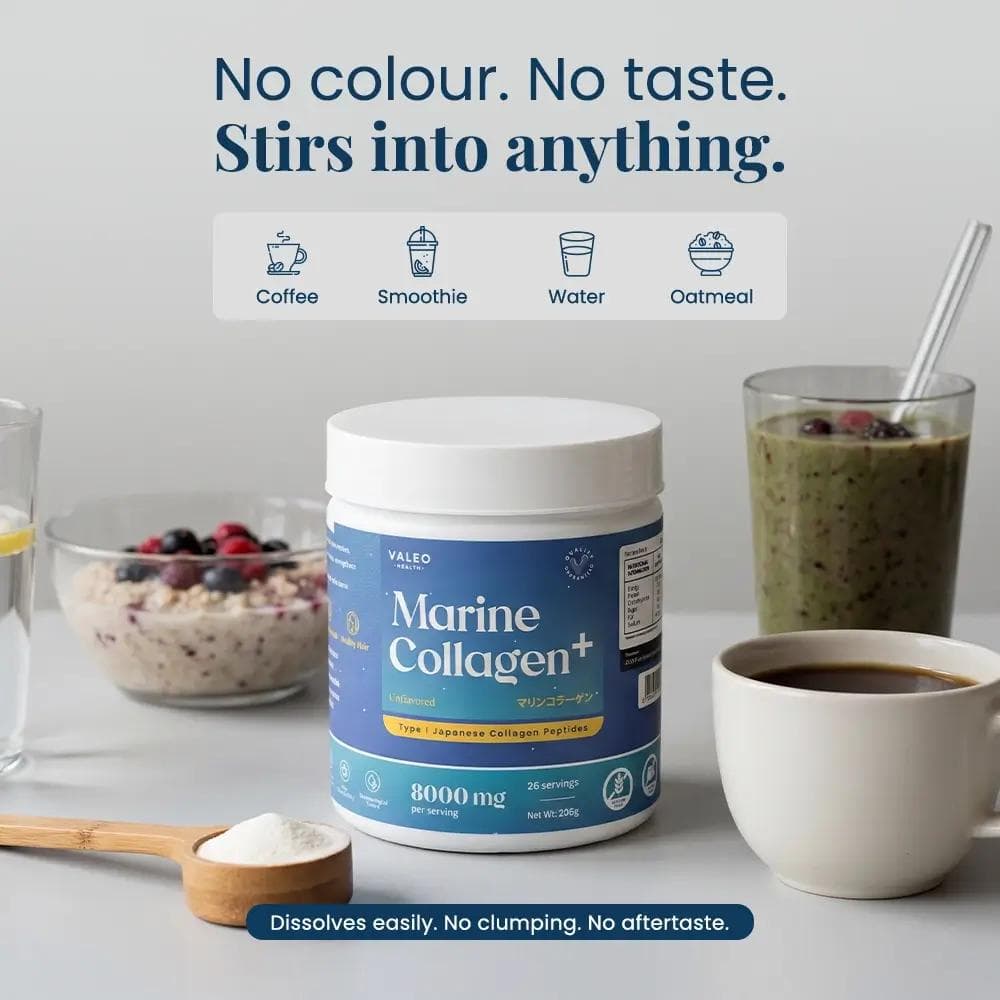
Powder collagen supplements are easy to add to coffee, smoothies, or juice, making daily use convenient.
Types of Collagen You'll Encounter
Marine collagen (fish)
Type I. Sourced from fish skin and scales. Small peptides, generally good absorption. Not suitable if you have a fish allergy.
1.Bovine collagen (cow)
Types I and III. Widely available, usually the cheapest per gram. Sourced from cow hide and bones.
2.Porcine collagen (pig)
Types I and III. Common in some markets, unsuitable for many consumers in this region on religious grounds.
3.Chicken collagen
Mostly Type II, with naturally occurring hyaluronic acid and chondroitin. Marketed for joints.
4.Vegan collagen
This is a misnomer worth flagging. There is no plant collagen — collagen is an animal protein. Products labelled vegan collagen are collagen builders: vitamin C, zinc, silica and amino acids intended to support your body's own collagen production. That's a legitimate product category, but it is not collagen.
Marine Collagen vs the Alternatives
Source | Collagen types | Typically used for | Peptide size | Notes |
Marine (fish) | Type I | Skin, hair, nails | Smallest | Avoids bovine and porcine sourcing; not for fish allergies |
Bovine (cow) | Types I & III | Skin and joints | Medium | Cheapest per gram; widely available |
Porcine (pig) | Types I & III | Skin and joints | Medium | Not suitable for many consumers in the GCC |
Chicken | Type II | Joints and cartilage | Larger | Often paired with hyaluronic acid |
"Vegan collagen" | None | Supporting own production | N/A | Contains no collagen — it's a builder blend |
Source, Sourcing and Certification
This deserves its own section because it's the question we get asked most often in this market.
Fish-derived collagen sidesteps porcine sourcing entirely, and avoids bovine sourcing too. For many buyers in Qatar that's the deciding factor, and it's a genuine practical advantage of the marine form.
Halal certification, though, is a separate question from source. Certification covers processing, handling and the full supply chain, not just the raw material. If certification matters to you, look for the certification mark itself rather than reasoning from the ingredient — and ask the retailer if it isn't printed on the pack.
The same logic applies to fish allergies. It's made from fish, and it is not safe for people with a fish allergy however finely processed it is. Check the allergen statement.
What Does the Research Actually Say?
Honest answer: the skin research is reasonably encouraging and the marketing runs well ahead of it.
Several randomised trials of hydrolysed collagen peptides have reported improvements in skin hydration and elasticity over 8 to 12 weeks. Reviews of that literature — including work summarised by Cleveland Clinic — generally conclude that the signal is real but modest, that study sizes are often small, and that a good number of trials have been funded by collagen manufacturers.
What that means for you in practice:
- Expect subtle changes, not transformation
- Expect them at around 8–12 weeks of consistent daily use, not two weeks
- Collagen is one input among many. Sun exposure, sleep, hydration and smoking all move the same needle, some of them harder
We'd rather say that plainly than sell you a miracle.
How Much Marine Collagen Should You Take Daily?
Most collagen studies use around 2.5 g to 10 g of collagen peptides daily.
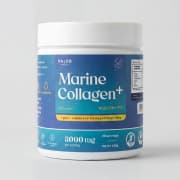
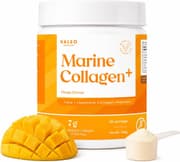
Valeo Marine Collagen+ provides 8 g collagen peptides per serving.
Consistency is important. Most noticeable changes reported in studies are seen after 8–12 weeks of regular use.
How to Choose Marine Collagen in Qatar
Before you buy, check:
· Hydrolyzed collagen or collagen peptides on the label
·
Collagen amount per serving, not just total package size
·
Fish source and allergen information
·
Ingredient quality and transparency
·
Brand testing standards
Is Marine Collagen Safe?
Marine collagen is generally well tolerated. Some people may experience mild digestive discomfort or aftertaste.
Avoid marine collagen if you have:
- Fish allergy
- Shellfish allergy concerns
- Specific medical conditions requiring protein restrictions
Speak with a healthcare professional if you are pregnant, breastfeeding, or taking prescription medications.
Final Thoughts
If your goal is skin, hair and nails, marine collagen is the sensible pick — it's Type I, it absorbs well, and it avoids the sourcing questions that come with bovine and porcine collagen. Just be realistic about what it does. Eight to twelve weeks of consistent daily use, alongside sun protection and sleep, is the honest picture.
Pick the format you'll actually stick with: unflavoured Marine Collagen+ or Marine Collagen+ Mango. Not sure how much or when? See how much collagen to take per day.
Medically Reviewed By: Dr. Rayan Mohammed, General Practitioner at Valeo Health
Reviewed for medical accuracy, safety guidelines, and healthcare recommendations.
Frequently Asked Questions abut Marine Collagen
1.What is marine collagen made from?
Marine collagen is made from fish skin and scales. The collagen is processed into smaller peptides called hydrolyzed collagen peptides.
2.Is marine collagen better than bovine collagen?
Neither is always better. Marine collagen mainly contains Type I collagen and is commonly chosen for skin, hair, and nail support, while bovine collagen contains Type I and III collagen.
3.How long does marine collagen take to work?
Most studies that report changes in skin hydration and elasticity observe results after around 8–12 weeks of consistent daily use.
4.Can I take marine collagen every day?
Yes, many people include marine collagen as part of their daily wellness routine. Follow the serving instructions on your product label.
5.Does marine collagen smell or taste like fish?
High-quality marine collagen is usually neutral in taste and smell. A strong fishy smell may indicate processing or quality issues.
6.Is marine collagen halal?
Marine collagen comes from fish sources, but halal certification depends on the complete manufacturing and supply chain process. Consumers should check the certification mark if this is important to them.
7.Do I need vitamin C with marine collagen?
Vitamin C supports the body's natural collagen production. It does not have to be taken in the same product but should be included in your daily diet.