
How to Take Berberine in Kuwait: Dose, Timing, Safety and Who Should Be Careful
Quick Answer: How Should You Take Berberine?
Berberine supplements come in different strengths and formulations, so there is no single dose that is appropriate for everyone.
Many clinical studies have used 500 mg of berberine HCl two or three times a day, giving a total daily amount of around 1,000 to 1,500 mg. Dividing the daily amount into several servings is common in research and may also be easier for some people to tolerate than taking a large amount at once.
However, research doses should not be treated as personal dosage instructions. The appropriate serving depends on your specific supplement, its formulation, your health, your tolerance and any medicines you take.
Always follow the directions on your supplement label unless a qualified healthcare professional advises you differently.
If you take medication for diabetes, blood pressure, cholesterol or another ongoing medical condition, speak with your doctor or pharmacist before adding berberine to your routine.
For people searching for berberine in Kuwait, the same principle applies. Choose a clearly labelled supplement, understand how much berberine you receive per serving and do not increase the amount simply because another product or research study uses a different dose.
Start Low, Then Build Carefully
Digestive discomfort is one of the main reasons some people find berberine difficult to tolerate.
Cramping, loose stools, constipation, gas and nausea are among the symptoms that may occur, particularly when someone begins with a larger amount.
If the instructions for your specific product allow a gradual introduction, beginning carefully may make the supplement easier to tolerate. Some people start with one serving daily and increase only if they remain comfortable.
Do not increase the amount beyond the serving stated on the product label.
If digestive symptoms are severe, persistent or unusual, stop taking the supplement and speak with a healthcare professional.
What Is Berberine and How Does It Behave in the Body?
Berberine is a naturally occurring plant compound known as an alkaloid.
It is found in several plants, including Berberis vulgaris, Berberis aristata and Coptis chinensis.
In dietary supplements, berberine is commonly available as berberine hydrochloride, usually written as berberine HCl.
Researchers have investigated berberine for its potential role in metabolic health, including its possible effects on blood glucose and lipid markers.
Two characteristics are particularly relevant when considering how berberine is used.
1.Berberine Does Not Remain in the Body for Long Periods
Research protocols commonly divide the total daily amount into more than one serving rather than giving the entire amount at once.
This is one reason several berberine studies use divided servings throughout the day.
Your own supplement may use a different serving schedule, so the product instructions should always take priority.
2.Berberine Has Limited Oral Absorption
Only part of the berberine that is swallowed reaches systemic circulation unchanged.
This has led to the development of different formulations intended to change how berberine is delivered and absorbed.
It also means that the milligram amount alone is not always enough to compare two products.
Standard berberine HCl and an enhanced absorption formulation may use different amounts and should not automatically be compared based only on the number printed on the front of the bottle.
Why Do People Ask About Berberine Timing?
People considering a berberine supplement in Kuwait often have the same practical questions.
How many milligrams of berberine should I take per day?
Is berberine better in the morning or at night?
Should berberine be taken before food or with food?
How long does berberine take to work?
Can I take berberine with diabetes medication?
What happens if I stop taking berberine?
The following sections answer each question in more detail.
How Much Berberine Should You Take Per Day?
There is no universal daily amount that is appropriate for every person.
1.What Is the Standard Berberine Dose Used in Research?
A commonly studied amount is 500 mg per serving.
Some clinical studies use 500 mg twice daily, while others use 500 mg three times daily.
This is why a total daily amount of around 1,000 to 1,500 mg is frequently mentioned when discussing berberine dosage.
These amounts describe research protocols.
They do not automatically represent the right serving for every supplement or every person.
The serving instructions on your specific product should remain your starting point.
2.What If Your Berberine Supplement Contains 1000 mg?
Some products are formulated with a higher amount per serving.
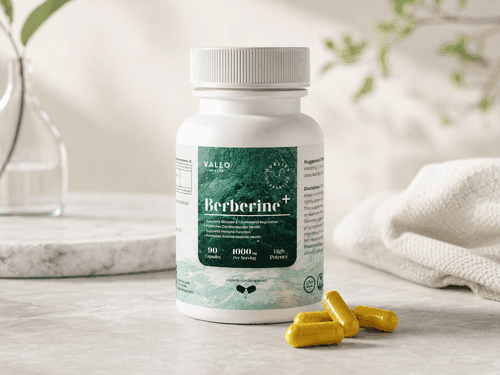
Valeo Berberine+ available in Kuwait provides 1000 mg of berberine HCl per daily serving and comes in a bottle containing 90 capsules.
If your product provides 1000 mg per serving, follow the directions for that specific formulation rather than trying to recreate a study that used individual 500 mg servings.
If you are interested in the Valeo formulation, see Valeo Berberine+ 1000 mg, 90 Capsules.
3.What If You Are Using a Phytosome or Enhanced Absorption Product?
Some berberine formulations are designed differently from standard berberine HCl.
They may use a lower stated milligram amount because their delivery method is different.
Do not assume that a supplement containing fewer milligrams is automatically weaker.
Compare the form of berberine, the amount per serving, the recommended serving and the complete formulation.
4.Do Not Exceed the Product Label
More berberine does not automatically mean better results.
Increasing the amount may increase the likelihood of digestive discomfort without providing a proportional benefit.
Follow the serving instructions stated on your product.
When Should You Take Berberine?
There is no single perfect hour for taking berberine.
The most practical approach is to follow your product instructions and create a routine that you can maintain consistently.
If a supplement uses two daily servings, morning and evening may be convenient.
If it uses three divided servings, breakfast, lunch and dinner may be easier to remember.
The exact clock time is usually less important than following the correct serving schedule consistently.
Should You Take Berberine With Food?
Many people take berberine around their meals because this fits naturally into a divided serving schedule.
Taking it around food may also be more comfortable for people who experience stomach irritation.
However, product instructions and research protocols can differ.
Some research protocols have used berberine before meals, while commercial supplements may provide different guidance.
Follow the instructions on your specific product.
If you experience nausea, abdominal discomfort, diarrhoea or another digestive symptom, speak with a healthcare professional about whether changing the timing is appropriate.
Is Berberine Better in the Morning or at Night?
Berberine does not need to be treated strictly as a morning supplement or a nighttime supplement.
For people using divided servings, spacing them throughout the day is generally more practical.
If your supplement recommends one daily serving, follow the timing on the label.
If it recommends two servings, morning and evening may work well.
If it recommends three servings, spreading them around your main meals may be convenient.
Consistency is generally more useful than focusing on one supposedly perfect time of day.
Berberine Dosing at a Glance
How Long Does Berberine Take to Work?
Berberine should not be judged after only a few days.
Clinical studies evaluating blood glucose, cholesterol and other metabolic markers commonly measure outcomes after several weeks.
Many studies review results after approximately eight to twelve weeks, while some continue for several months.
This means a realistic timeframe for evaluating measurable metabolic changes is usually weeks rather than days.
How you feel is not always a reliable way to judge what is happening to blood glucose or cholesterol.
If metabolic health is the reason you are considering berberine, knowing your starting measurements may make later assessment more meaningful.
An At Home Blood Test in Kuwait can help provide baseline metabolic information that you can discuss with a qualified healthcare professional.
Does Berberine Affect Blood Sugar?
Berberine has been studied for its possible effects on glucose metabolism.
Research suggests that it may influence blood glucose markers in some people.
This is also why people who already take medication for diabetes need to be particularly careful.
Berberine should not be used as a substitute for prescribed diabetes treatment.
If you have diabetes, prediabetes or abnormal blood glucose results, speak with the healthcare professional responsible for your care before starting berberine.
Can You Take Berberine With Metformin?
People taking metformin should speak with their doctor before adding berberine.
Metformin is a prescription medicine, while berberine is a dietary supplement, but both may influence glucose related pathways.
Combining a supplement that may influence blood glucose with an existing diabetes treatment without professional guidance can complicate blood sugar management.
Whether the combination is suitable depends on factors such as your medication dose, glucose readings, other medicines, medical history and overall treatment plan.
Do not stop, reduce or replace prescribed metformin because you have started taking berberine.
How to Choose the Right Berberine Product in Kuwait
Dose and timing matter, but they are useful only when you choose a product with clear and transparent information.
1.Check the Ingredient Form
Look for a clearly identified form such as berberine HCl, phytosome or another named formulation.
Knowing the form helps you make a more meaningful comparison between supplements.
2.Check the Amount Per Capsule and Per Serving
These numbers are not always the same.
A product may display a large amount on the front of the bottle while requiring several capsules to reach the stated serving.
Read the complete serving information.
3.Check Brand Transparency
Look for clear information about the manufacturer, active ingredients, production standards and quality controls.
A transparent label is more useful than vague marketing claims.
4.Look for Testing Information
Where available, review information about independent testing, certification or other quality checks.
5.Read Reviews Carefully
Customer reviews may provide useful information about the experience of using a product consistently.
However, reviews should never replace professional medical advice or clear product information.
6.Consider Your Own Health
A supplement that suits another person is not automatically suitable for you.
Your health history, medicines and reason for using berberine should all be considered.
7.Check for Medication Interactions
This is one of the most important steps.
If you take prescription medicine, speak with your doctor or pharmacist before starting berberine.
For a broader comparison of products, prices and formulations, read our Berberine Kuwait: Benefits, Price, Dosage and How to Choose the Best Supplement guide.
Are Berberine Supplements Safe?
For many healthy adults, berberine may be tolerated when used according to the product instructions.
However, berberine can cause side effects and may interact with medicines.
Natural does not automatically mean risk free.
Common Berberine Side Effects
The most commonly reported problems are digestive.
These can include:
Diarrhoea
Constipation
Abdominal cramping
Gas
Nausea
Vomiting
Following the product instructions and paying attention to how your body responds may help you recognise problems early.
If symptoms continue, become severe or concern you, stop using the supplement and seek medical advice.
Who Should Avoid Berberine or Speak With a Doctor First?
Certain people need additional caution before starting berberine.
1.People Taking Diabetes Medication
Berberine may influence blood glucose.
Anyone taking metformin, insulin or another medicine used to manage glucose should speak with a healthcare professional before adding berberine.
2.People Who Are Pregnant
Berberine is not recommended during pregnancy.
3.People Who Are Breastfeeding
Berberine should also be avoided while breastfeeding unless a qualified healthcare professional specifically advises otherwise.
Infants and Children
Berberine should not be given to infants.
Extra caution is also appropriate when considering dietary supplements for children.
4.People Taking Prescription Medication
Berberine can influence pathways involved in how the body processes certain medicines.
If you take prescription medication regularly, ask your doctor or pharmacist to review your medicines before starting berberine.
5.People With Liver or Kidney Disease
Anyone with liver disease, kidney disease or another significant ongoing medical condition should discuss new supplements with their healthcare professional.
6.People Preparing for Surgery
Tell your medical team about every medicine and supplement you take before surgery or another planned procedure.
Follow their instructions about whether any supplement should be stopped and when.
Can Berberine Interact With Medication?
Yes, berberine has the potential to interact with certain medicines.
Berberine may influence enzymes involved in drug metabolism, which can affect how some medicines are processed by the body.
This does not mean berberine will interact with every medicine.
It does mean that people taking prescription medication should check compatibility before adding it to their routine.
This is particularly important if you use medication for blood glucose, blood pressure, cholesterol or another ongoing health condition.
If you are unsure, speak with a doctor or pharmacist in Kuwait and provide them with a complete list of your medicines and supplements.
What Happens If You Stop Taking Berberine?
Berberine is not generally associated with a classic withdrawal syndrome.
You should not expect a sudden withdrawal reaction simply because you stop using the supplement.
However, any effect berberine may have been supporting should not automatically be expected to continue after supplementation stops.
If you were monitoring blood glucose, cholesterol or another metabolic marker, speak with your healthcare professional about whether further testing is appropriate.
Never stop prescribed medicine simply because you have started or stopped taking berberine.
How Long Can You Take Berberine?
There is no single duration that is appropriate for every person.
Many studies evaluate berberine over eight to twelve weeks, while others continue for several months.
Research lasting several months does not automatically mean indefinite supplementation is appropriate for everyone.
If you intend to use berberine for a longer period, discuss continued use with a healthcare professional, particularly if you take prescription medicine or have an ongoing medical condition.
Why Choose Valeo Berberine+ in Kuwait?
Valeo Berberine+ is available in Kuwait as a 1000 mg Berberine HCl supplement with 90 capsules.
Follow the directions on the pack for the correct serving size and timing.
The current Valeo Health Kuwait listing shows the product at KWD 18, reduced from KWD 21 at the time of writing.
Prices and promotions can change, so always check the current product information before purchasing.
If digestive health is part of the reason you are exploring supplements, Valeo also offers Gut Health Supplements such as probiotics and fibre options that work differently from berberine.
If you want to understand the broader research and reasons people use berberine, you can also read Seven Most Cited Berberine Benefits.
Final Thoughts
Taking berberine does not need to be complicated.
Research commonly uses divided servings, but the directions for your own supplement should always come first.
Pay attention to digestive tolerance, allow enough time for measurable health markers to be reviewed and avoid increasing the amount simply because you see a larger dose advertised elsewhere.
Most importantly, take medication interactions seriously.
If you use medicines for diabetes, blood pressure, cholesterol or another health condition, speak with a qualified healthcare professional before adding berberine.
For people in Kuwait who have already confirmed that berberine is suitable for them, the Full Valeo Supplement Range in Kuwait provides additional options for supporting daily health and wellness.
Medically Reviewed By: Dr. Rayan Mohammed, General Practitioner at Valeo Health
Reviewed for medical accuracy, safety guidelines, and healthcare recommendations.
Frequently Asked Questions About Berberine
1.How Much Berberine Should I Take Per Day?
Many studies have used a total daily amount of around 1,000 to 1,500 mg, commonly divided into two or three servings.
This is research information rather than a personalised dosage recommendation.
Follow the serving instructions on your specific product.
2.Is 500 mg of Berberine Enough?
A 500 mg serving is commonly used in clinical research.
Whether it is appropriate for you depends on your product, total daily serving, formulation, health and reason for taking berberine.
Do not increase the amount simply because another supplement contains more.
3.Can I Take 1000 mg of Berberine at Once?
Some supplements are specifically formulated to provide 1000 mg per daily serving.
Follow the instructions on your product.
Do not combine several servings simply to copy a research protocol.
4.What Is the Best Time to Take Berberine?
There is no universally proven best hour for everyone.
If your supplement recommends several daily servings, spacing them throughout the day may be practical.
Follow the product instructions for timing.
5.Is Berberine Better in the Morning or at Night?
Neither time is automatically better for everyone.
For a schedule involving two daily servings, morning and evening may be convenient.
For other formulations, follow the directions on the product.
6.Should Berberine Be Taken With Food?
Some people prefer taking berberine around meals because it may be more comfortable for the stomach.
Different products and protocols may provide different instructions.
Follow your supplement label.
7.Can You Take Berberine on an Empty Stomach?
This depends on the product and how you tolerate it.
If taking berberine on an empty stomach causes nausea or abdominal discomfort, speak with your doctor or pharmacist about whether changing the timing is appropriate.
8.How Long Does Berberine Take to Work?
Studies looking at metabolic markers often assess changes after approximately eight to twelve weeks.
Results should therefore generally be considered over weeks rather than a few days.
9.Can I Take Berberine Every Day?
Daily berberine use has been studied for periods lasting several weeks or months.
Whether daily supplementation is appropriate for you depends on your product, health and medication.
Follow the product directions and seek professional advice for longer use.
10.Can I Take Berberine With Metformin?
Only after discussing it with the healthcare professional responsible for your diabetes treatment.
Berberine may influence glucose related markers, so combining it with diabetes medication requires individual assessment.
11.Is Berberine the Same as Metformin?
No.
Berberine is a plant derived compound used in dietary supplements.
Metformin is a prescription medicine.
Berberine should not be used as a substitute for metformin or another prescribed treatment.
12.What Are the Most Common Berberine Side Effects?
The most common concerns are digestive symptoms such as nausea, abdominal discomfort, diarrhoea, constipation, cramping and gas.
If symptoms are persistent or severe, stop taking the supplement and seek medical advice.
13.Can Berberine Cause Diarrhoea?
Yes.
Diarrhoea is one of the digestive symptoms reported by some people taking berberine.
If it is severe or continues, stop using the supplement and speak with a healthcare professional.
14.Can Berberine Cause Constipation?
Yes.
Constipation may occur in some people who take berberine.
Monitor your symptoms and seek medical advice if they continue.
15.Who Should Not Take Berberine?
People who are pregnant or breastfeeding should avoid berberine.
It should not be given to infants.
People taking prescription medication or managing an ongoing medical condition should speak with a healthcare professional before using it.
16.Does Berberine Interact With Medication?
It can.
Berberine may influence pathways involved in how some medicines are processed.
Anyone taking prescription medicines should check potential interactions with a doctor or pharmacist.
17.Does Berberine Affect Blood Sugar?
Berberine has been studied for its possible effects on glucose metabolism.
This is one reason people taking diabetes medication should discuss berberine with their healthcare professional before using it.
18.What Happens When You Stop Taking Berberine?
Berberine is not generally associated with a classic withdrawal syndrome.
However, any effect it may have been supporting should not be assumed to continue once supplementation stops.
19.How Long Can You Take Berberine?
There is no universal duration for everyone.
Many studies last around eight to twelve weeks or several months.
Discuss longer use with a healthcare professional, particularly if you take medication or have an ongoing health condition.
20.Where Can I Buy Berberine in Kuwait?
Berberine supplements are available from health and wellness retailers in Kuwait.
Valeo Health offers Valeo Berberine+ with 1000 mg of Berberine HCl per daily serving and 90 capsules.
Check the current product information, serving instructions, availability and price before purchasing.