
Electrolytes in Kuwait: How to Read the Label and Choose the Right One
When Kuwait temperatures climb, sweating can become part of an ordinary day rather than something that happens only during exercise.
A short walk outdoors, a gym session, working outside or spending several hours moving between locations can all increase fluid losses. That helps explain why electrolytes in Kuwait have moved from being mainly a sports product to becoming part of everyday hydration routines.
The problem is that not every product labelled hydration or electrolytes is formulated the same way.
Some provide meaningful amounts of sodium and other minerals. Others contain relatively little electrolyte but plenty of sugar, flavouring or added vitamins.
That is why choosing hydration supplements in Kuwait should begin with the nutrition label rather than the front of the package.
This guide explains what numbers matter, how different formats compare, what an electrolyte drink in Kuwait should contain for different situations and how to avoid paying more for a formula that does not match your needs.
Quick Answer: What Should You Look for in an Electrolyte Drink?
Start with sodium.
For general comparison, many useful electrolyte products provide roughly 300 to 1,000 mg of sodium per serving depending on their intended use.
Products below about 200 mg may provide relatively little sodium for meaningful sweat replacement, while formulas toward the higher end are generally designed for heavier sweating or longer exercise sessions.
Next, check potassium, magnesium and sugar.
Potassium commonly appears around 200 to 400 mg per serving in electrolyte formulas. Magnesium is often included in smaller amounts.
Finally, check sugar. A small amount of carbohydrate can have a practical role during prolonged exercise, but a drink containing very high sugar and very little sodium may be closer to a sweetened sports drink than a serious rehydration formula.
Why Sodium Is the First Number to Check
Sweat contains several electrolytes, but sodium and chloride are the minerals lost in the greatest amounts.
That makes sodium the most useful starting point when comparing products.
A simple practical guide is:
Under 200 mg per serving: relatively low sodium.
Around 300 to 500 mg: a moderate range that may suit everyday hydration during hot conditions.
Around 500 to 1,000 mg: more relevant for heavier sweating, prolonged outdoor activity or longer exercise.
Above 1,000 mg: generally positioned toward endurance athletes or very heavy sweat losses rather than routine desk-day hydration.
These numbers are a comparison guide rather than an individual prescription. Sweat rates, diet, health conditions and activity levels differ between people.
If a product does not clearly state its sodium content in milligrams, comparing it with alternatives becomes much more difficult.
What About Potassium?
Potassium works alongside sodium in normal nerve signalling, muscle function and fluid balance.
Many electrolyte formulas contain approximately 200 to 400 mg per serving, although formulations vary considerably.
More is not automatically better.
People with kidney disease or those taking medicines that affect potassium need individual medical advice before routinely using high-potassium products.
Does an Electrolyte Drink Need Magnesium?
Magnesium is commonly included in electrolyte formulas, but usually in fairly small amounts.
This is important if your main reason for buying electrolytes is muscle cramping.
A hydration sachet may provide some magnesium, but it often supplies considerably less than a dedicated magnesium supplement.
Electrolytes and magnesium supplements can therefore have different purposes.
How Much Sugar Should an Electrolyte Drink Have?
Sugar is one of the easiest ways to separate different types of hydration products.
A small amount of carbohydrate can support fluid absorption during prolonged physical activity because sodium and glucose are transported together in the intestine.
However, that does not mean every everyday hydration drink needs a large amount of sugar.
If you use an electrolyte drink in Kuwait mainly for ordinary heat exposure, commuting or moderate workouts, a lower-sugar or sugar-free option may be more practical.
If you are exercising for several hours, carbohydrate-containing formulas may have a different role.
The context matters more than a simple sugar is good or sugar is bad rule.
What Electrolyte Formats Are Available in Kuwait?
The format can make almost as much difference to your routine as the ingredients.
When comparing electrolyte powder in Kuwait, tablets, sachets and ready-to-drink products, think about where you will actually use them.
Stick Packs and Sachets
Single-serve sachets are one of the most practical options for Kuwait.
They are already measured, easy to put in a gym bag, desk drawer or travel bag, and only require a bottle of water.
This format works particularly well when hydration is needed away from home.
Effervescent Electrolyte Tablets
Effervescent tablets are compact and convenient for travel.
You simply add one to water and wait for it to dissolve.
The important point is to check sodium because many tablets contain less sodium than powder sticks.
Do not assume two products are equivalent simply because both are called electrolytes.
Electrolyte Powder Tubs
A larger electrolyte powder in Kuwait may provide a lower cost per serving than individual sticks.
The trade-off is convenience.
You need to measure the powder and have the container available, making tubs more practical at home than while commuting.
Ready-to-Drink Electrolytes
Pre-mixed bottles are extremely convenient but usually cost more per serving.
They are also heavier to carry and may contain considerably more sugar.
Read the nutrition information rather than assuming a bottled sports drink automatically provides strong electrolyte replacement.
Coconut Water
Coconut water naturally contains potassium and can be an enjoyable hydration drink.
However, it is relatively low in sodium compared with many purpose-formulated electrolyte drinks.
That means it may not replace the main mineral lost during significant sweating as effectively as a higher-sodium formula.
Oral Rehydration Salts
Oral rehydration salts are different from everyday sports electrolytes.
ORS products use a specific sodium and glucose balance designed for fluid replacement during illnesses involving vomiting or diarrhoea.
When illness is the reason for dehydration, particularly in children, an appropriate oral rehydration product is more relevant than an adult sports hydration mix.
How to Choose Electrolytes in Kuwait Without Overpaying
Once you know what you need, the comparison becomes much easier.
Start by checking sodium per serving.
Then look at potassium, magnesium and sugar.
After that, calculate the actual cost per serving.
A box costing KWD 9 with 20 servings is not directly comparable with a similarly priced tub containing 30 or 40 servings.
Imported premium products can also become much more expensive after shipping without necessarily providing more sodium or a better formula.
Higher price does not automatically mean better hydration.
If you want to compare locally available formulas, you can review Valeo Health hydration supplements and electrolyte options in Kuwait after deciding what sodium level and format actually suit your routine.
The label should make the decision first. Branding should come second.
Which Electrolyte Format Is Best for Everyday Kuwait Heat?
There is no single best format for everyone.
For many people, stick packs are practical because Kuwait hydration often happens away from home.
Someone commuting, working outdoors or going to the gym can keep single-serve sachets nearby without carrying a tub.
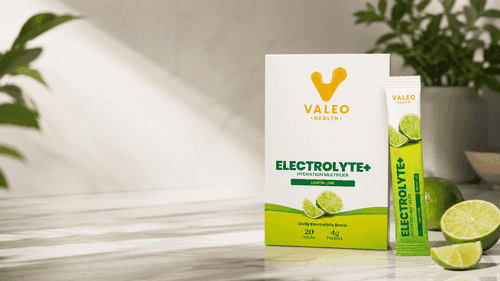
Valeo Health currently offers hydration stick formats for people looking for convenient everyday electrolyte options, including lemon and lime and fruit-based flavour profiles within its Kuwait supplement range.
When choosing hydration supplements in Kuwait, the best option is usually one that provides an appropriate formula and is convenient enough that you will actually use it.
Electrolytes vs Magnesium for Muscle Cramps
If cramping is your main concern, do not assume an electrolyte drink provides a full magnesium dose.
Hydration formulas generally prioritise fluid and electrolyte replacement rather than delivering large quantities of one mineral.
If your diet or individual needs call for more dedicated magnesium support, you can compare a Valeo Health Magnesium+ supplement in Kuwait for dedicated magnesium support separately from your electrolyte routine.
Electrolytes may be more relevant after heavy sweating.
A magnesium supplement has a different nutritional purpose.
Electrolytes and Creatine: Do You Need Both?
Creatine and electrolytes are not substitutes for each other.
Creatine is commonly used within training routines to support high-intensity exercise performance and strength, while electrolyte products are focused on replacing minerals and supporting hydration.
Someone training regularly may therefore use both for different reasons.
If performance is part of your goal, you can compare Valeo Health creatine and performance supplements available in Kuwait separately from your hydration product.
Every supplement in a routine should have a clear purpose rather than being added because it is popular.
What Else Should You Check on an Electrolyte Label?
Sodium, potassium and sugar are the major numbers, but several smaller details still matter.
Consider whether you genuinely like the flavour. A perfectly formulated product is not useful if you dislike it so much that the box stays unopened.
Check the sweetener type if sugar alcohols or particular sweeteners cause digestive discomfort for you.
Look for unnecessary duplication of vitamins if you already use a multivitamin or other fortified products.
Also consider storage.
Powders and sachets should be kept away from prolonged heat and humidity. Leaving hydration products inside a very hot car for extended periods is not ideal.
Who Should Be Careful With High-Sodium Electrolytes?
High-sodium formulas are not appropriate for everyone.
People with high blood pressure, heart failure or a medically prescribed low-sodium diet should discuss regular electrolyte use with their healthcare professional.
People with kidney disease need additional caution because the kidneys regulate potassium and magnesium.
Some medicines, including certain diuretics, ACE inhibitors and ARBs, can affect electrolyte balance.
People with diabetes should also check the carbohydrate and sugar content.
Children with dehydration from illness should generally use an age-appropriate oral rehydration product rather than an adult sports formula.
The key principle is simple: match the product to the fluid and electrolyte losses you have actually experienced.
Do You Need Electrolytes Every Day?
Not necessarily.
A person spending the entire day indoors with normal activity and a balanced diet may not need a high-sodium electrolyte product every day.
Electrolytes become more relevant when losses increase.
Examples include prolonged exercise, heavy sweating, outdoor work, extended heat exposure and certain situations involving significant fluid loss.
Routine use should still make sense for your health, diet and activity level.
Where Can You Buy Electrolytes in Kuwait?
Electrolytes in Kuwait are available through pharmacies, sports retailers, supermarkets and online health platforms.
Online shopping can make comparison easier because you can check serving size, sodium, sugar and price before purchasing.
If you are comparing an electrolyte powder in Kuwait with stick packs or other supplement formats, you can also browse Valeo Health supplement options in Kuwait for hydration, minerals and performance.
For further educational reading rather than product shopping, the Valeo Health supplement articles covering hydration, minerals and wellness in Kuwait can help you understand how different supplement categories fit together.
Final Thoughts
Choosing electrolytes in Kuwait does not need to be complicated.
Turn the package over.
Check sodium first, then potassium, magnesium and sugar. After that, calculate the price per serving and decide whether the format works for your routine.
An expensive imported product is not automatically better than a simpler local option.
For everyday use, the best electrolyte drink in Kuwait is usually one that matches your actual sweat losses, fits your health needs and is convenient enough to use consistently.
Hydration supplements in Kuwait should solve a specific hydration problem rather than simply add another product to your shelf.
Medically Reviewed By: Dr. Rayan Mohammed, General Practitioner at Valeo Health
Reviewed for medical accuracy, safety guidelines, and healthcare recommendations.