










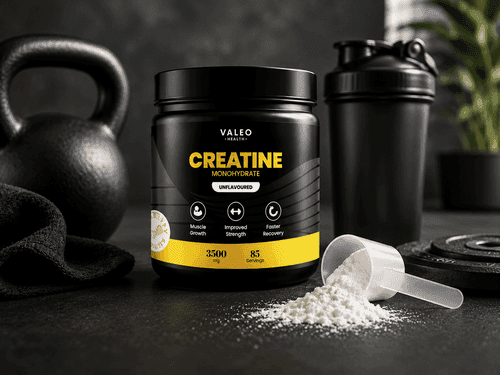
Creatine Side Effects: Hair Loss, Kidneys, Bloating & What the Research Says
Creatine has been studied for decades and is one of the most widely used sports supplements in the world. Yet it still comes with plenty of questions.
Does creatine cause hair loss? Can it damage your kidneys? Will it make you bloated or dehydrated? And is it actually safe to take every day?
If you have heard different answers online, you are not alone.
The short answer is that creatine monohydrate is generally well tolerated by healthy adults when used at commonly studied doses. The side effects that do occur are usually mild and often related to water retention or taking large amounts at once.
Some of the biggest concerns, particularly kidney damage and hair loss, require more context than they often receive online.
This guide explains the creatine side effects that are supported by evidence, the ones that are largely misunderstood, and when it makes sense to speak with a healthcare professional before using creatine.
Quick Answer: Does Creatine Have Side Effects?
Yes, creatine can cause side effects, but they are usually mild.
Some people experience temporary water-weight changes, stomach discomfort, bloating, nausea or loose stools, particularly when using a high-dose loading phase.
Current research does not show that standard creatine supplementation causes kidney damage in healthy adults. Creatine can, however, increase blood creatinine levels, which can affect how some kidney blood tests are interpreted.
Current evidence also does not show that creatine causes hair loss. A randomized controlled trial published in 2025 directly examined hair health and found no significant difference between creatine and placebo.
People with kidney disease, reduced kidney function or significant medical conditions should discuss creatine with a healthcare professional before starting.
What Is Creatine and What Does It Do in the Body?
Creatine is a naturally occurring compound that your body already produces. You also obtain smaller amounts from foods such as meat and fish.
Most creatine in the body is stored in skeletal muscle.
There, it helps support the phosphocreatine energy system.
During short bursts of intense activity, such as lifting a heavy weight, sprinting or jumping, your muscles rapidly use adenosine triphosphate, or ATP.
Phosphocreatine helps regenerate ATP so your muscles can continue producing energy during these brief, demanding efforts.
Taking creatine increases muscle creatine stores over time. This is why creatine is commonly used to support strength, power and repeated high-intensity exercise.
It is important to understand what creatine is not.
Creatine is not a steroid. It is not a stimulant, and it is not a hormone.
Understanding this makes it easier to separate genuine creatine side effects from concerns that have little to do with how creatine actually works.
What Are the Most Common Creatine Side Effects?
For most healthy adults, creatine monohydrate is well tolerated.
When side effects occur, the most commonly reported issues involve changes in body water or digestive discomfort.
The likelihood of digestive symptoms may increase when large amounts are taken in a single dose.
Creatine Water Retention and Weight Gain
One of the most noticeable early effects of creatine can be an increase in body water.
Creatine increases water associated with muscle tissue as muscle creatine stores rise.
As a result, some people notice the number on the scale increase during the first days or weeks of supplementation, particularly if they use a loading phase.
The amount varies considerably between individuals, and not everyone experiences a noticeable change.
This early increase should not automatically be interpreted as fat gain.
For someone competing in a weight-class sport or closely tracking body weight, it is worth keeping this temporary change in mind.
Does Creatine Cause Bloating?
Creatine may cause bloating or a feeling of fullness in some people, particularly when high doses are taken at once.
This is more likely during a traditional loading phase than when taking a smaller maintenance dose each day.
If bloating is uncomfortable, skipping the loading phase and using a smaller daily dose may be easier to tolerate.
Creatine does not need to be loaded in order to work. Loading simply increases muscle creatine stores more quickly.
Can Creatine Cause Stomach Pain or Diarrhoea?
Digestive symptoms can occur, particularly when a large amount of creatine is consumed in one serving.
Possible symptoms include:
Nausea
Stomach cramps
Loose stools
A feeling of fullness
If this happens, reducing the amount taken at one time or dividing the daily amount into smaller servings may help.
A person who continues to experience significant digestive symptoms should stop using the supplement and speak with a healthcare professional.
Does Creatine Cause Hair Loss?
Current evidence does not show that creatine causes hair loss.
The concern largely started with a small 2009 study involving rugby players.
Researchers found an increase in dihydrotestosterone, commonly called DHT, after creatine supplementation.
DHT is relevant because sensitivity to androgens such as DHT plays an important role in androgenetic alopecia, or male pattern hair loss.
However, the study had an important limitation.
It did not actually measure hair loss.
Researchers did not assess hair density, shedding, hair thickness or follicle health.
For years, the claim that creatine causes hair loss was therefore based mainly on a change in a hormone associated with hair loss rather than direct evidence showing that hair was being lost.
What Does New Research Say About Creatine and Hair Loss?
More direct evidence became available in 2025.
In a 12-week randomized controlled trial, resistance-trained men received either 5 grams of creatine monohydrate per day or a placebo.
Researchers measured DHT, testosterone and several direct markers of hair health, including hair density, follicular unit count and cumulative hair thickness.
They found no significant difference between the creatine and placebo groups for DHT or the measured hair outcomes.
This study is important because it directly examined hair follicle health rather than relying only on hormone measurements.
Based on current evidence, there is no convincing evidence that normal creatine supplementation causes hair loss.
People who are already experiencing unusual or rapid hair loss should still speak to a healthcare professional, because genetics, hormones, nutritional deficiencies, medications and several medical conditions can contribute to hair changes.
Is Creatine Bad for Your Kidneys?
For healthy adults, current research does not show that creatine monohydrate taken at commonly studied doses causes kidney injury.
The confusion largely comes from a blood marker called creatinine.
Creatine and creatinine sound similar, but they are not the same thing.
Creatinine is a breakdown product associated with creatine metabolism and is commonly measured in blood tests because the kidneys remove it from the bloodstream.
Healthcare professionals often use serum creatinine to help estimate kidney filtration.
When someone supplements with creatine, serum creatinine may rise slightly.
That increase can make a creatinine-based estimate of kidney function appear lower even when there is no corresponding evidence that the kidneys have been damaged.
Creatine, Creatinine and Kidney Blood Tests
Recent systematic reviews and meta-analyses have helped clarify the issue.
Creatine supplementation has been associated with modest increases in serum creatinine.
However, researchers have not consistently found corresponding changes in other kidney-health measurements that would indicate actual kidney injury.
This means an elevated creatinine result in someone taking creatine needs to be interpreted in context.
If you use creatine and are having kidney blood tests, tell the healthcare professional who ordered or interprets the test.
They can decide whether additional testing or alternative kidney-function markers are appropriate.
Who Should Be Careful With Creatine?
The strongest safety evidence applies to generally healthy adults.
Speak with a qualified healthcare professional before taking creatine if you:
Have kidney disease or reduced kidney function
Have a history of significant kidney problems
Have liver disease or another significant chronic health condition
Take medicines that may affect kidney function
Are pregnant or breastfeeding
Are under 18 and considering supplementation
Have been given specific medical instructions about fluid, protein or supplement intake
This does not automatically mean creatine is unsuitable for every person in these groups.
It means the decision should be personalized rather than based only on general supplement advice.
Does Creatine Cause Dehydration?
Current research does not support the idea that creatine causes dehydration when used at recommended doses.
The myth developed partly because creatine changes water distribution within muscle tissue.
Researchers once questioned whether this might reduce the amount of water available elsewhere in the body.
Controlled research has not demonstrated a higher dehydration risk among healthy creatine users.
That does not mean hydration becomes less important.
Creatine cannot compensate for inadequate water intake.
Creatine and Hydration in Kuwait's Heat
Hydration deserves special attention for anyone exercising in Kuwait.
High temperatures and heavy sweating can significantly increase fluid and electrolyte losses regardless of whether you use creatine.
If you train outdoors, exercise for long periods or sweat heavily, your hydration strategy matters far more than simply asking whether creatine holds water in the muscles.
Start exercise adequately hydrated.
Replace fluids after significant sweat loss.
During prolonged or heavy sweating, sodium and other electrolytes may also need to be replaced.
Creatine does not create a hydration problem in healthy users, but it also does not protect you against dehydration caused by Kuwait's heat.
Does Creatine Cause Muscle Cramps?
Available research does not show that creatine consistently increases muscle cramps.
Studies involving athletes and people exercising in hot environments have generally not found a higher rate of cramping among creatine users.
Cramps can have many causes, including muscle fatigue, high exercise intensity, previous cramping history, fluid losses and electrolyte imbalance.
If cramping happens frequently, it makes sense to look at the complete training and hydration picture rather than automatically blaming creatine.
Does Creatine Make You Gain Fat?
Creatine itself does not directly cause body-fat gain.
The early change some people notice on the scale is primarily related to body water.
Over time, someone using creatine alongside resistance training may also gain lean mass as training capacity and muscle development improve.
Neither effect is the same as gaining body fat.
Body-fat changes are influenced much more by overall calorie intake, energy expenditure, activity levels and other lifestyle factors.
Does Creatine Damage the Liver?
Liver damage is not considered a common side effect of standard creatine monohydrate supplementation in healthy adults.
However, people with existing liver disease, abnormal liver-function tests or significant medical conditions should speak with their doctor before taking any new supplement.
This becomes particularly important when multiple supplements or medications are being used at the same time.
Is Creatine Safe to Take Every Day?
For most healthy adults, daily creatine monohydrate at commonly studied doses is generally considered well tolerated.
Daily supplementation is also how creatine has been used in much of the research.
A common maintenance intake used in studies is around 3 to 5 grams per day.
A loading phase is optional rather than necessary.
Do You Need a Creatine Loading Phase?
No.
A loading phase can increase muscle creatine stores faster, but it is not required.
A traditional loading approach uses a larger total daily amount divided into several smaller doses for a short period before moving to a maintenance intake.
Taking around 3 to 5 grams daily without loading can also increase muscle creatine stores, simply more gradually.
Skipping loading may be preferable for people concerned about digestive discomfort or rapid water-weight changes.
How Much Water Should You Drink With Creatine?
There is no evidence-based rule requiring everyone taking creatine to drink a specific extra amount of water.
Hydration needs depend on your body size, diet, physical activity, sweat rate and climate.
Someone training outdoors in Kuwait during summer will naturally have very different fluid requirements from someone working indoors in air conditioning.
Aim for appropriate overall hydration rather than forcing excessive amounts of water simply because you take creatine.
Which Type of Creatine Is Best Studied?
Creatine monohydrate remains the form with the strongest research base.
Other forms such as creatine hydrochloride, buffered creatine and creatine ethyl ester are often marketed as more advanced alternatives.
However, they have not consistently demonstrated meaningful advantages over creatine monohydrate.
When choosing a creatine product, look for:
Creatine monohydrate as the main ingredient
A clearly stated amount per serving
Transparent ingredient information
Quality and purity testing where available
Minimal unnecessary ingredients
Clear manufacturer information
Creatine Side Effects at a Glance
Water retention: Possible, particularly during the early stages of supplementation.
Weight gain: May occur initially because of increased body water rather than fat.
Bloating: Possible, especially with high doses or loading.
Stomach upset: Possible and more likely with large single doses.
Hair loss: Not demonstrated by current controlled evidence.
Kidney damage: Not demonstrated in healthy adults taking commonly studied doses.
Higher serum creatinine: Possible and important when interpreting blood tests.
Dehydration: Current evidence does not show an increased risk from creatine itself.
Muscle cramps: Not supported as a consistent creatine side effect.
Fat gain: Creatine itself does not directly cause fat gain.
Final Thoughts: How Safe Is Creatine?
Creatine has attracted a long list of side-effect claims, but many sound more alarming than the research suggests.
Water-weight changes can happen.
Digestive discomfort can happen, especially with large single doses.
Those are realistic considerations.
Hair loss, however, has not been demonstrated in controlled research, and a 2025 trial that directly examined hair health found no significant difference between creatine and placebo.
Kidney concerns also need context. Creatine can increase serum creatinine and affect creatinine-based kidney estimates, but this should not automatically be interpreted as kidney damage in a healthy person.
The most important distinction is who is taking it.
A healthy adult considering a standard amount of creatine monohydrate is very different from someone with kidney disease, a significant medical condition or medications that affect kidney function.
If any of those apply to you, speak with a qualified healthcare professional before starting.
Medically Reviewed By: Dr. Rayan Mohammed, General Practitioner at Valeo Health
Reviewed for medical accuracy, safety guidelines, and healthcare recommendations.
Frequently Asked Questions About Creatine Side Effects
1. Does creatine cause hair loss?
Current controlled research does not show that creatine causes hair loss. A 2025 randomized controlled trial directly examined hair density, follicular units and hair thickness and found no significant difference between people taking creatine and those taking placebo.
2. Is creatine bad for your kidneys?
Current evidence does not show kidney injury from commonly studied creatine doses in healthy adults. Creatine can increase serum creatinine, which may affect creatinine-based kidney-test results. People with kidney disease or impaired kidney function should consult a healthcare professional before taking creatine.
3. Can creatine increase creatinine on a blood test?
Yes. Creatine supplementation can modestly raise serum creatinine. Because creatinine is used to estimate kidney function, tell your healthcare professional that you take creatine before your results are interpreted.
4. Does creatine cause bloating?
Some people experience bloating or fullness, particularly when using high-dose loading protocols. Smaller daily doses may be easier to tolerate.
5. Why do you gain weight after starting creatine?
Early weight gain is usually related to increased body water as muscle creatine stores rise. It should not automatically be interpreted as fat gain.
6. Does creatine cause dehydration?
Current research does not show that recommended creatine supplementation increases dehydration risk in healthy users. Proper hydration remains essential, especially when exercising in Kuwait's heat.
7. Does creatine cause cramps?
Research has not consistently shown an increased risk of muscle cramps among creatine users. Fatigue, training intensity, fluid loss and electrolyte imbalance are other possible causes of cramping.
8. How much water should I drink while taking creatine?
There is no fixed amount specifically required because you take creatine. Drink according to your individual hydration needs, and increase fluid intake appropriately during hot weather, exercise and heavy sweating.
9. Is creatine safe to take every day?
Daily creatine monohydrate at commonly studied doses is generally well tolerated by healthy adults. Much of the available research has studied creatine through continuous daily use.
10. How much creatine should I take per day?
A commonly studied maintenance intake for healthy adults is around 3 to 5 grams of creatine monohydrate per day. Individual needs may vary, and people with medical conditions should seek professional advice.
11. Do I need to cycle creatine?
There is no established requirement to cycle creatine or routinely stop supplementation. Continuous daily use has been widely studied.
12. Does creatine affect testosterone or DHT?
Most available research has not demonstrated a consistent clinically meaningful increase in testosterone or DHT from creatine supplementation. A 2025 randomized trial also found no significant difference in DHT between creatine and placebo.
13. Can women take creatine?
Healthy women can use creatine, and research has examined creatine supplementation in women as well as men. Women who are pregnant or breastfeeding should seek medical advice before supplementation because evidence in these groups is more limited.
14. Can teenagers take creatine?
Research in adolescents is less extensive than research in adults. Teenagers considering creatine should ideally discuss it with a qualified healthcare or sports-nutrition professional, particularly when supplementation is being used for athletic performance.
15. Who should speak to a doctor before taking creatine?
People with kidney disease, impaired kidney function, significant chronic medical conditions, pregnancy or breastfeeding, or medications that may affect kidney function should seek professional advice before starting creatine.